
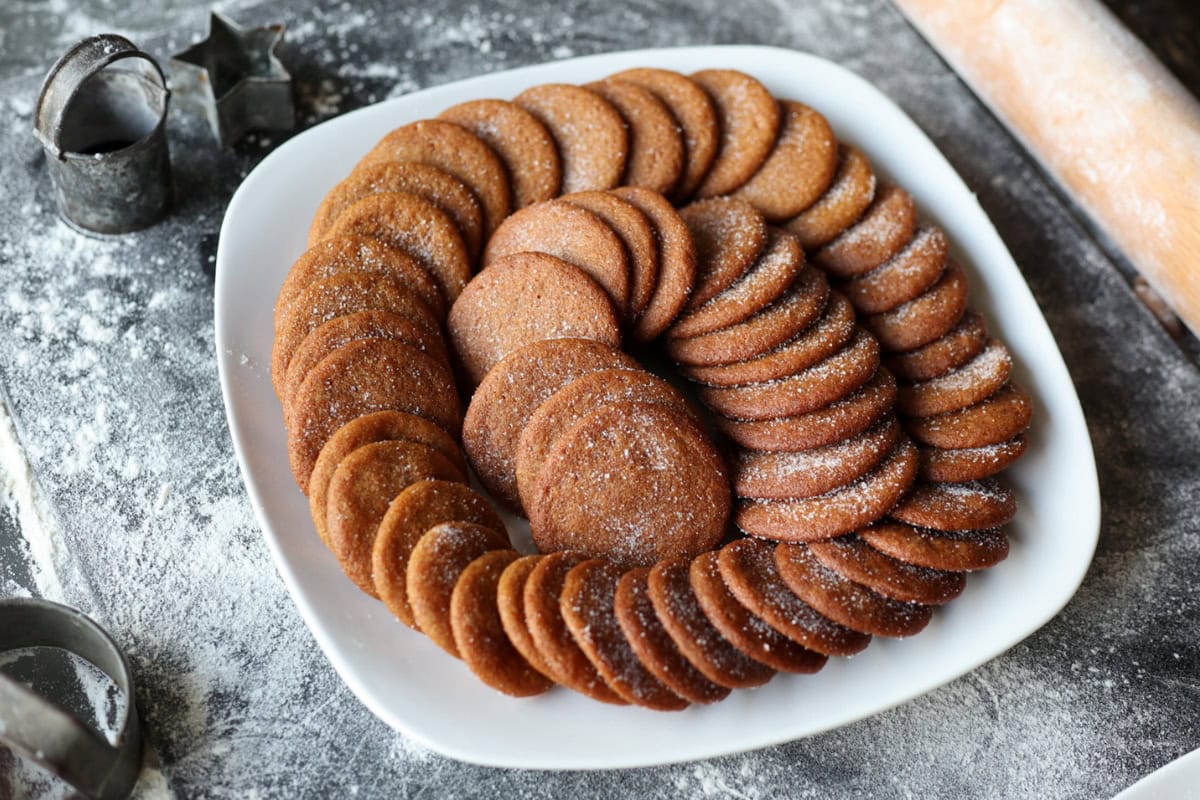
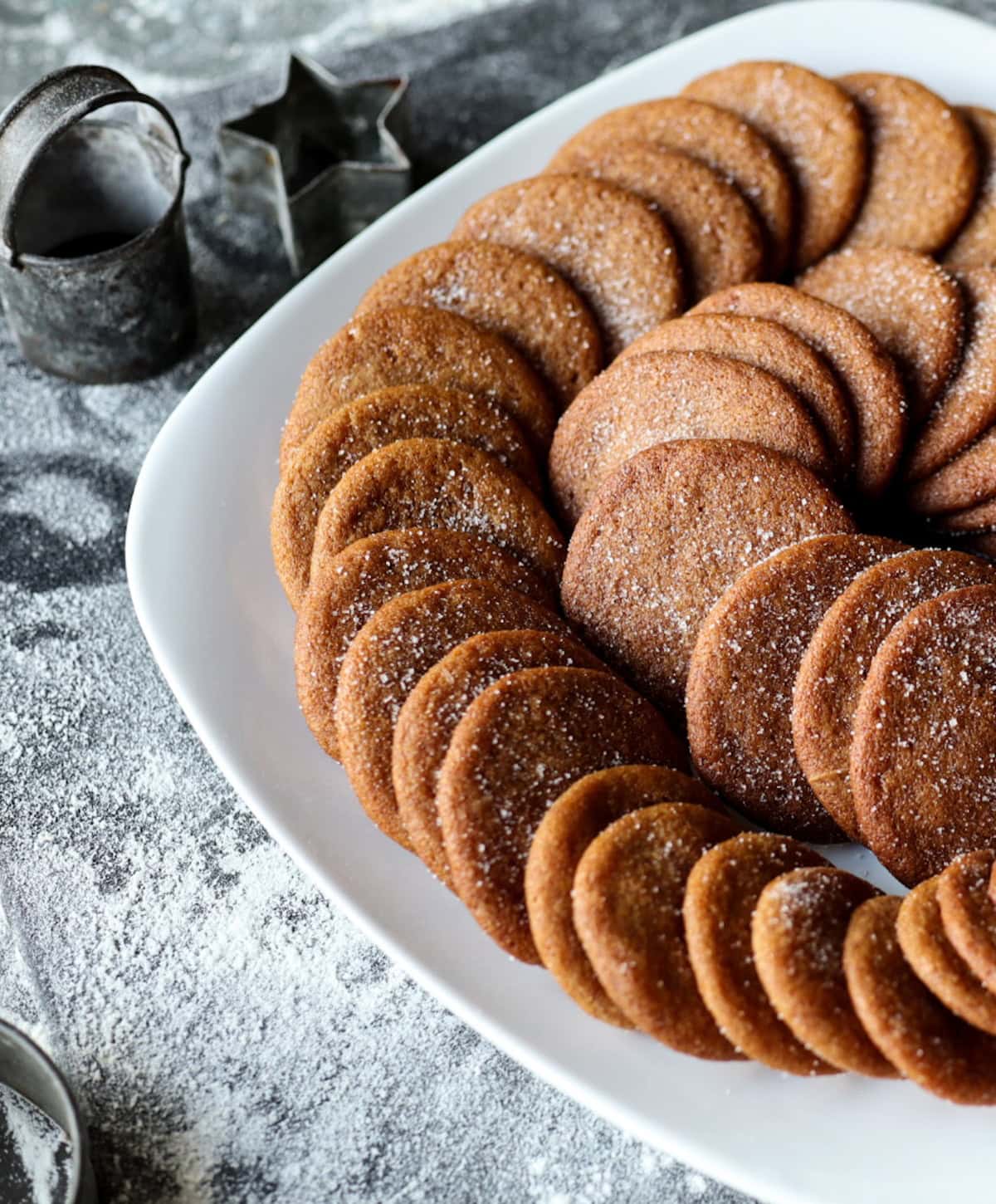
These deliciously crisp and spicy Ginger Snaps are an absolute treat. Made following a recipe found in a very old manuscript recipe book, this is a classic cookie that everyone still adores today.
Dear friends ~
Today’s recipe is a special one. I’m very fortunate to sometimes get the opportunity to work with handwritten manuscript recipe books. This delicious recipe for ginger snaps that I’m sharing today, comes from one of these unique volumes.
The tricky thing about manuscript volumes, is that they can be hard to date with precision. Now and then, an author might put a date and attribution by a recipe, or inscribe their name and a date at the beginning of the volume. Sometimes you’ll find a clipped recipe pinned or pasted into the book, and that might have a date on it.
Other times, we have to rely on more subtle clues, like the ingredients, or style of recipes included. For example, a volume that regularly uses hartshorn or ammonia for leavening, may be from the earlier half of the nineteenth century, rather than later on, when soda and baking powder were the common rising agents. Likewise, a volume that contains many puddings, but few cakes, might reflect an earlier date.
Multiple recipes calling for canned oysters, on the other hand, would hint at a date toward the waning decades of the 1800’s.
All that to say, I can’t give you an exact date for today’s recipe. I can say that just a few pages over from this cookie recipe, is a remedy for Cholera which calls for opium, an ingredient that became more expensive and regulated starting in 1890–so that’s interesting. Based on the ink, paper, ingredients, and the recipes included, I’d venture to say this is quite likely a late-middle 1800’s collection of recipes.
What I can tell you with absolute certainty, though, is that this is a darn tasty old-fashioned recipe for Ginger Snaps, and you can’t go wrong by making up a batch.
~ Unattributed Manuscript Recipe Book
GINGER SNAPS
1 cup sugar, 1 molasses, 1 lard & butter, 2 spoons ginger, 1 soda, salt
Heat sugar, molasses, butter & lard to boiling, stir in ginger and soda while hot, mix stiff.
Here’s a photo of the recipe as it appears in the cookbook:
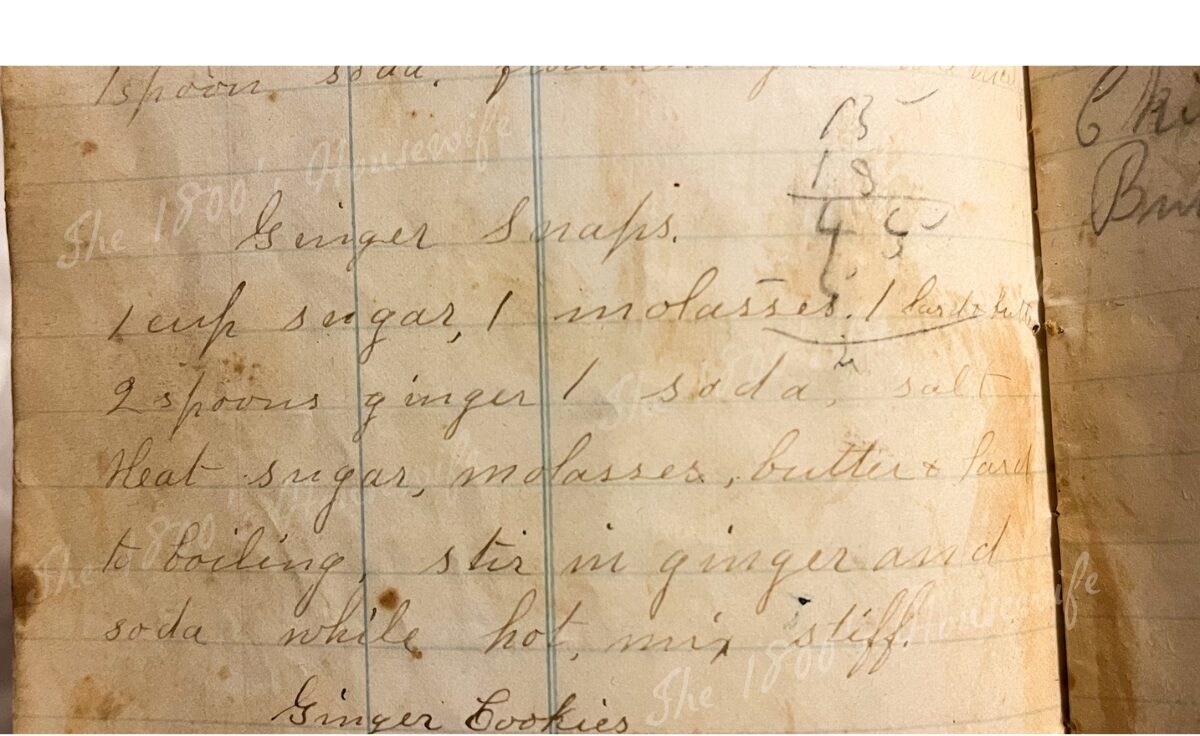
Photo Credit: The 1800’s Housewife, All Rights Reserved.
A FEW COOKING NOTES:
What a fun recipe this was to make! My nine year old son absolutely loves any type of cookie baking that requires rolling out dough, so he was my right hand in the kitchen for this project.
Here are a few notes from our afternoon spent making these. We tried many different variables, carefully taking notes on what worked best.
What type of lard to use
If you’ve never worked with lard, it’s a smooth, pure white fat that results from boiling down and filtering raw fat from a pig.
If you can, the best lard for baking is almost always going to be some that you render yourself, since most lard in grocery stores is hydrogenated and/or has stabilizers added. (If you’ve never tried it, rendering your own lard is honestly easy. Choose leaf lard to work with if you can, but fatback works fine too.)
Thankfully, it’s also getting much easier to find pre-rendered lard directly from farm stands and farmer’s markets now as well. Chances are you can find a source by asking around a bit. Good lard is a nice staple to have for 1800’s cooking!
Back to our recipe…the assumed measurement here is one cup. (There are other places throughout the book where the author omits the unit of measurement when that unit is that same as for the previous ingredient, so we can be pretty certain on this.) We used one half cup of lard, and one half cup of unsalted butter, for that total of one cup.
Can you use all butter?
I believe that would probably turn out just fine. I’ve substituted all butter when making gingerbread recipes that call for half lard, half butter, and the result has been lovely.
While I haven’t tried it with this cookie recipe, I expect it would be a perfectly fine substitute if you can’t get your hands on some high quality lard.
How long should it boil?
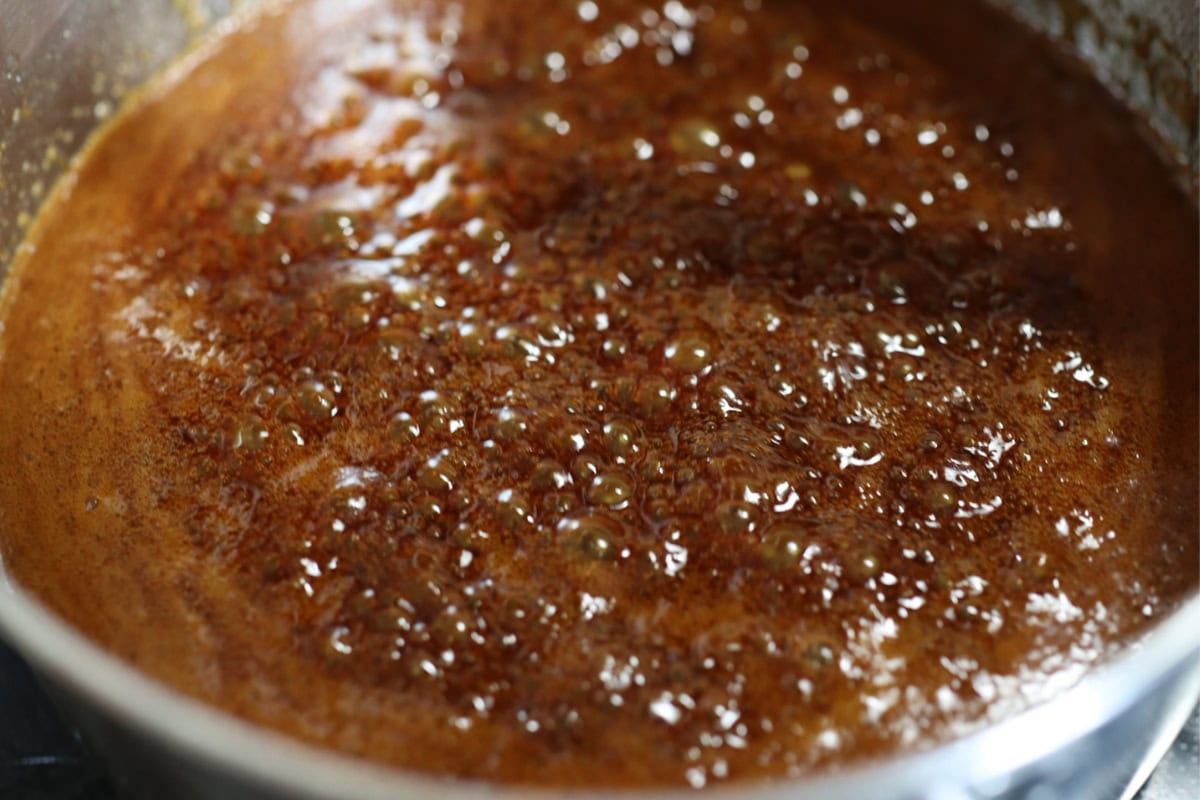
I found that just boiling the sugar, molasses, lard, and butter, for a few minutes worked well. Bringing it all up to a well-incorporated boil seems to be the point here, rather than getting it to a certain temperature or viscosity.
BE PREPARED FOR THIS STEP
We followed the directions exactly, and added the ginger and soda while the mixture was still hot.
Whoa, NELLIE.
If I’d stopped to think about what to expect, I would have known the mixture would immediately rise and bubble up. If you’ve ever made old fashioned peanut brittle, you know.
However, I was absentmindedly thinking about how much salt to put in (a pinch is perfect), as I stirred in the ginger and soda.
Make sure your pan has plenty of headroom if you’re mixing the dough right in the pan you use for boiling. (And there’s no reason you shouldn’t, as far as I see.)
OR, pour the boiling mixture into a large bowl with plenty of room, and then add the soda and ginger. As you add it, stir continually until it settles down. This doesn’t take long, but if you stir it in and walk away, it could rise enough to flow over the side, and you’d have a sticky mess on your hands.
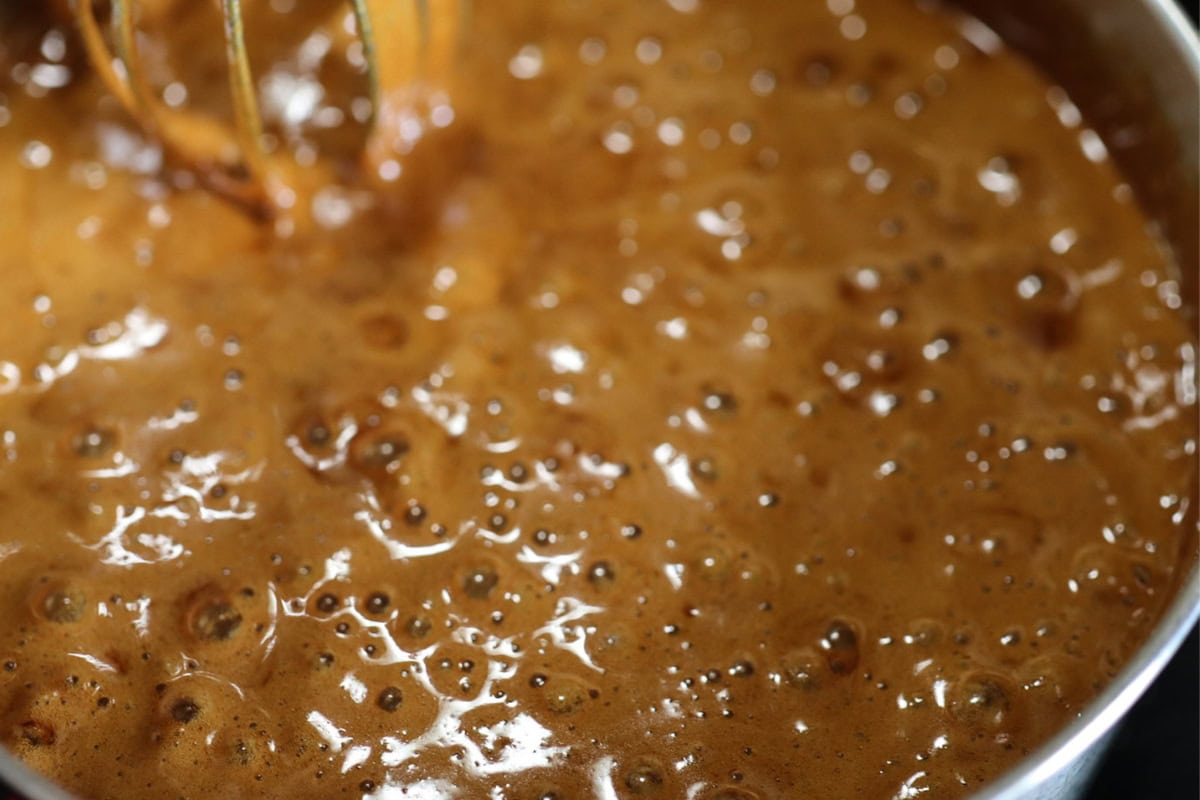
Photo Credit: The 1800’s Housewife.
How much flour
3 cups of flour seemed to be the perfect amount, to “mix stiff”.
Having made a very similar recipe and experimented with this before, I have found that the result of mixing in your flour when the mixture is hot, differs from mixing in the flour once the mixture has cooled down. Letting it cool down first gave a better result, so that’s what we did here as well.
It doesn’t need to fully come to room temperature, but I do feel that waiting to add the flour until the mixture is no longer boiling hot, helps result in a better finished cookie.
How thin is thin?
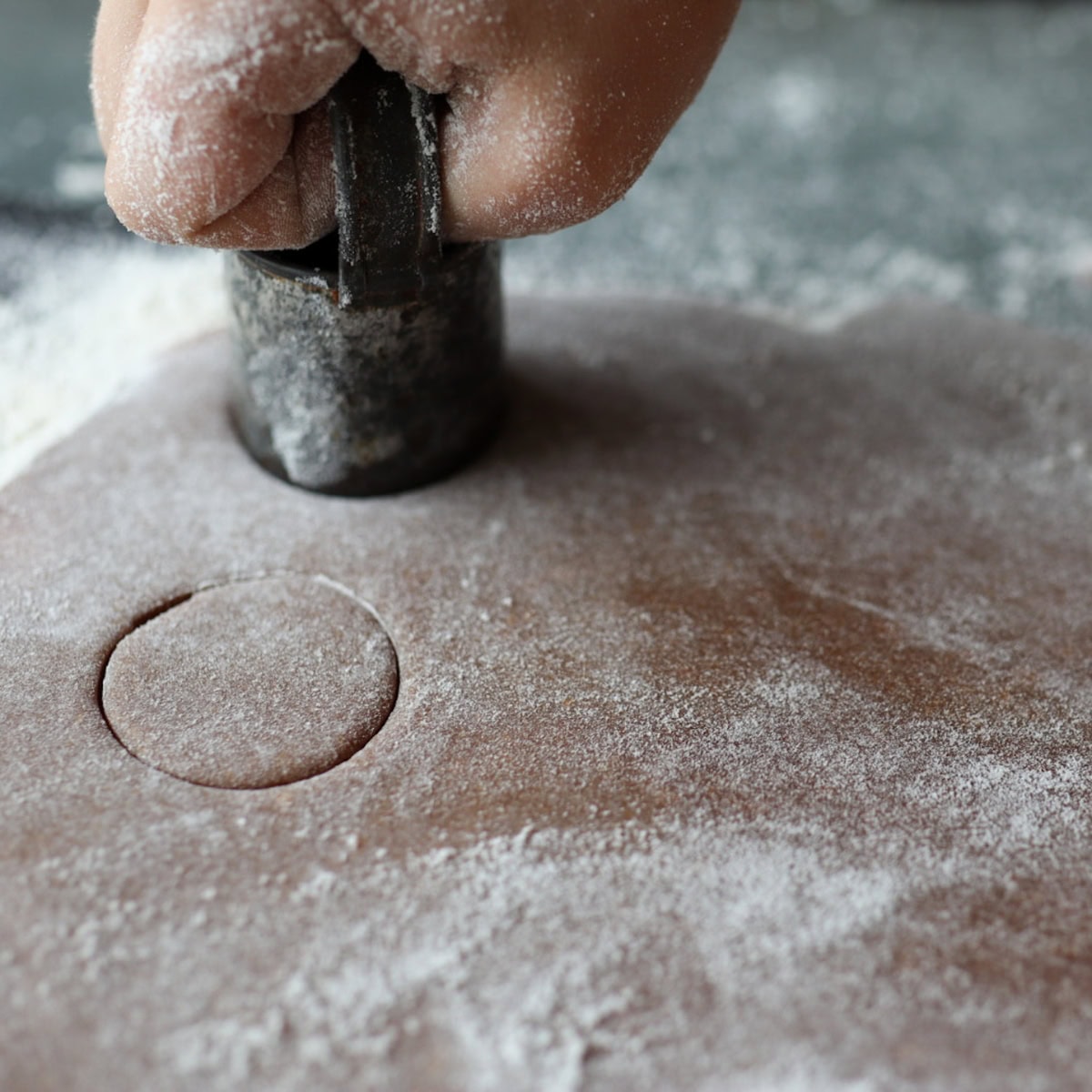
Now, this recipe does not at all specify how thick to roll the dough, but many contemporary Ginger Snaps recipes say to roll the dough thin.
We did so much experimenting with this recipe! We found that our favorite cookies came from dough that was rolled a little less than ¼″ thick.
Yes, my children and I are kitchen nerds. (Those apples do not fall far from this tree!) In our opinion, 3/16″ thick dough really does make a perfect cookie, for this recipe.
What size cookie cutter to use?
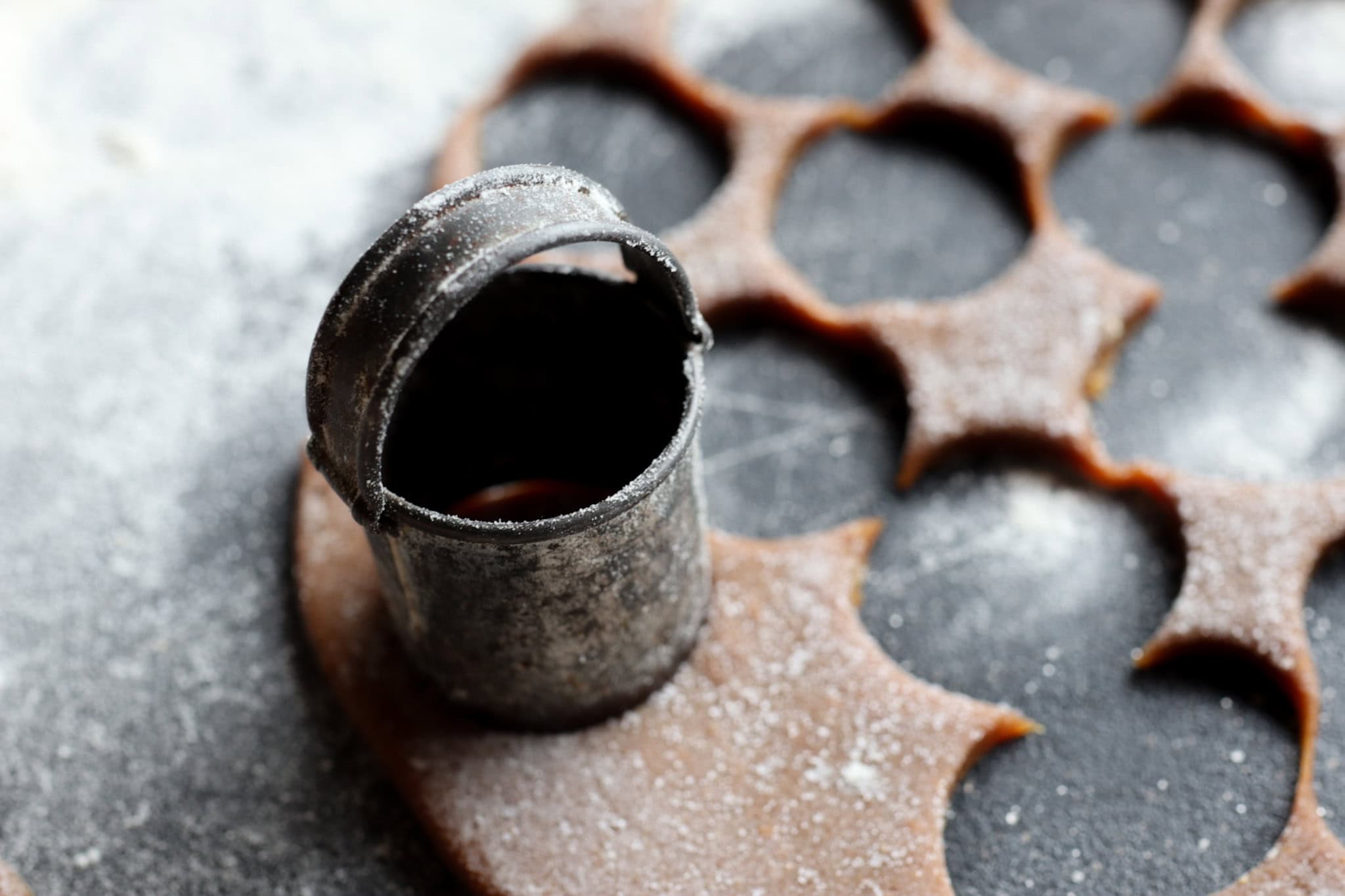
You really can cut these however you like, adjusting the bake time to get the right results.
We found that using a cutter 1.5″ in diameter gave nice, crispy cookies, that cooked evenly.
How hot should the oven be?
Again, we have no instruction here, but most similar recipes of the era call for a “hot oven”, or a “quick oven”. I went with 375°F, and this is what I’d recommend. Much hotter than that, and you end up with a cookie that tastes like scorched molasses, by the time they reach a level of “done-ness” that allows them to remain lightly crisp once they’ve cooled.
How long to bake them
This is all going to depend on how thick you roll your dough, and how large you cut your cookies.
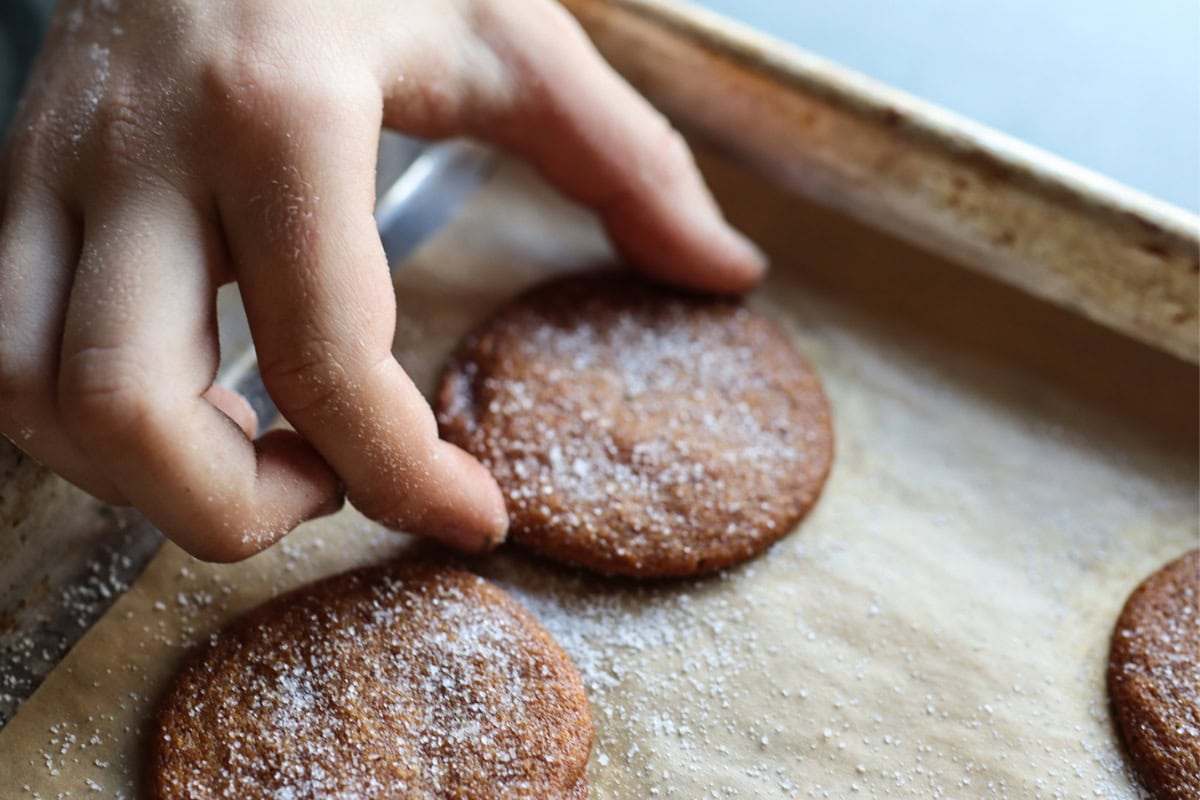
For us, with 3/16″ thick dough (scant ¼″ if that feels easier), cut in 1.5″ rounds, we found that 8 minutes at 375°F gave us the perfect cookie.
With a thin cookie like this, even a minute makes a noticeable difference, so I recommend doing a quick test batch to dial in your timing. Once you’ve found the perfect amount of time, trust it and go with that. This recipe makes quite a lot of cookies, so getting into assembly line mode works well!
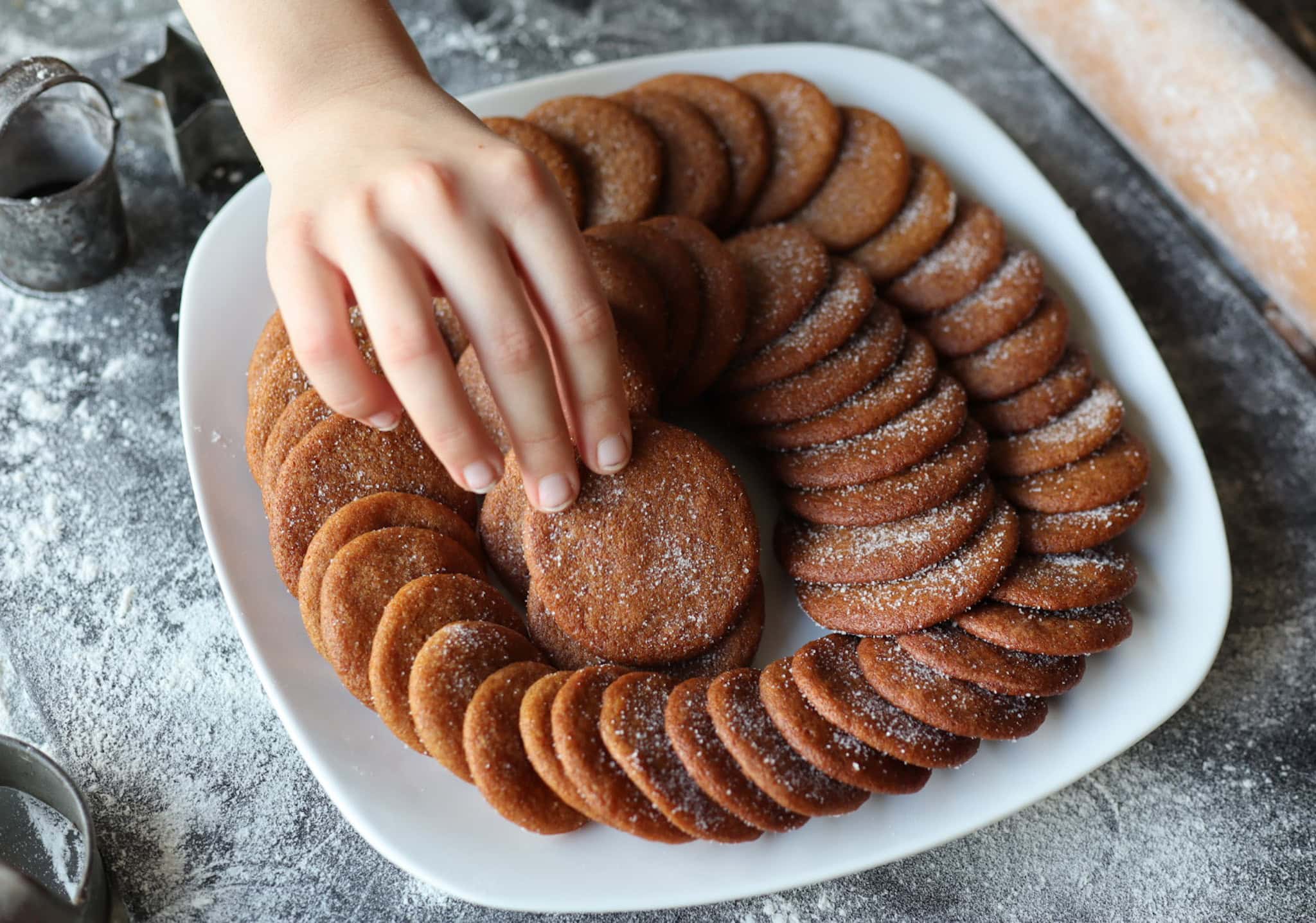
Wow, leave it to me to turn the shortest recipe yet, into the longest article! It’s good to be back to experimenting in the kitchen, and I hope I didn’t overwhelm you with too many cooking notes on this one!
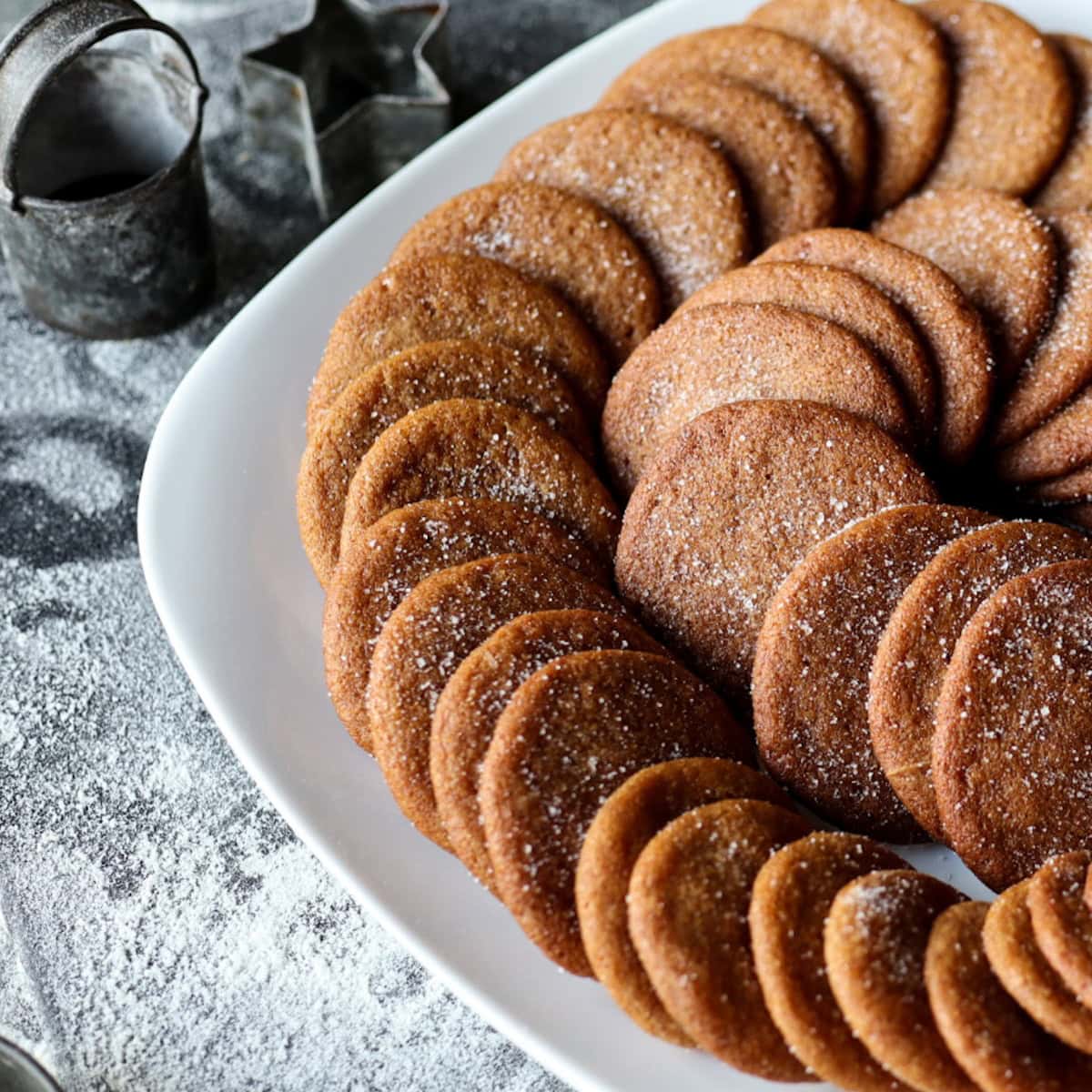
These cookies turned out well-flavored and pleasingly crisp, and they hold up nicely to being transported and shared around at school. They’re definitely worth a try, if you like crispy, old-fashioned ginger snaps.
As always, feel free to send me an email anytime, with recipe requests! ‘Til next time, ~ Anna
📖 Recipe
Ingredients
- 1 cup sugar
- 1 cup molasses
- ½ cup butter
- ½ cup lard
- 2 teaspoons ginger
- 1 teaspoon baking soda
- 1 pinch salt
- 3 cups flour
Instructions
- Pre-heat oven to 375℉
- Heat sugar, molasses, butter, and lard, to boiling, in a pan with lots of room
- Stir in ginger and soda while hot, stir until mixture stops rising
- Stir in flour until well mixed.
- Roll dough on floured board, about 3/16" thick
- Cut into shapes. I like a 1" diameter round cookie cutter for this recipe.
- Bake for about 8 minutes, until done. Adjust time as necessary, based on size and thickness of cookies.
- Allow to fully cool before storing in an airtight container.
Nutrition
This post was originally published in the 1800’s Housewife newsletter. Not on the mailing list? You can join here to receive full recipes with cooking notes straight to your inbox!
Marty says
Hi, could these cookies be made by rolling little balls of dough and flattening them to the right thickness?
Anna says
Absolutely! That’s exactly the method I employ when using up the final scraps of dough, and it works just fine!
Darlene in Nova Scotia says
These will be delicious. Just like my grandmother’s recipe, the trick is shortening. Thanks for sharing!
Anna says
I’m so glad it brings back happy memories! Thanks for the kind words!!
Judy says
These 1800s Housewife cookies look fabulous! I cannot wait to make them. I love these old fashioned recipes and I’m so glad I found you!
Mattress62 says
fantastic, exactly what I was looking for – thank-you.
Used only lard for xtra-snapfactor
Jo says
This looks like the closest recipe I’ve seen to the “spiced wafers” popular in Pennsylvania under the Sweetzel and Ivins brand names. I’ve been searching because neither company makes gluten-free spiced wafers, and I miss them!