
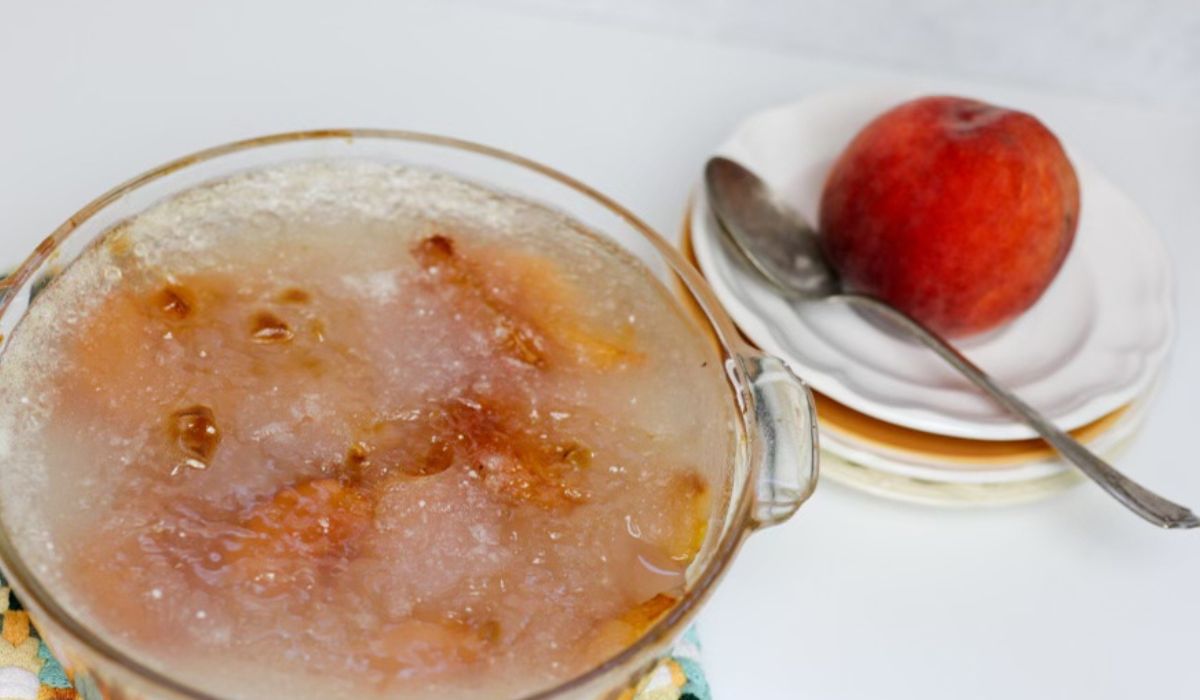
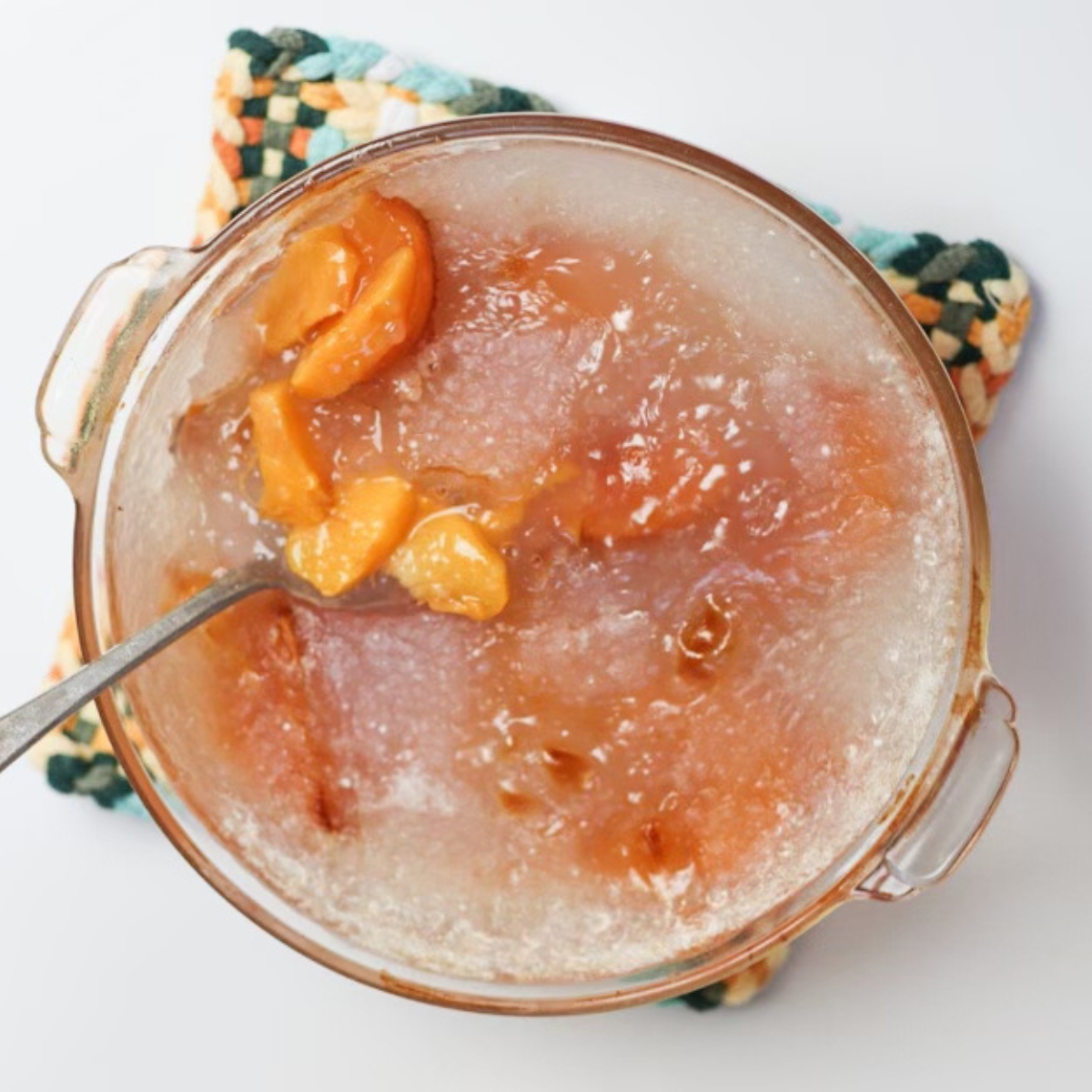
This delicious pudding is my new favorite thing to make with perfectly ripe, juicy peaches!
Dear friends ~
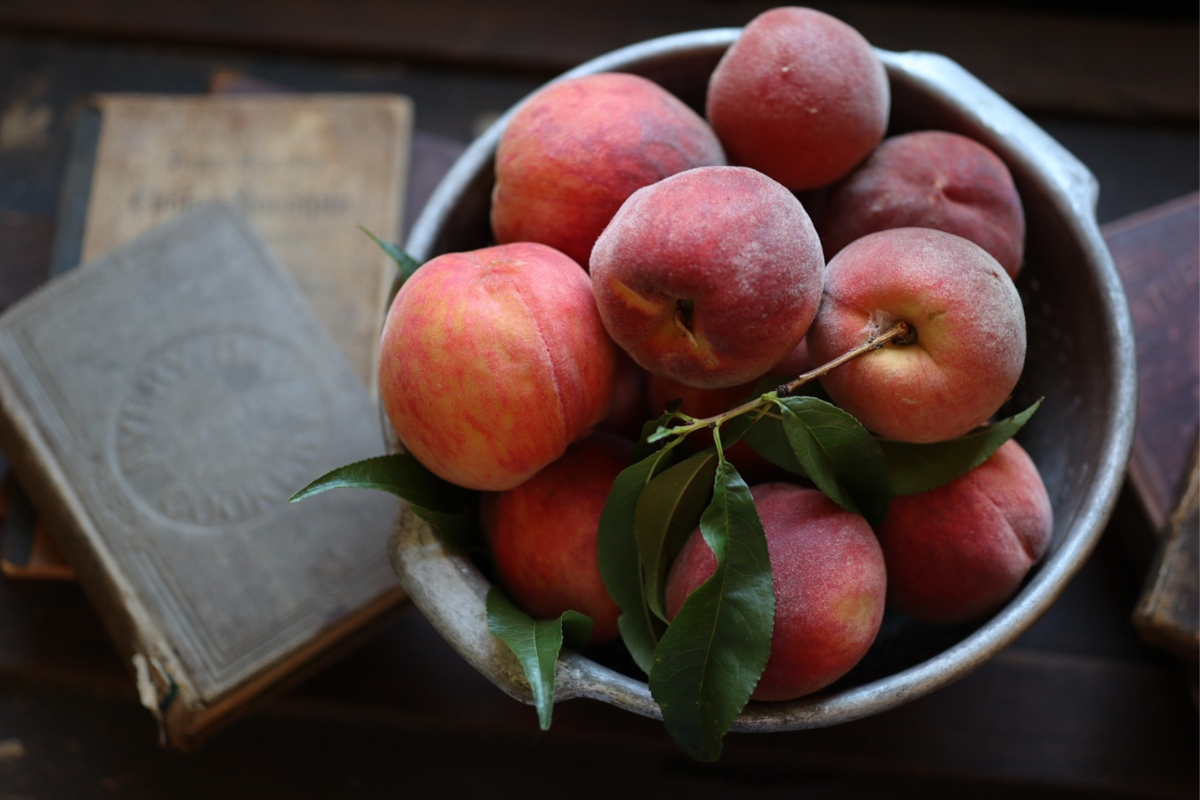
It’s been a wonderful year for peaches. Here in my Maine backyard, the Reliance and Redhavens have passed, and now I’m just waiting for the Contender tree to fully ripen. Less productive and precocious than the other two, it offers a welcome last hurrah to peach season, just as the apples are starting to ripen.
The long peach harvest has given me a wonderful chance to try quite a few 1800s peach recipes this year, and I have to say, this tapioca pudding is an unexpected favorite so far!
Sweet, smooth, and just exploding with the flavor of those ripe peaches, this is a dessert I’ll be making every year, now that I’ve discovered it. My son is already asking me to make another one this weekend…he’d have this for dessert every night if he could!
It’s a great option for something special after Sunday dinner, since you can just lower the oven heat after taking out that chicken or roast, and then pop this in to slowly cook during the meal. If you give it a go, I hope you enjoy it as much as we do!
~ Anna
The Economical Cook Book, 1876
PEACH TAPIOCA PUDDING
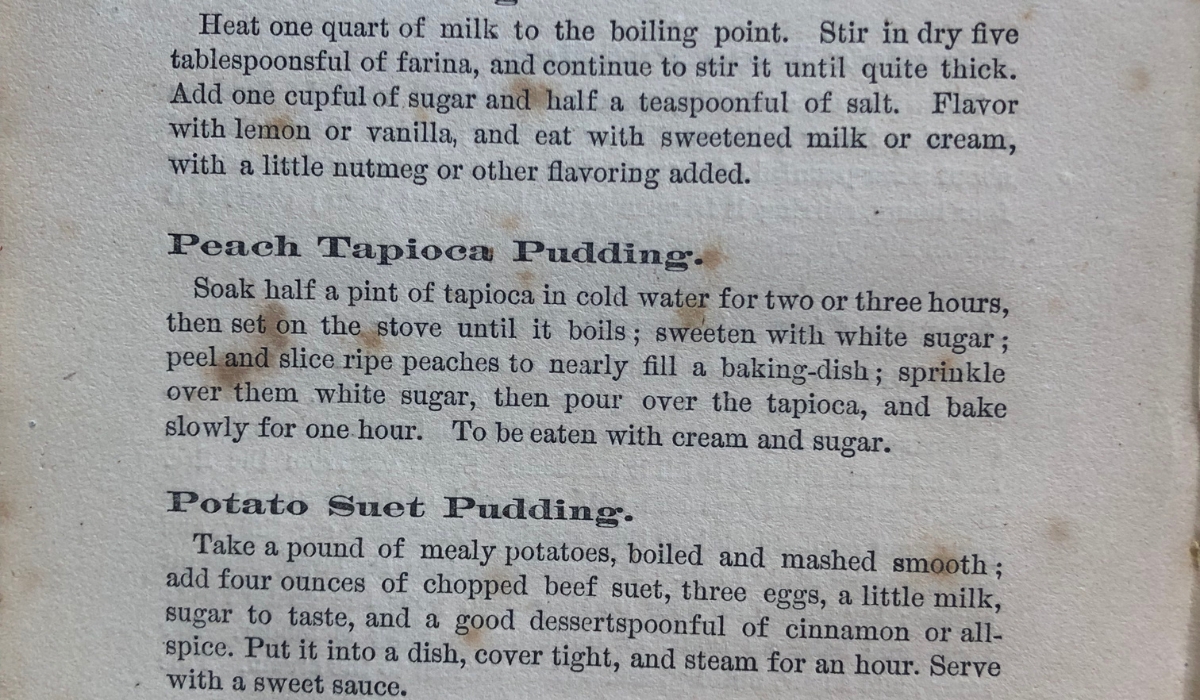
Soak half a pint of tapioca in cold water for two or three hours, then set on the stove until it boils; sweeten with white sugar; peel and slice ripe peaches to nearly fill a baking dish; sprinkle over them white sugar, then pour over the tapioca, and bake slowly for one hour. To be eaten with cream and sugar.
Here’s a photo of the recipe as it appears in the cookbook:
A FEW COOKING NOTES:
This is an easy pudding that comes together quickly, once that tapioca soaks. It makes a big batch, so unless you have a large family, you may want to try halving the recipe. Here are a few cooking notes!
The tapioca
You can probably tell from the instructions, which call for soaking the tapioca, that this isn’t “Minute Tapioca”. What we know as Minute Tapioca now, didn’t come on the scene until the 1880s, and started becoming more widely available in the 90s.
To get the full experience of this recipe with a tapioca closest to what would have been available at the grocer’s in 1876, you’ll want to go with a regular small pearl tapioca. Bob’s Red Mill makes a small pearl tapioca that I like, and if you’re lucky enough to live near an Asian market, that can be a great source.
Keep in mind you’re not looking for the modern large pearl tapioca, like you’d find in boba tea!
You wouldn’t think that one cup of tapioca pearls would go so far, but that “half pint” cooks up to such a volume that a full batch requires either a very large baking dish, or two 2-quart baking dishes.
You’ll want to set the pearls to soak in a large enough container to let them expand, and add water to more than cover them. What I found worked well for me was soaking them in a pint of water. After 3 hours, I poured the soaked tapioca pearls into a sauce pan, with another 4 cups of water.
5 or 6 cups of total liquid, to each cup of tapioca, is a pretty common ratio in the 1800s cook books I surveyed, for tapioca pudding recipes.
The peaches
This is a great way to use juicy, tree-ripened peaches that are a little riper than the “ripe but firm” peaches most of the 1800s pickling and preserving recipes call for.
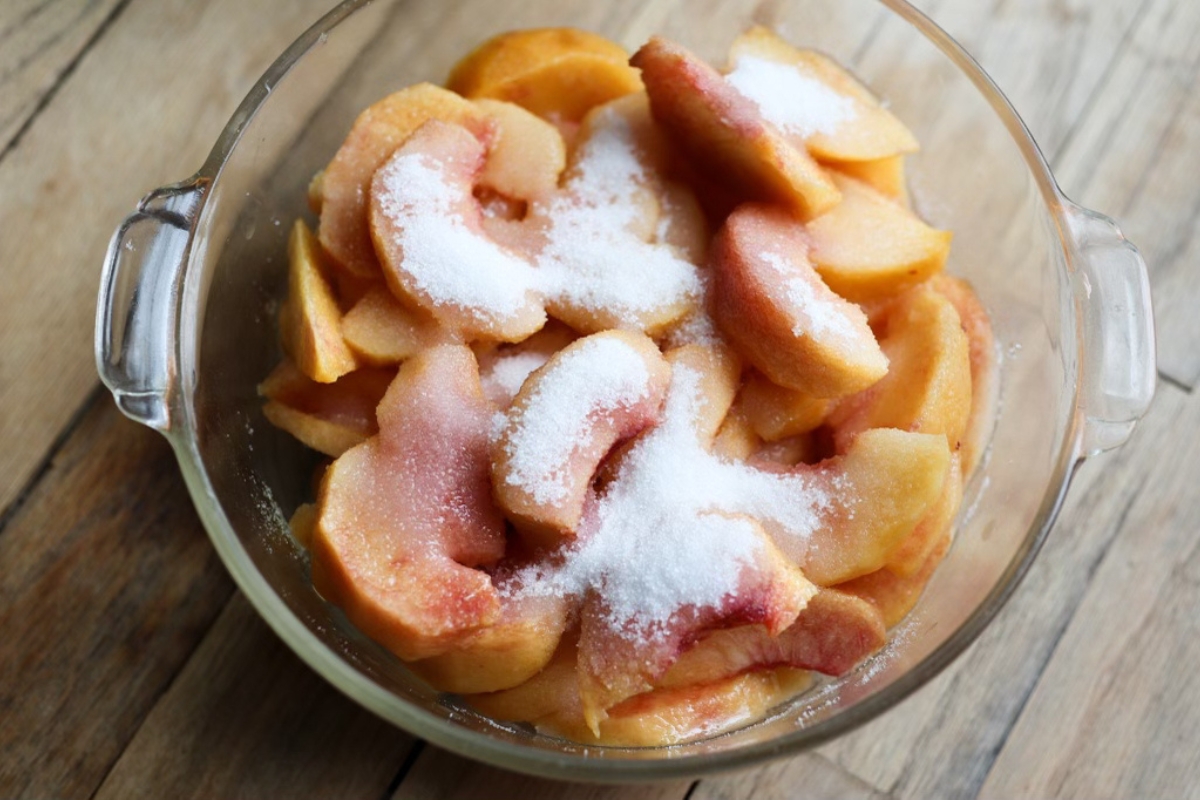
I made this with large, perfectly-ripe Redhaven peaches, and found that 5 sliced peaches along with half of the tapioca, was perfect for filling a 2-quart baking dish. For the full recipe, you’ll need about 10 large, or a dozen smaller peaches.
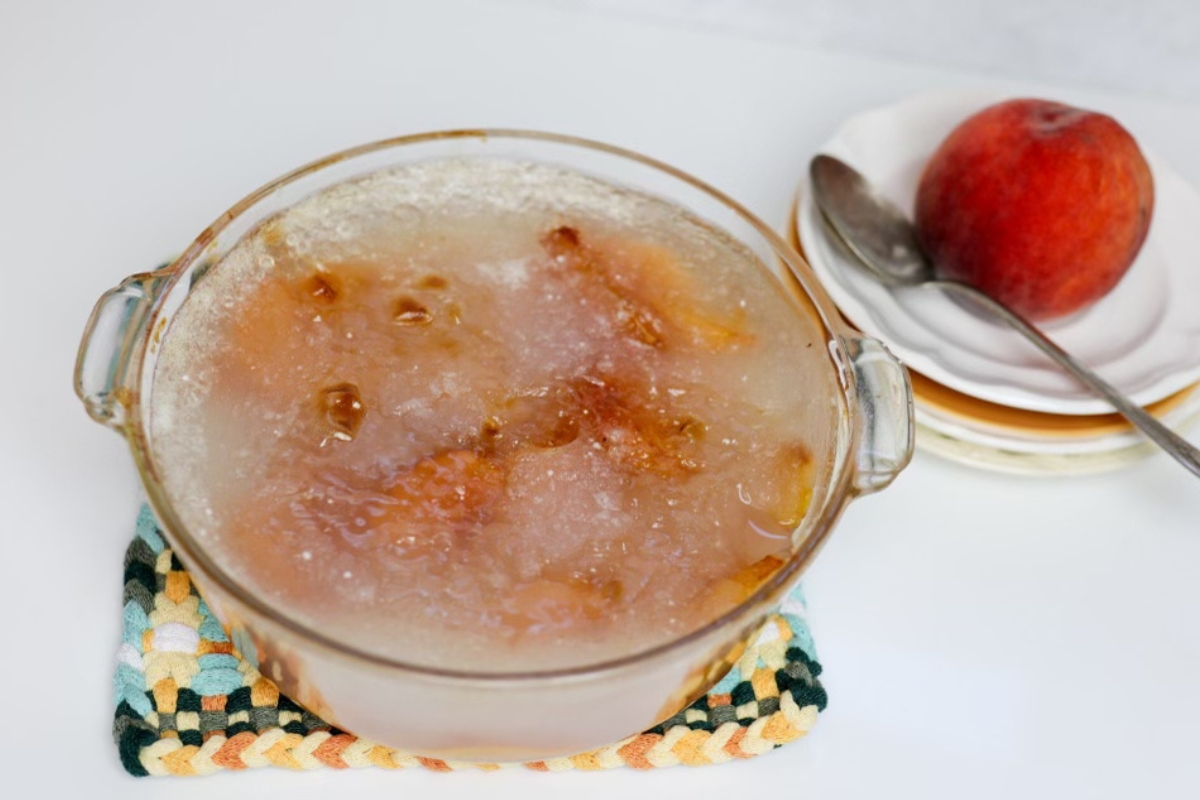
Sugar
I used ⅓ cup of unbleached white sugar to sweeten the full batch of tapioca, then another ⅓ cup to sprinkle over each 2 quart dish of sliced peaches. (If you were making this as one huge batch, that would add up to one cup total.)
With really sweet, ripe peaches, this was definitely plenty sweet enough. I might actually use a little less next time.
If your peaches aren’t quite ripe or aren’t very sweet, you may like to bump that up a bit.
Baking Slowly
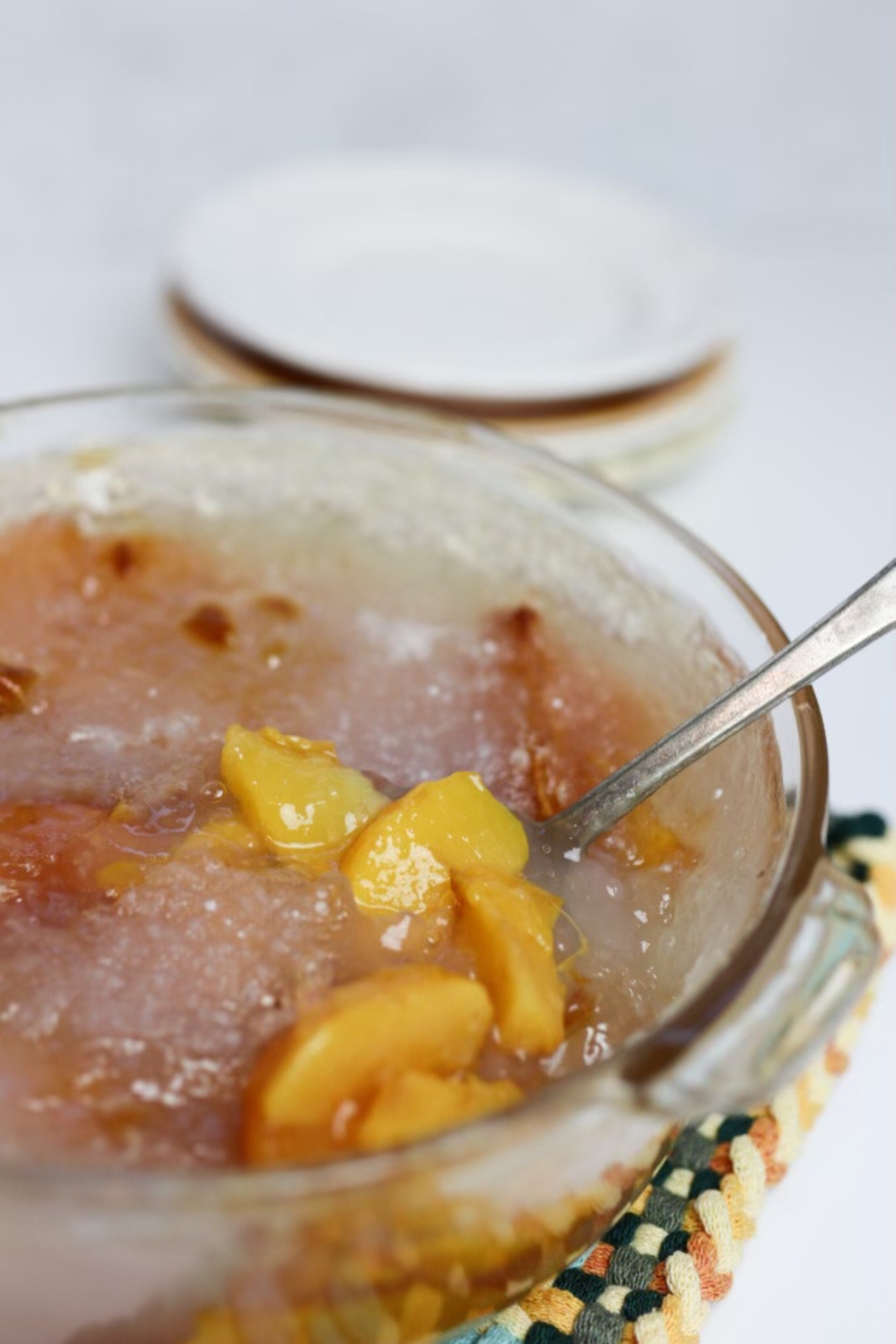
I generally find that when a “slow oven”, or “baking slowly” is called for, a temperature of 300°F works well, or maybe just a shave higher. I went with 300°F for this, and after the prescribed one hour of cooking, it was absolute perfection.
Cooking in a wood-fired oven would tend to give a pudding like this a slightly crackly top, something that can be hard to quite recreate in our modern ovens. If you’re not getting that crackly finish after a full hour of baking, and your pudding is nice and bubbly and clearly done, I think there’s no shame at all in flipping on the broiler for just a moment or two, to give that pudding a nice crackly finish.
There’s such a joy to a perfectly-done baked pudding!
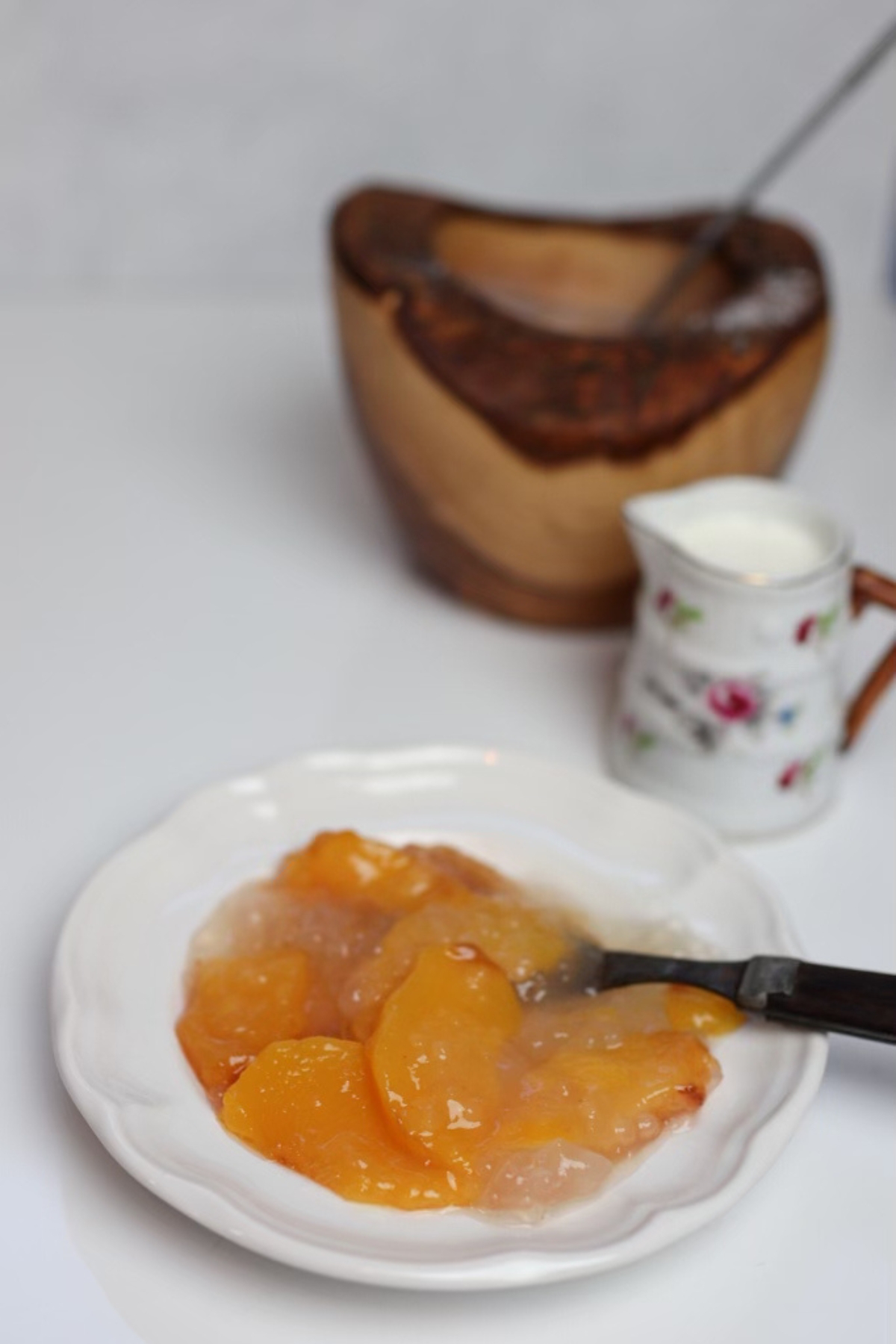
Serving
Fresh, thick cream, and a sprinkling of sugar, just puts this delicious pudding right over the top. This is late summertime eating at its best!
The traditional way to serve this “to be eaten with cream and sugar”, would generally have been to pass the sugar and cream at the table, so each person could add these according to their own taste.
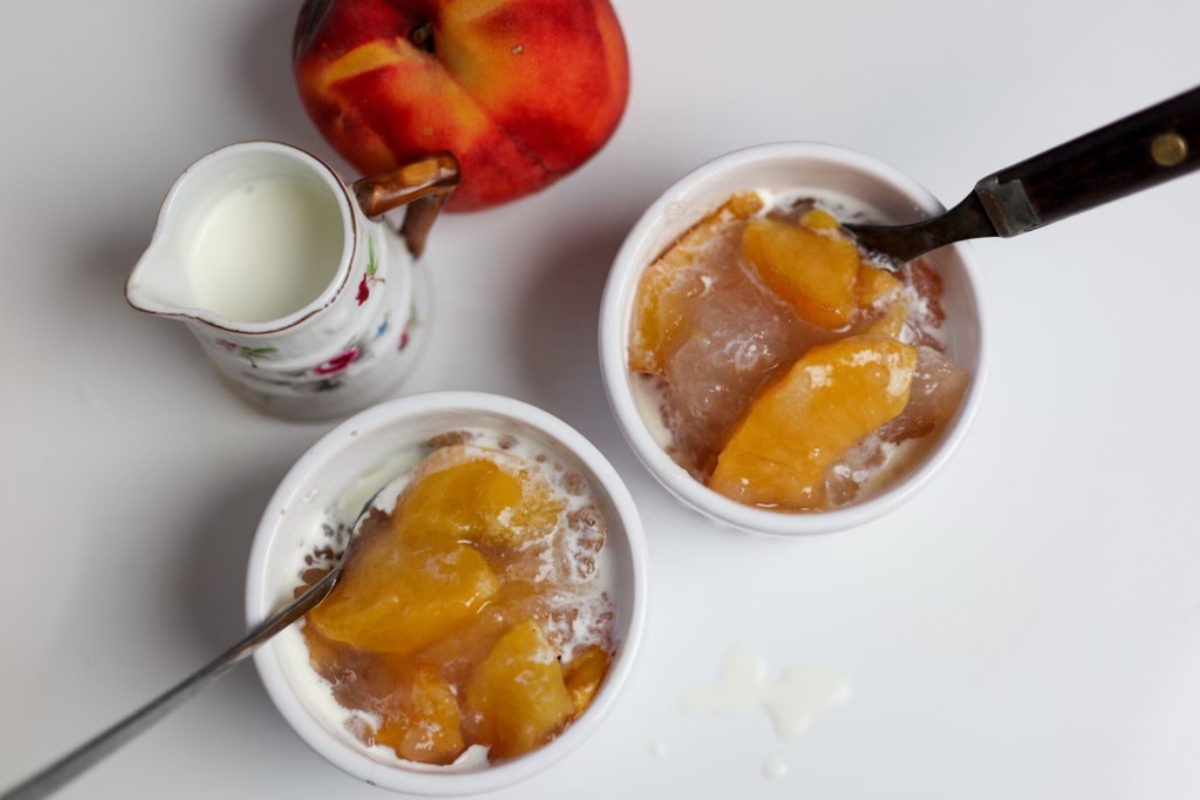
Gosh, I’m hungry just writing this! For those of you who subscribe to this newsletter to “read not bake” (I know there are many, and I appreciate you!), this is one of those recipes where I’d encourage you to give this one a go.
It’s so old fashioned, so easy, and such a celebration of in-season fruit.
Until next time, ~ Anna
📖 Recipe
Ingredients
- 1 cup small pearl tapioca
- 6 cups water
- ⅓ cup sugar
- 10 ripe peaches
- ⅔ cup sugar
Instructions
- Soak half a pint of tapioca in cold water for two or three hours, then set on the stove until it boils;1 cup small pearl tapioca6 cups water
- sweeten with white sugar;⅓ cup sugar
- peel and slice ripe peaches to nearly fill a baking dish; sprinkle over them white sugar, then pour over the tapioca, and bake slowly for one hour.10 ripe peaches⅔ cup sugar
- To be eaten with cream and sugar.
Notes
Some other summertime recipes you might enjoy:


Comments
No Comments