
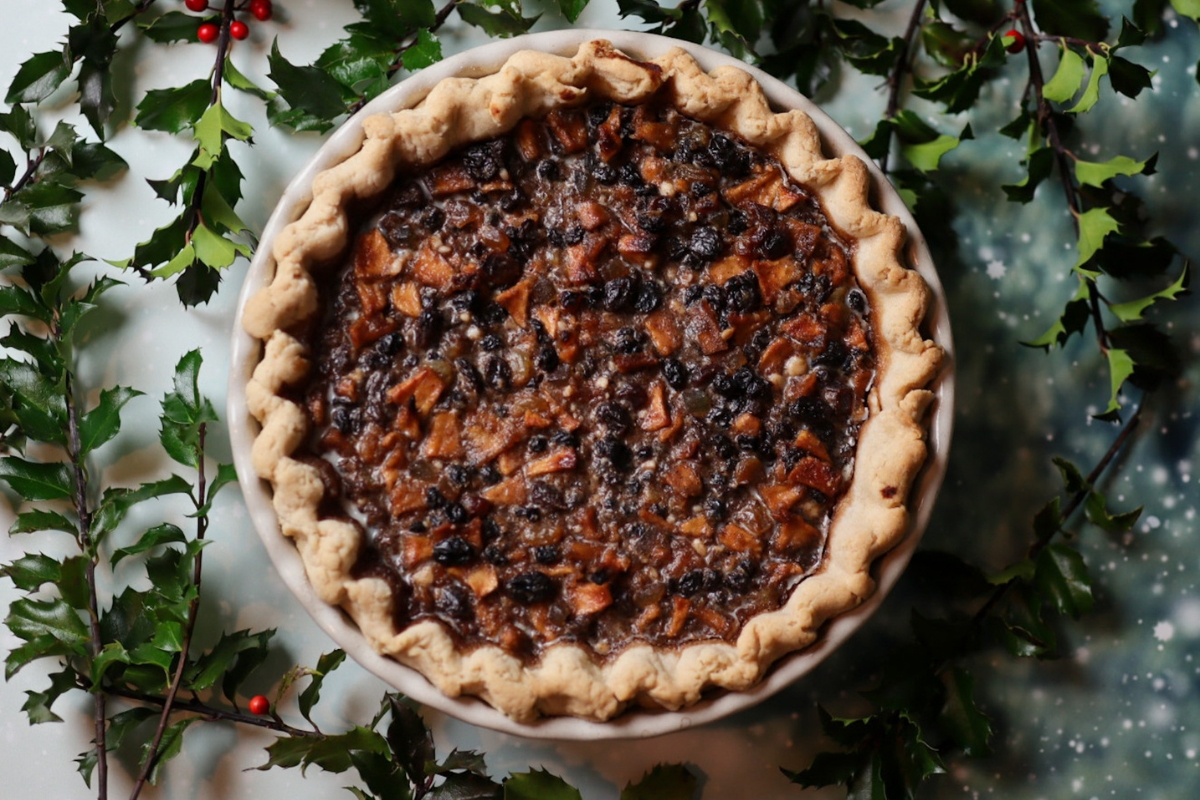
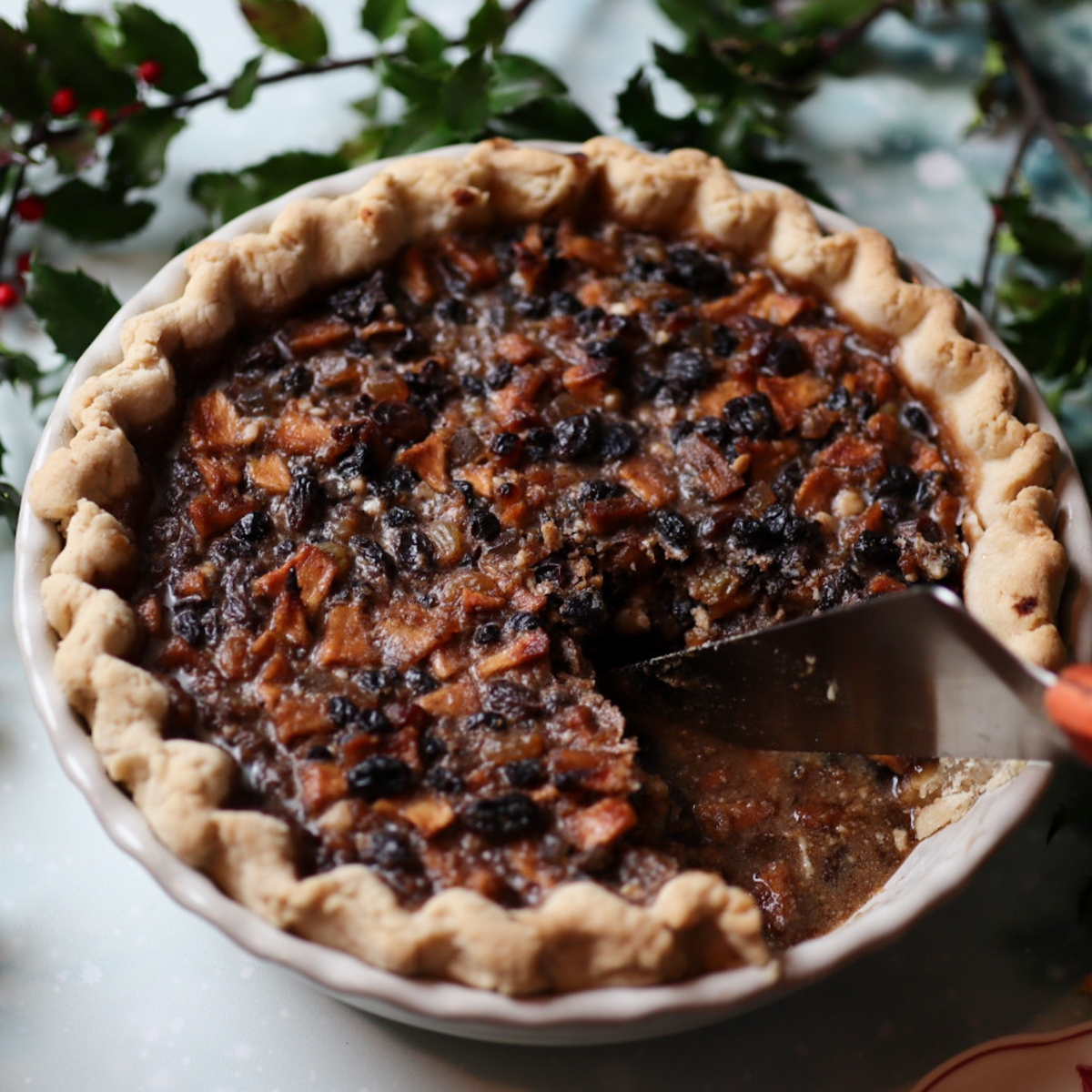
This classic apple mince-meat makes the most wonderful holiday pies! So festive, and absolutely packed with flavor, this is one for the family recipe box!
Dear friends ~
For last year’s holiday baking, I made a big batch of “real” mince meat, following a recipe from The White House Cook Book (1887). Made with beef and suet, Brandy, and Madeira, it’s a rich, “proper” mincemeat that was perfectly delicious.
This year, going into the holidays, I decided to try another mince recipe I’ve had my eye on. This one is an apple mince-meat recipe from one of my favorite cook books–Common Sense in the Household, by Marion Harland.
Apple-based “mince-meat” recipes were generally considered to be easier on the digestion, than those made with meat as a primary ingredient. Suet does play a role in this recipe, so it’s still not what you’d call a light dish.
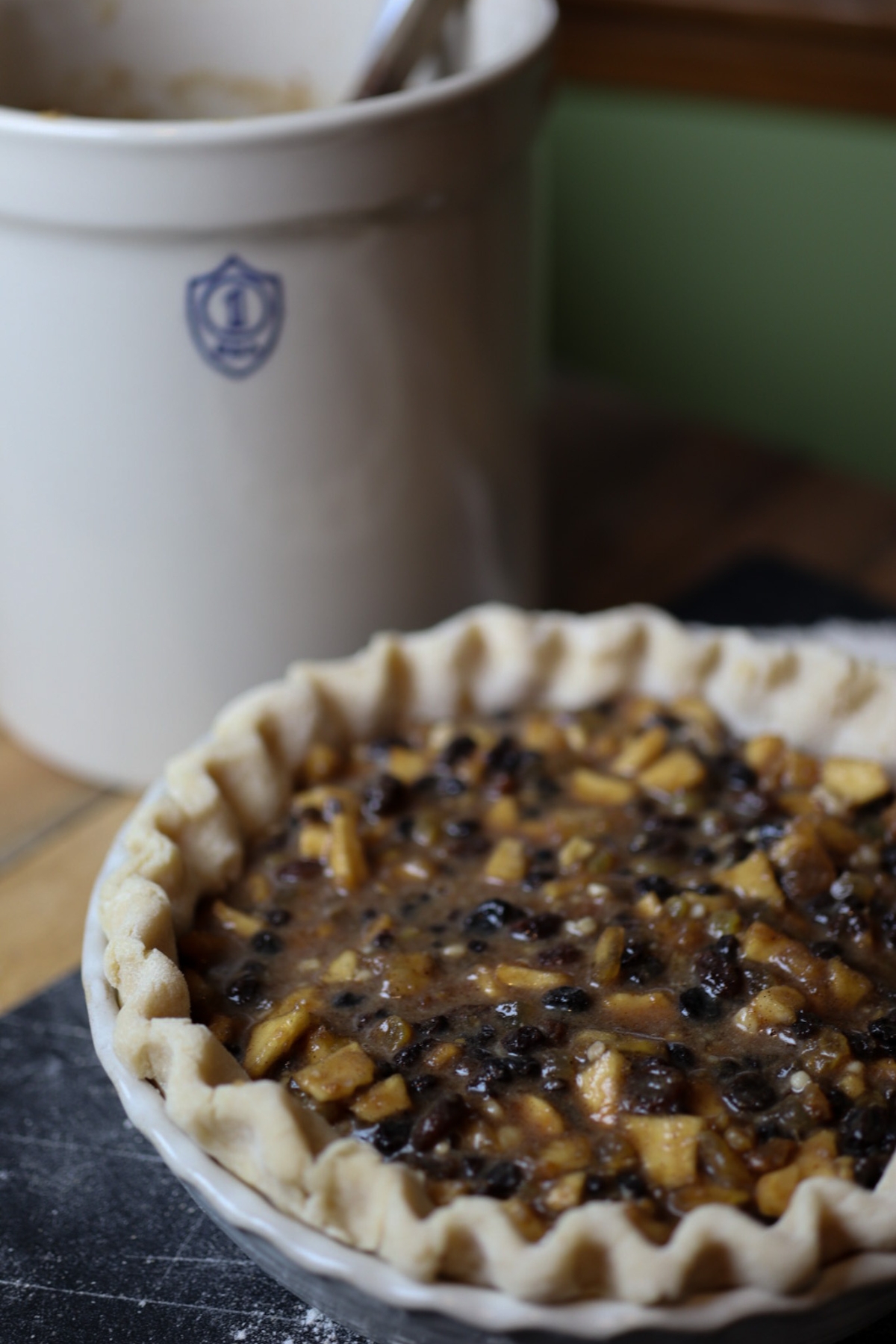
What it is though, is a bona fide orchestra of flavors and textures, yet somehow without being overly busy. Along with the apple, you have the sweetness of raisins, currants, and sultanas, brightened up with the citrus flavors of citron, lemon juice, and lemon peel.
In my opinion, this is one of those recipes that’s worth copying down and tucking into the family cook book, next to great-grandma’s fruitcake recipe. That’s what I did, anyway. This one’s definitely worth a try, I hope you do!
Common Sense in the Household, 1877
APPLE MINCE-MEAT
2 lbs. apples–pared and chopped.
¾ lb. beef suet–cleared of strings and powdered.
1 ” currants.
½ ” raisins, seeded and chopped.
½ ” sultana raisins.
¼ ” citron, cut into shreds.
1 lemon–juice and grated rind.
1 tablespoonful cinnamon.
1 teaspoonful cloves.
1 ” mace.
1 tablespoonful allspice.
2 lbs. brown sugar.
Half-pint best brandy.
A glass of wine.
2 teaspoonfuls salt.
Pack down in a stone jar, with close cover and keep in a cool place.
Here’s a photo of the recipe as it appears in the cookbook:

A FEW COOKING NOTES:
If you’ve been getting this newsletter for a while, you know I could chat 1800’s pie making all day, but I’ll try to keep myself brief on this one! Let’s dive in.
What kind of apples to use?
Any type of good pie apple works well here. I know from spending many hours in this volume, that Marion Harland was particular to Greenings, Baldwins, and Campfields, as well as most Pippins, for pies and baked apple dishes, though she doesn’t specify any variety here. These days, those can be hard to get your hands on, so a combination of Granny Smith and McIntosh is a good combination that would give a similar result.
Sourcing that raw suet
If you’re lucky enough to have a good butcher shop nearby, that’s the first place I’d look. You may also find suet right at your grocery store’s meat counter. If you don’t see any on the shelves, try asking the butcher or department manager directly. They may be able to get some for you.
Local farms that raise cows and sheep would be other great places to try. Remember that suet can come from lamb and mutton, as well as beef. If the farmers don’t have any available, chances are they may have an idea where you can get some. Anyone raising meat animals tends to be pretty integrated into the locally-grown food community, and is likely to know who’s got what available.
Keep the suet cool as you work with it, and either grate it finely through a regular hand grater, or pound it fine with a rolling pin. Either way works.

The currants, raisins, and sultanas
In the 1800’s, currants were notorious for being filled with dirt and grit. They needed to be very well washed and dried, before using. These days they usually come quite clean, and not in need of a good washing. However, it’s always a good idea to check them over well for bits of stone. I’ve definitely found more than one in my currants, just this year.
What’s the difference between sultanas and raisins? In modern times, you’ll usually hear that both sultanas and raisins are dried Thompson grapes, with raisins being dried naturally, and sultanas being treated with oil and dioxides, to speed drying and preserve a lighter color. This was not the case, in the 1800’s though.
Now, I’ve spent WAY more time than I want to admit, studying dried fruits of the 1800’s. However, I do want to be clear that I’m still not an expert.
My current understanding is that what were called “sultanas” in 1800’s recipes like this one, were naturally dried Thompson raisins.
“Raisins” were naturally dried grapes of other, larger varieties. You’ll notice that this recipe, like many other contemporary ones, calls for chopping the raisins but not the sultanas. Raisins were generally assumed to be larger in size, and tended to come more clean and ready to use, than the smaller sultanas, which were more prone to needing a bit of cleaning (though not as much as currants, which were smaller still.)

The citron
Your best bet with this ingredient, is to opt for a dye-free candied citron peel. (This is me, holding myself back from boring you with a deep dive on historical citron.)
We’re used to finding neon-colored versions in the grocery stores at Christmas time, but in my opinion, it’s 100% worth your time trying to source some better quality, dye free natural citron. It’s delicious, and adds so much to this recipe. I try to buy extra at Christmas and Easter, when it’s easiest to find, and tends to be a little lower in cost.
The brandy and wine
Budget is the determining factor on what to use for that “best brandy”. My budget is pretty small, so I’m not going to recommend a brand, though I do recommend choosing a neutral brandy, rather than a flavored one.
For wine, I opted for a good basic red, though you could certainly reach for Madeira, like the 1887 Mince Meat recipe, if you like. I go into more depth on the volume of “a glass of wine” in this article about Beef Soup, but for brevity’s sake, I’ll just say here that you want to go with 4 ounces of wine for this.
Baking the pie
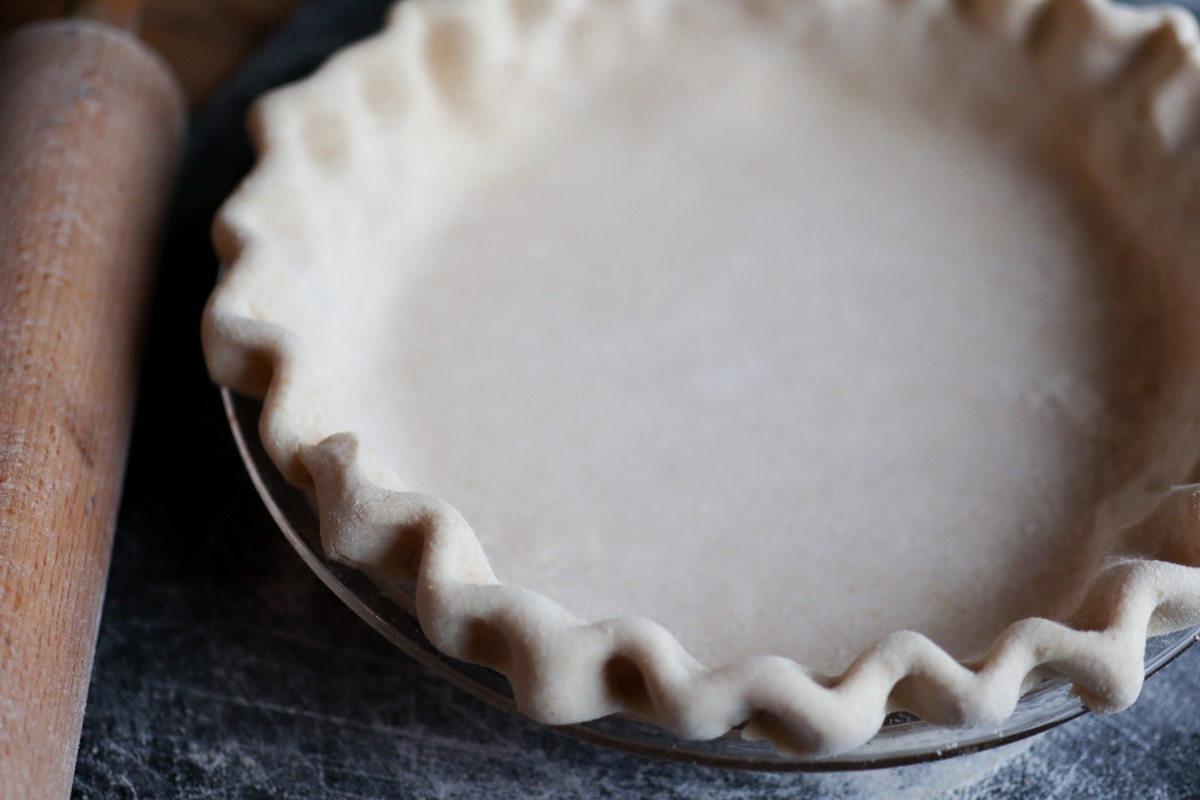
This recipe doesn’t contain any instructions for baking, and that was pretty typical of mince-meat recipes, since you generally would have been making up a big batch for the winter’s baking, and not actually baking a pie with it until at least a full day later.
It’s a good plan to do the same, and let this sit for 24 hours or more before baking it, so the flavors have a chance to meld.
This apple mince-meat recipe is enough for 3 large, deep pies, or 4 regular 9″ ones.

A few baking notes.
My go-to crust recipe is this one.
I generally bake a mince pie at 350°, and that worked well here. It doesn’t take as long to bake as that pumpkin pie we made a couple weeks ago…about 45-50 minutes works well for this one, maybe just a tad longer if it’s especially deep.

Serving the pie
Any traditional mince-meat pie wants to sit and cool before being re-warmed and served. If you serve this hot, right out of the oven, it’s going to be very wet and sloppy for dishing.
You don’t want to serve it cold, or at room temperature, because even though the suet was finely pounded and has well dispersed though the pie, it’s going to feel like there are very fine shavings of candle in your mouth, if you do.
The best way to serve this is to make it several hours, or even a full day, before it’s wanted, then warm it up right before serving.
Storing the extra mince-meat
Historically, this was stored in a cool place for up to a few months. Keeping modern food safety practices in mind, my approach to a recipe like this one, is to store it in the fridge if using within a few days, or freeze it in vacuum-sealed bags that hold the correct amount for a single pie.

It’s getting cold here in Maine. Hot oatmeal for breakfast, and hot chocolate after school, has become our routine, with lots of reading by the wood stove in the evenings. It’s cozy season.
A reader asked me last week for a good 1800’s “roll-out” gingerbread recipe, and I think that’s a wonderful idea…just what the season calls for. That one will be coming up soon!
Until next time, ~ Anna
📖 Recipe
Ingredients
- 2 lbs. apples pared and chopped.
- ¾ lb. beef suet cleared of strings and powdered.
- 1 lb currants.
- ½ lb raisins seeded and chopped.
- ½ lb sultana raisins.
- ¼ lb citron cut into shreds.
- 1 lemon juice and grated rind.
- 1 tablespoon cinnamon.
- 1 teaspoon cloves.
- 1 teaspoon mace.
- 1 tablespoon allspice.
- 2 lbs. brown sugar.
- .5 pint best brandy.
- 4 oz wine.
- 2 teaspoon salt.
Instructions
- Pack down in a stone jar, with close cover and keep in a cool place.
If you liked this recipe, here are some others you may enjoy:

CrazyCatLady says
5 pints of brandy!!!!! seriously
Anna says
Half a pint.
“.5” not “5”
That is the way the recipe card app formatted it, rather than “1/2”, which perhaps you are more used to?
In the written-out recipe and the photo from the book it’s pretty clear, but perhaps I should switch to only fractions for measurements in the printable recipes, for those unaccustomed to decimal measurements.