
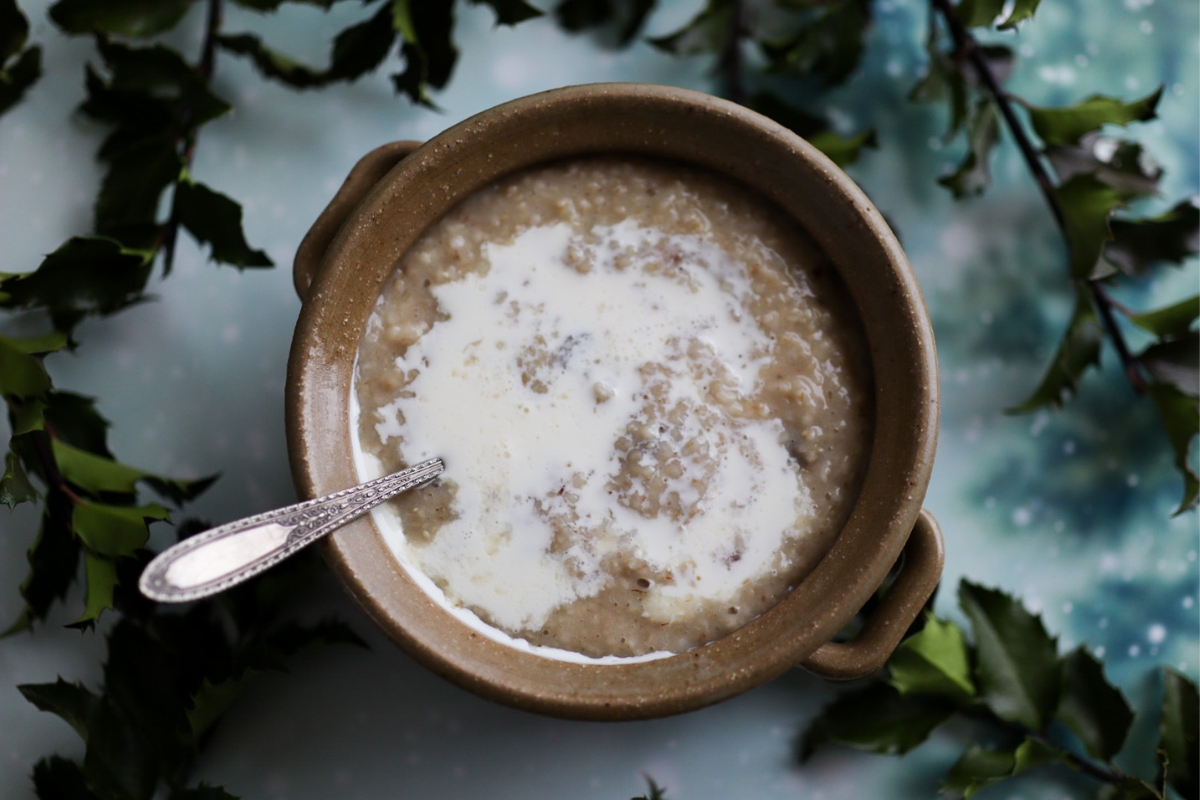
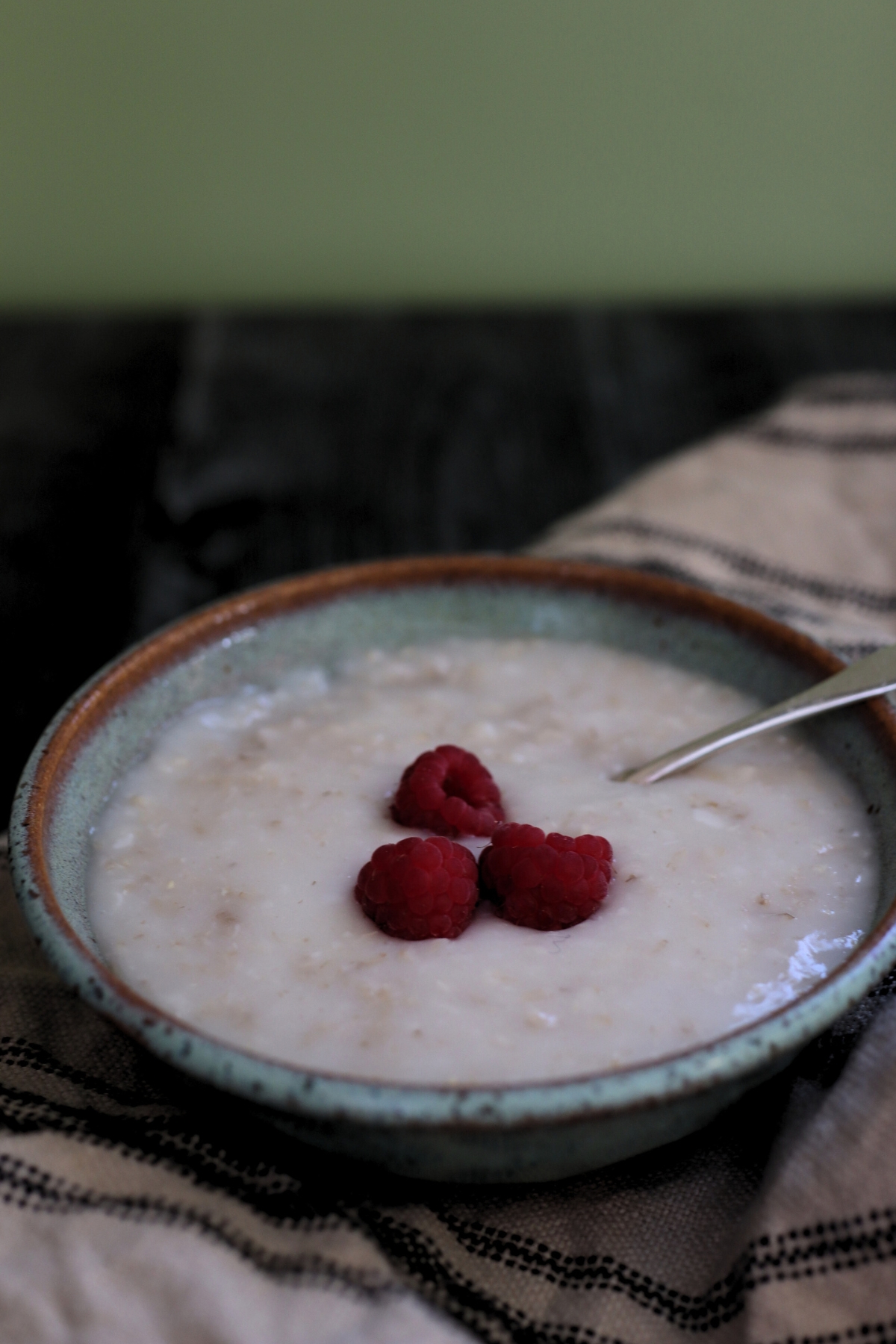
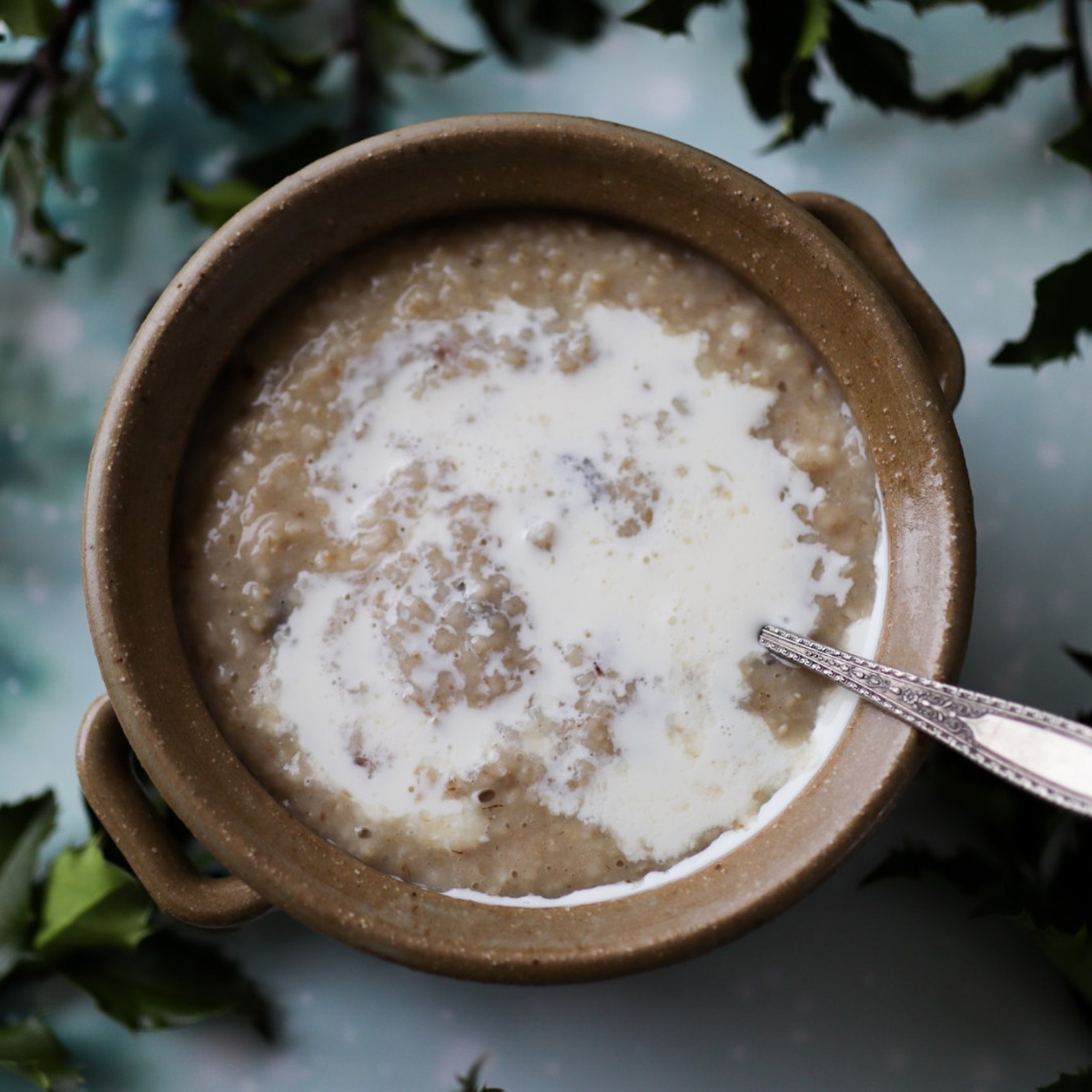
This classic 1800’s method for cooking oatmeal is not quick, but the resulting porridge is light and uniform in texture, almost fluffy, with a pleasant and wholesome flavor.
Dear friends ~
The power is back on, and we have another 9 inches of snow outside. Winter is good and here. Missed y’all yesterday while the power was out, so instead of a Tuesday tip, I’m sending what I was working on when the lights went out…everything I’m learning about 1800’s oatmeal.
Until last week, I thought of oatmeal as a quick and hearty breakfast food.
And then I read the 1800’s rules for making oatmeal. Let me tell you, “quick” has nothing to do with it. We’re talking 2+ hour cooking times.
But here’s the thing. Now that I’ve tried the 1800’s methods with multiple types of oats (see the cooking notes below the recipes), there is no going back. Those cookbook authors were right. I can’t make oatmeal on school-days now that I know what it’s capable of tasting like–because heaven knows I am not getting up to start breakfast at 5am.
Thank goodness for snow days.
~ Anna
The Appledore Cook Book, 1883
OATMEAL
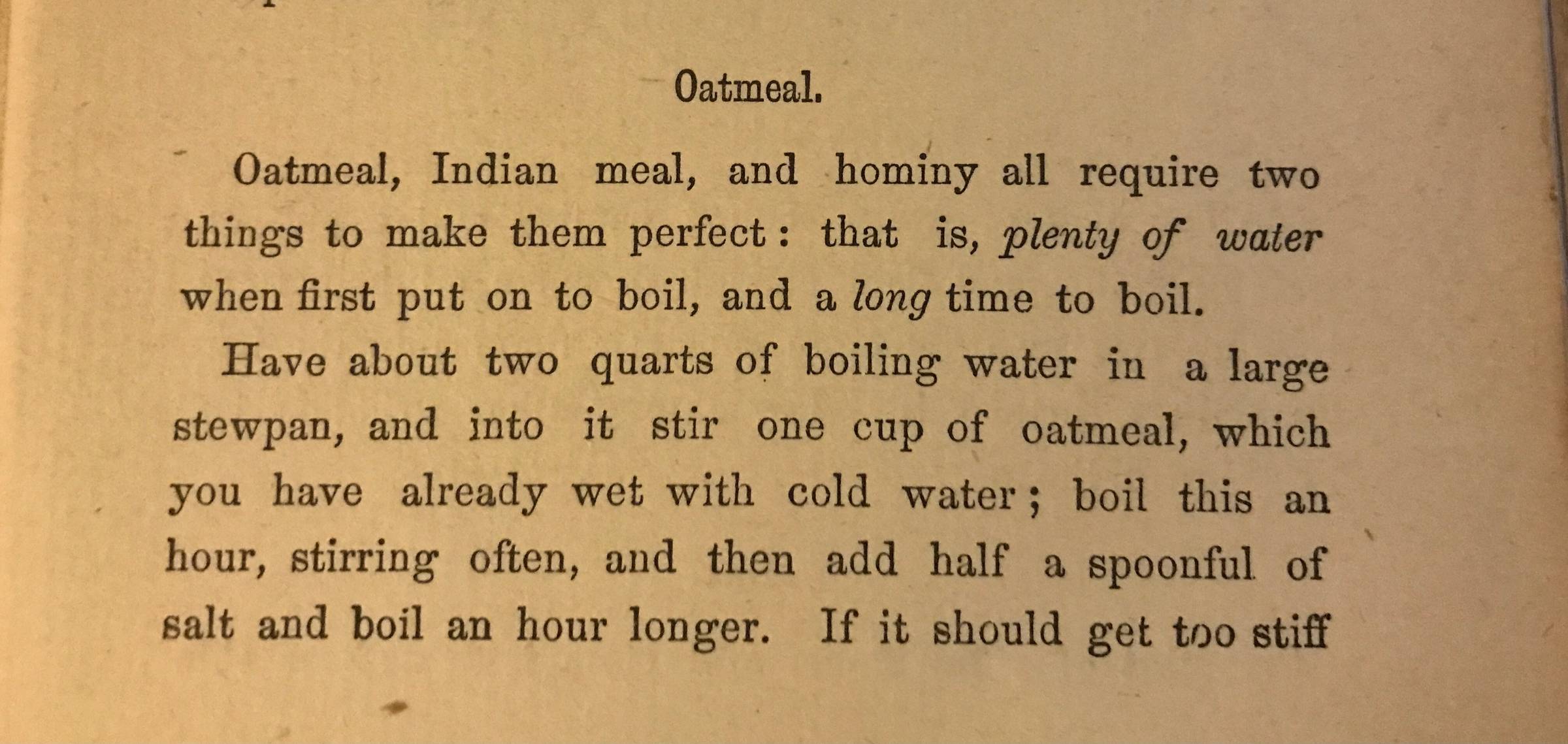
Oatmeal, Indian meal, and hominy all require two things to make them perfect: that is, plenty of water when first put on to boil, and a long time to boil.
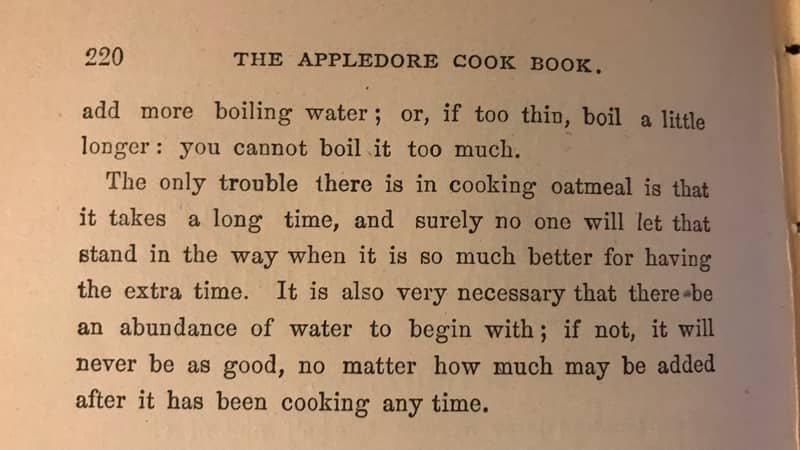
Have about two quarts of boiling water in a large stewpan, and into it stir one cup of oatmeal, which you have already wet with cold water; boil this an hour, stirring often, and then add half a spoonful of salt and boil an hour longer. If it should get too stiff add more boiling water; or if too thin, boil a little longer: you cannot boil it too much.
The only trouble there is in cooking oatmeal is that it takes a long time, and surely no one will let that stand in the way when it is so much better for having the extra time. It is also very necessary that there be an abundance of water to begin with; if not, it will never be as good, no matter how much may be added after it has been cooking any time.
Here’s a photo of the recipe as it appears in the cookbook:
SOME EXTRA-LONG COOKING & HISTORY NOTES TODAY:
What kind of oatmeal were they cooking in the 1800’s?
I have spent more hours reading about grains of the 1800’s this week than I want to admit. Who knew 1800’s breakfast cereal could be so interesting.
Here is my understanding, and do let me say that I am not an expert (yet) on this topic. In the first half of the 1800’s, oatmeal would have been stone ground, so let’s talk about that first.
Stone ground oatmeal.
This is the most historic form, and what people would have been cooking in the earlier decades of the 1800’s. For example, here in my little Maine town, we had a grist mill that opened in 1789. A woman living where I do would almost certainly have been cooking stone ground oatmeal, milled between large millstones. That mill was in operation until about the turn of the century, so it’s very likely that locally-milled, stone-ground oatmeal would have been what I’d have been cooking, had I lived here during any part of the 1800’s.
You can still buy stone ground oatmeal, and if you don’t have a local mill like I do, Bob’s Red Mill Scottish Oatmeal is stone ground on 100+ year old stones, and is a really good option.
Rolled Oats.
With the beginnings of the industrial revolution, the manufacture of cereals began (like so many things) to move toward cities. Rolled oats, or “oat flakes” became a ready option. Interestingly, these were not quite the same as the rolled oats we have today, since the process for making rolled oats without heating, kiln-drying, or steaming them before rolling, wasn’t patented until 1900. (You can read the whole patent here, which includes an explanation of why the new process allowed for a more healthful, less-processed, rolled oat.)
So as I understand it, rolled oats of the 1800’s were actually more processed than our “old-fashioned” oats of today, but were definitely in popular use. Any “old fashioned rolled oats” would be our closest approximation to the rolled oats that many women would have opted to cook in the later half of the 1800’s.
Steel-Cut Oats.
Like rolled oats, these were made with a more industrial process than stone ground oats, and were found in the later decades of the 1800’s. I do not have a specific text to cite that says this clearly, but my impression is that steel-cut oats seem to have been considered a less-desirable option than stone-ground or rolled. You can find steel cut oats readily, and these days they’re often marketed as “Irish” oats, (as opossed to “Scottish” oats, which are likely to be stone-ground.)
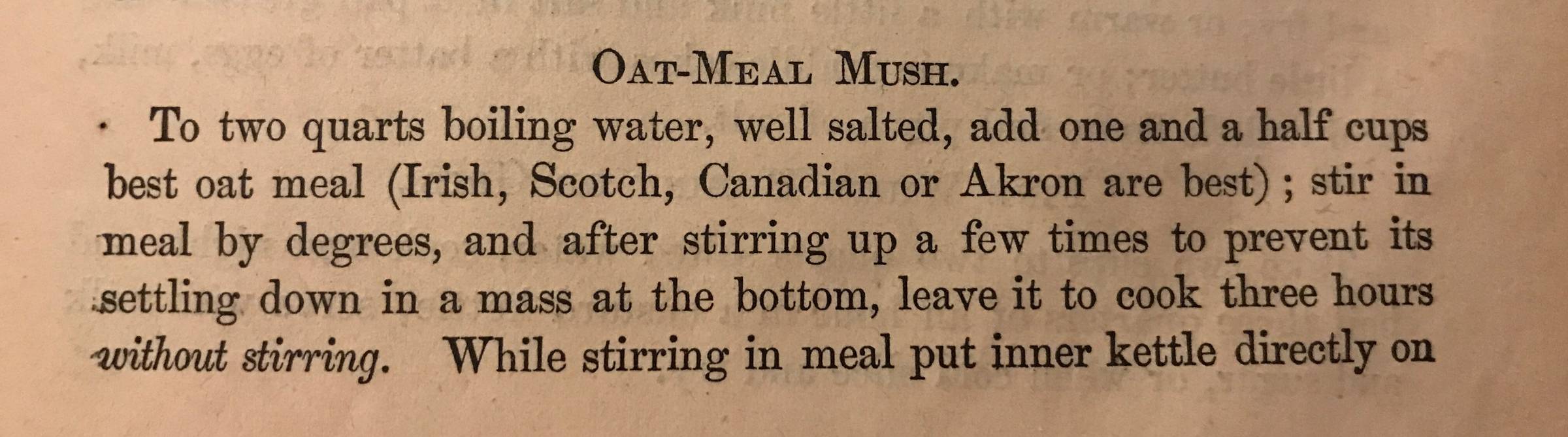
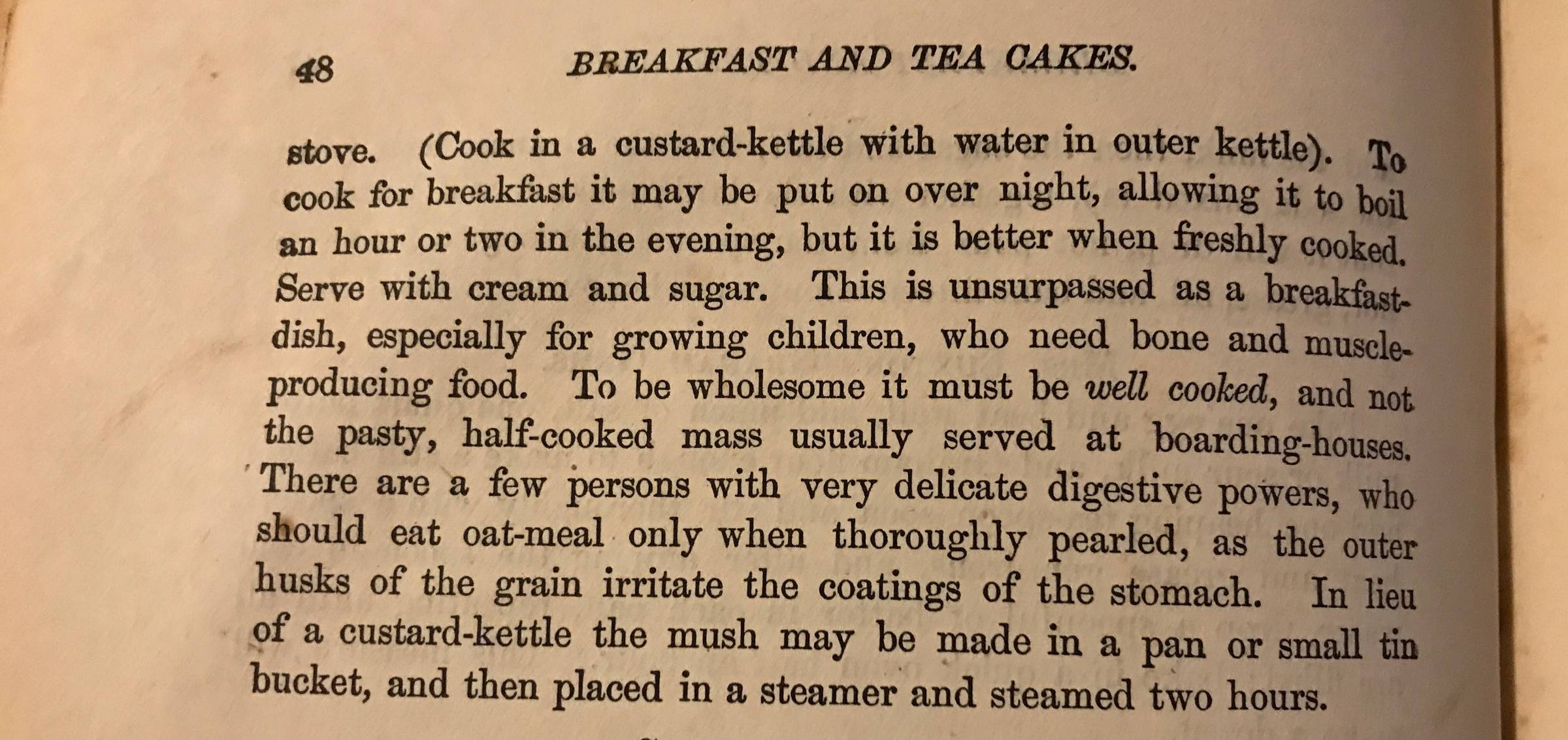
Many women of the 1800’s may have had only one type of oatmeal available, depending on the decade in which they lived, and whether they lived rurally or in a city. But toward the end of the 1800’s, it’s possible that any one of these types of oatmeal might have been used.
SO. In many ways, there is no one right choice for re-creating an authentic bowl of 1800’s oatmeal.
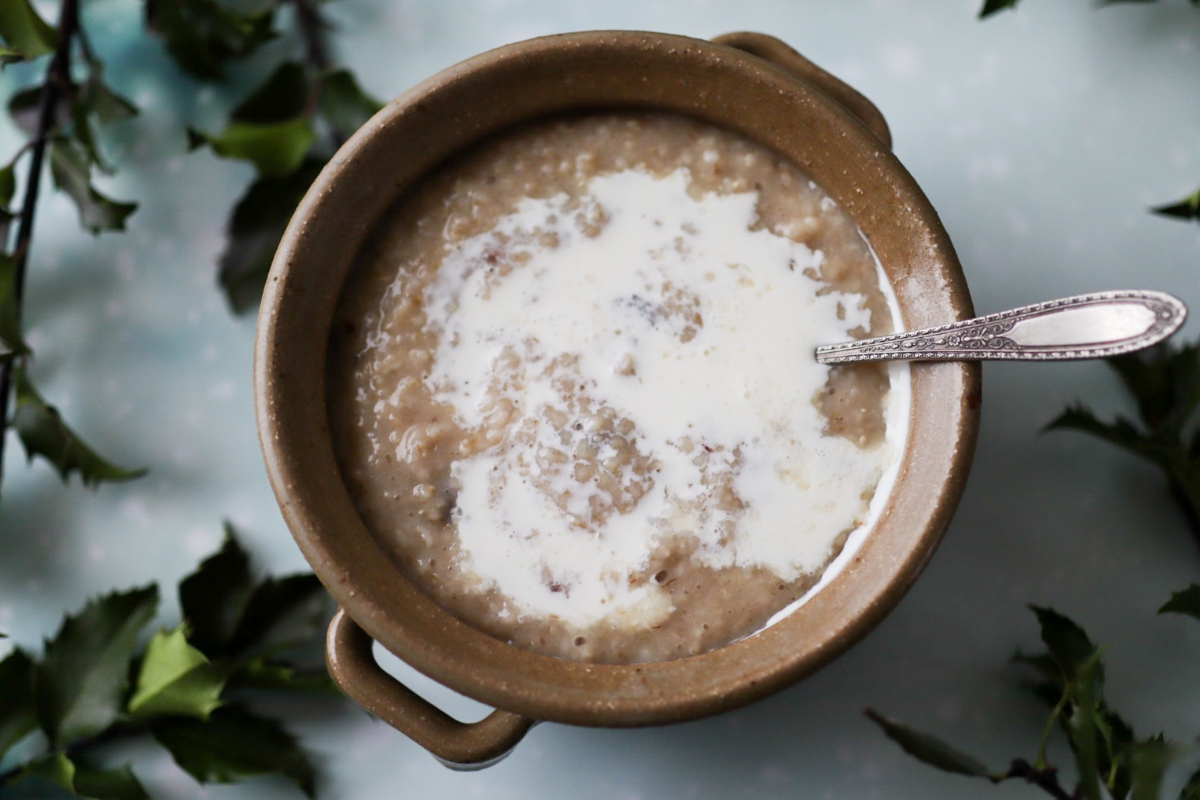
And, of course, I had to try them all. By the end of two hours cooking time, you would think you wouldn’t be able to tell the difference in anything that started out as OATS. But you can.
I expected rolled oats to turn into miserable gruel with a two hour cooking time, but found the lighter, looser texture of the finished porridge to be so much more enjoyable than the way I’ve been making it all my life (following the box directions that call for ten minute cook time).
What I didn’t expect, was for a fuller, slightly nutty flavor to develop with the longer cooking time. This is just a better tasting oatmeal when you take two or more hours to make it.
The steel cut oats really reminded me of cream of wheat after two hours of cooking, and felt like they had almost a gummier texture, even when cooked according to the same instructions.
The stone ground oats were the only type of oatmeal I’d never worked with before, so had no point of reference. These were my favorite. The texture was smooth and loose, and rather than the rustic “nuttiness” of the rolled oats (which I did love), these seemed to develop almost a sweetness of their own.
I cannot believe how long I have just droned on about OATMEAL, but friends, this has been an interesting week in the breakfast cereal department, and I have loved it.
Until next time, ~ Anna
As always, feel free to send me an email anytime, with recipe requests! Until next time, ~ Anna
📖 Recipe
Ingredients
- 2 quarts water
- 1 cups oatmeal
- ½ teaspoon salt
Instructions
- Have about two quarts of boiling water in a large stewpan, and into it stir one cup of oatmeal, which you have already wet with cold water; boil this an hour, stirring often, and then add half a spoonful of salt and boil an hour longer.
- If it should get too stiff add more boiling water; or if too thin, boil a little longer: you cannot boil it too much. The only trouble there is in cooking oatmeal is that it takes a long time, and surely no one will let that stand in the way when it is so much better for having the extra time. It is also very necessary that there be an abundance of water to begin with; if not, it will never be as good, no matter how much may be added after it has been cooking any time.
Nutrition
This recipe was originally shared in the 1800’s Housewife newsletter. Not on the mailing list? You can join here to receive full recipes with cooking notes straight to your inbox!
If you liked this recipe, here are some others you may enjoy:


Comments
No Comments