
This Delicious “Poverty Dinner” Cost 25 Cents in 1885. It’s one of my favorite recipes for preparing beef heart, and is still a frugal dinner recipe today.

Dear friends ~
One of my very favorite-ever cookbooks is a slim little paperback volume from 1885. It’s called “Twenty-Five Cent Dinners for Families of Six”, and it was written by Juliet Corson, founder of the New York School of Cookery.
She had a personal mission to educate the working-class women of New York City, helping them stretch every cent to feed their families well, on the tiniest of budgets.
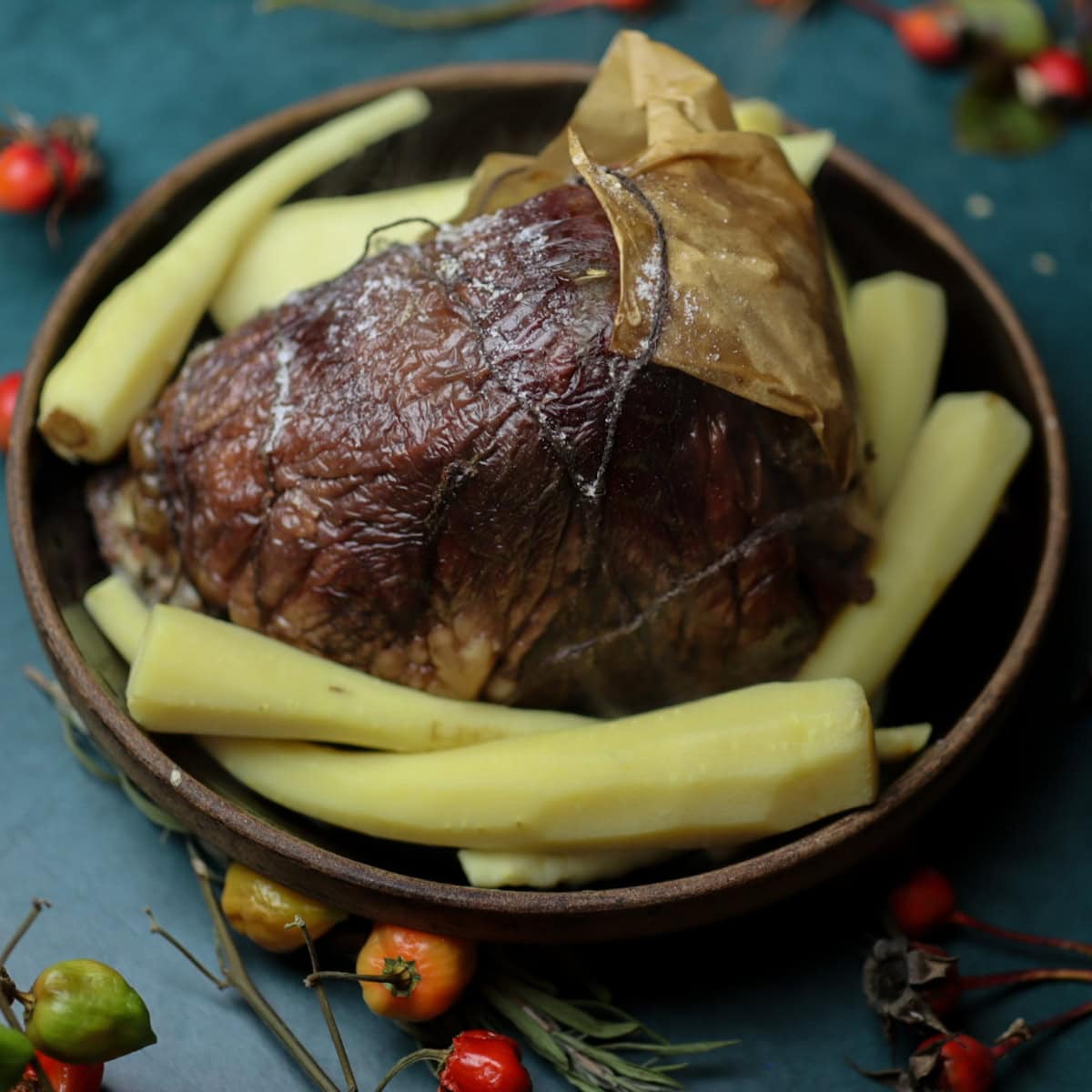
This theme feels pretty relevant right now, so I thought I’d share one of my favorite dinners from this little book, “Baked Heart”.
One thing I especially love about this book, is how Miss Corson painstakingly laid out the cost of each ingredient, for every recipe she shared.
In 1885, a whole beef heart cost just 10 cents. Where I live, beef heart is still one of the more affordable cuts, even though it’s gone up from $2.28/lb to $3.99/lb over the last couple of years. For grass-fed beef, that’s still pretty affordable, though I miss the old price, for sure.
This is actually one of the more expensive dinners in the book, using up the full twenty-five cent maximum dinner cost, and it’s the sort of dish that would likely offer leftovers for another meal.
I used the leftover bits from our baked heart to make an 1800’s casserole called Father Adam. It’s a delicious way to stretch those leftover meat scraps into another meal, and it’s always a favorite with the kids!
~ Anna
Twenty-Five Cent Dinners For Families of Six, 1885
BAKED HEART
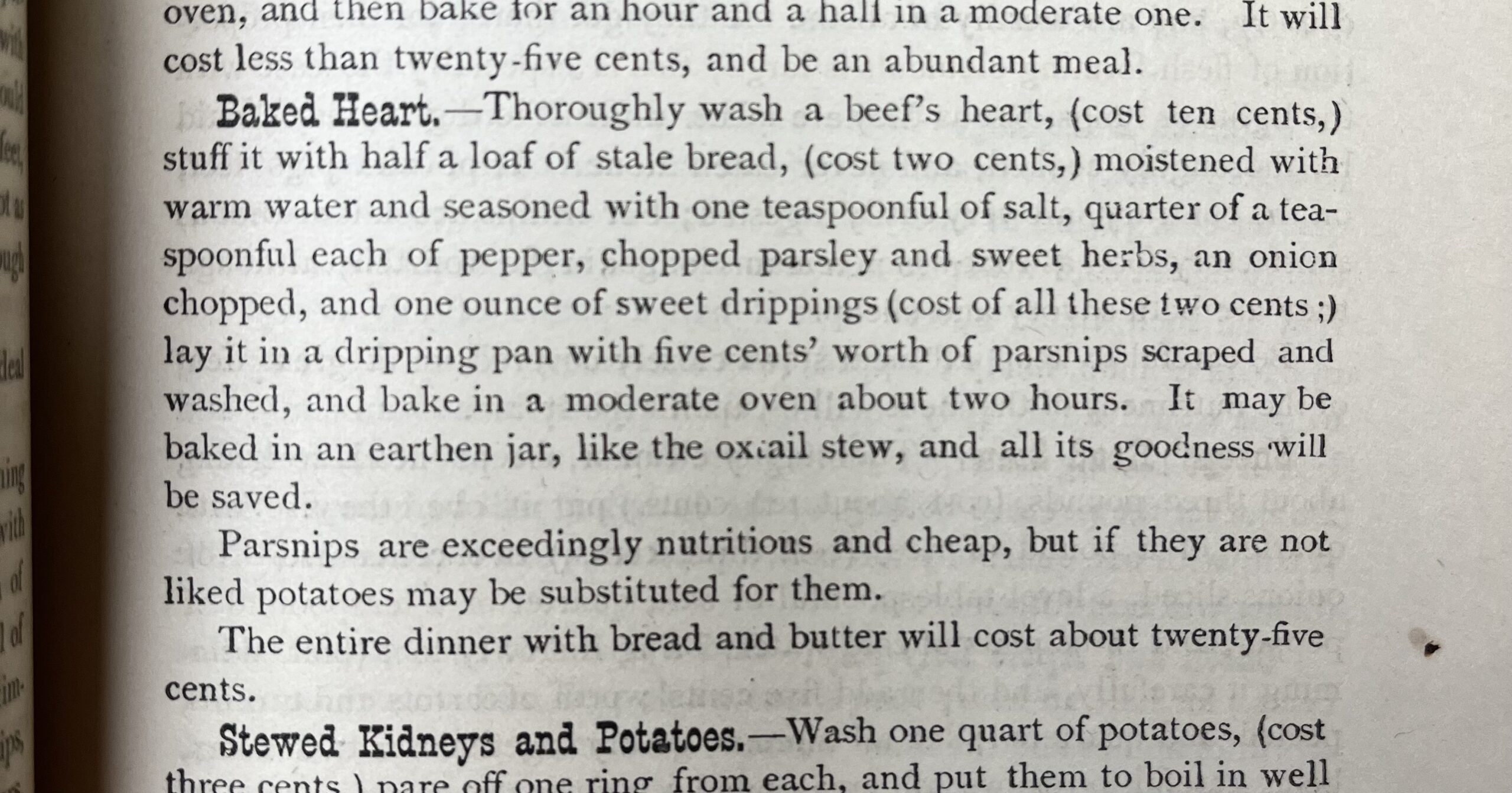
Thoroughly wash a beef’s heart (cost ten cents,) stuff it with half a loaf of stale bread, (cost two cents,) moistened with warm water and seasoned with one teaspoonful of salt, quarter of a teaspoonful each of pepper, chopped parsley and sweet herbs, an onion chopped, and one ounce of sweet drippings (cost of all these two cents;) lay it in a dropping pan with five cents’ worth of parsnips scraped and washed, and bake in a moderate oven about two hours. It may be baked in an earthen jar, like the oxtail stew, and all its goodness will be saved.
Parsnips are exceedingly nutritious and cheap, but if they are not liked potatoes may be substituted for them. The entire dinner with bread and butter will cost about twenty-five cents.
Here’s a photo of the recipe as it appears in the cookbook:
A FEW COOKING NOTES:
This is such an easy dinner, it doesn’t take much explaining. Here are a few notes that might be helpful, though.
Sourcing a Beef Heart
If you have a good butcher counter at your grocery store, you might be able to get your hands on a nice beef heart just by asking. In my experience, whole beef heart isn’t something that’s generally available with the usual selection of cuts.
A better bet might be to check the local farm stands and butcher shops. Often they have wonderful, pastured beef and sometimes the organ meats and “cheap cuts” can be quite a lot less costly than what you’d pay at the store.
That loaf of bread
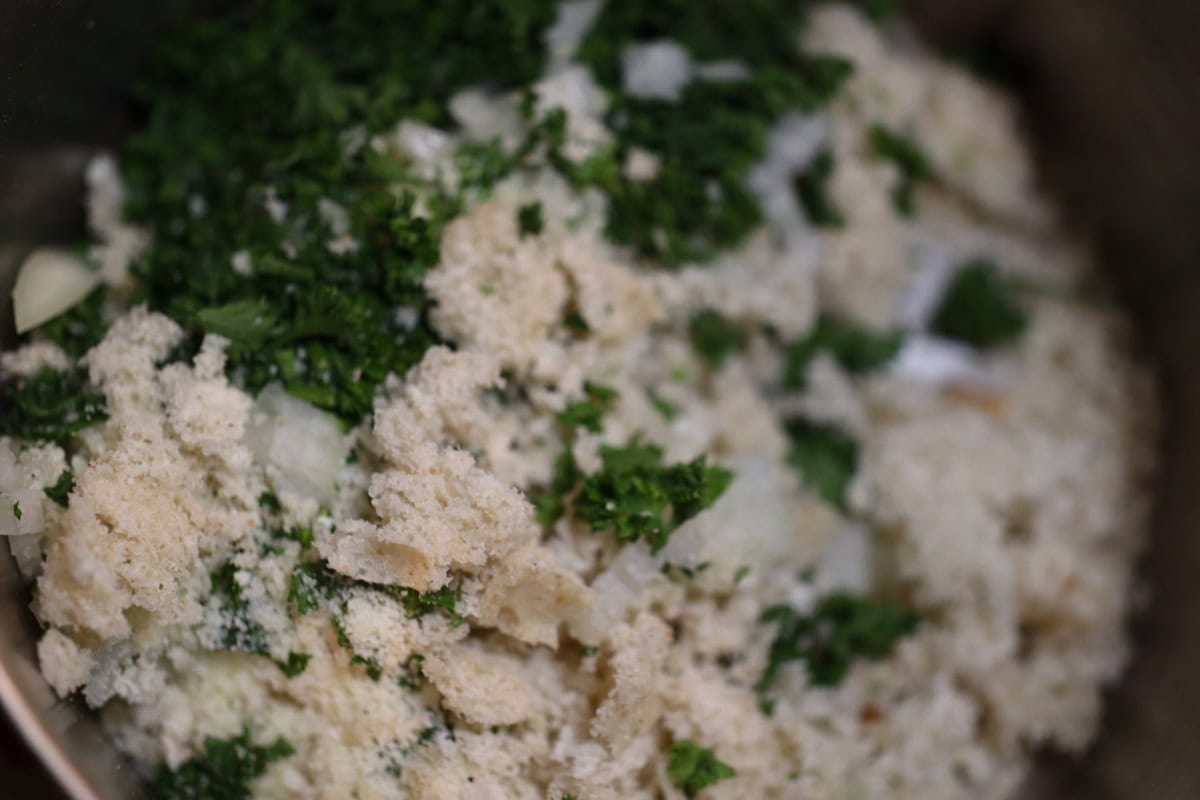
Any bread that you have on hand will work just fine. You’ll want about 2-3 cups of loose bread crumbs for this stuffing.
Those sweet herbs
In addition to the parsley, the recipe calls for sweet herbs. Thyme, summer savory, and sweet marjoram, would all be great options. You can tell I went way overboard with the parsley this time around. I was a little absentminded, getting dinner on quickly, and I really do love parsley!
The sweet drippings
In a frugal 1800’s household, nothing gets wasted, so if you had any leftover drippings from other meat dishes you’d made in the day or two prior to baking this recipe, you’d have saved those and would use that for making the stuffing.
Other contemporary cook books generally ofter the suggestion of butter as a substitute for drippings, if you don’t have any available, and that works very well here. If I’m substituting butter, I use about 2 tablespoons, melted.
You won’t see that suggestion in this cookbook, because butter was a costly ingredient that needed to be used sparingly, while drippings were a frugal leftover, just waiting to be incorporated into another meal, like this one.
How hot should the oven be?
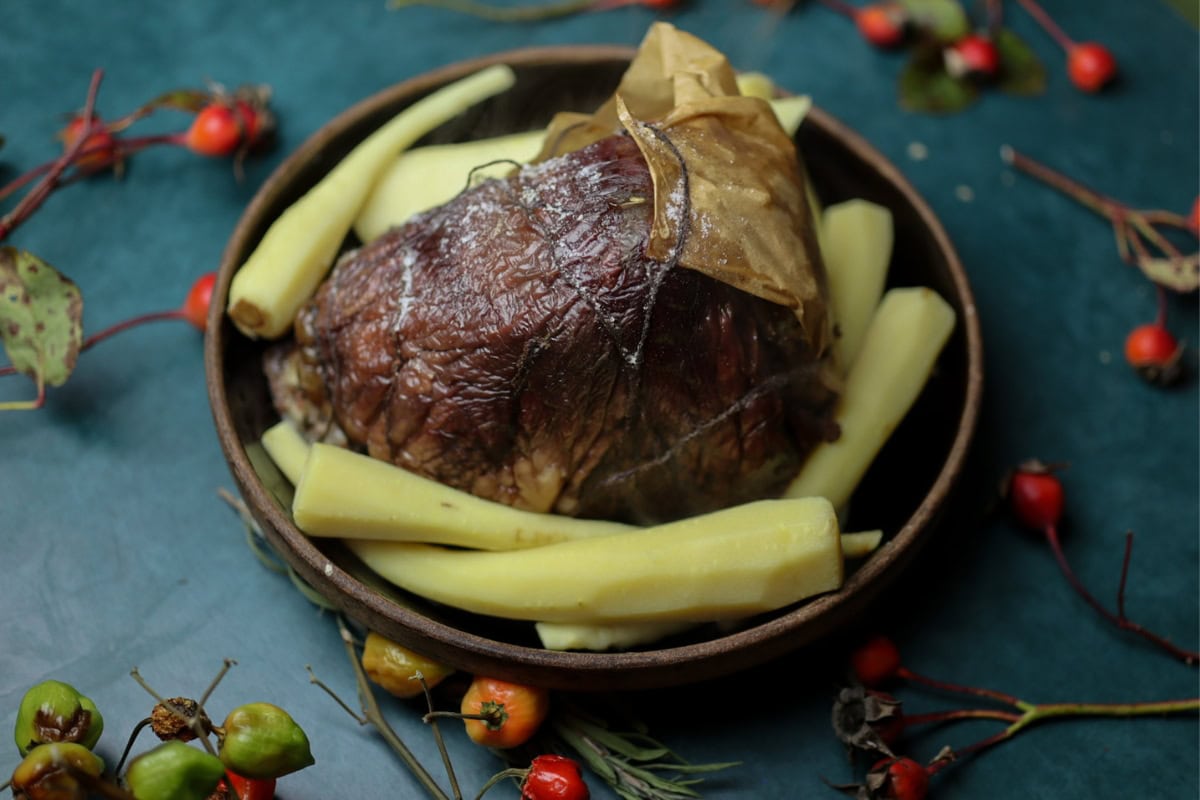
I find that about 325° F works well, and matches the cooking time of “about two hours”. The benefit to the slightly low cooking temperature, is that the parsnips bake thoroughly and are done at the same time as the heart.
What’s with the paper in the pictures?
I often compare similar recipes from other 1800’s cookbooks, and many of the other baked stuffed heart recipes call for tying up the heart, and putting a piece of paper over the open end to keep the stuffing in.
This recipe does not use a bit of string or paper, since there wasn’t an extra penny to spend on things that weren’t strictly necessary. Having made this a few times though, I do like tying up the heart with a bit of parchment paper, to help keep the stuffing inside as it bakes.
How to serve it
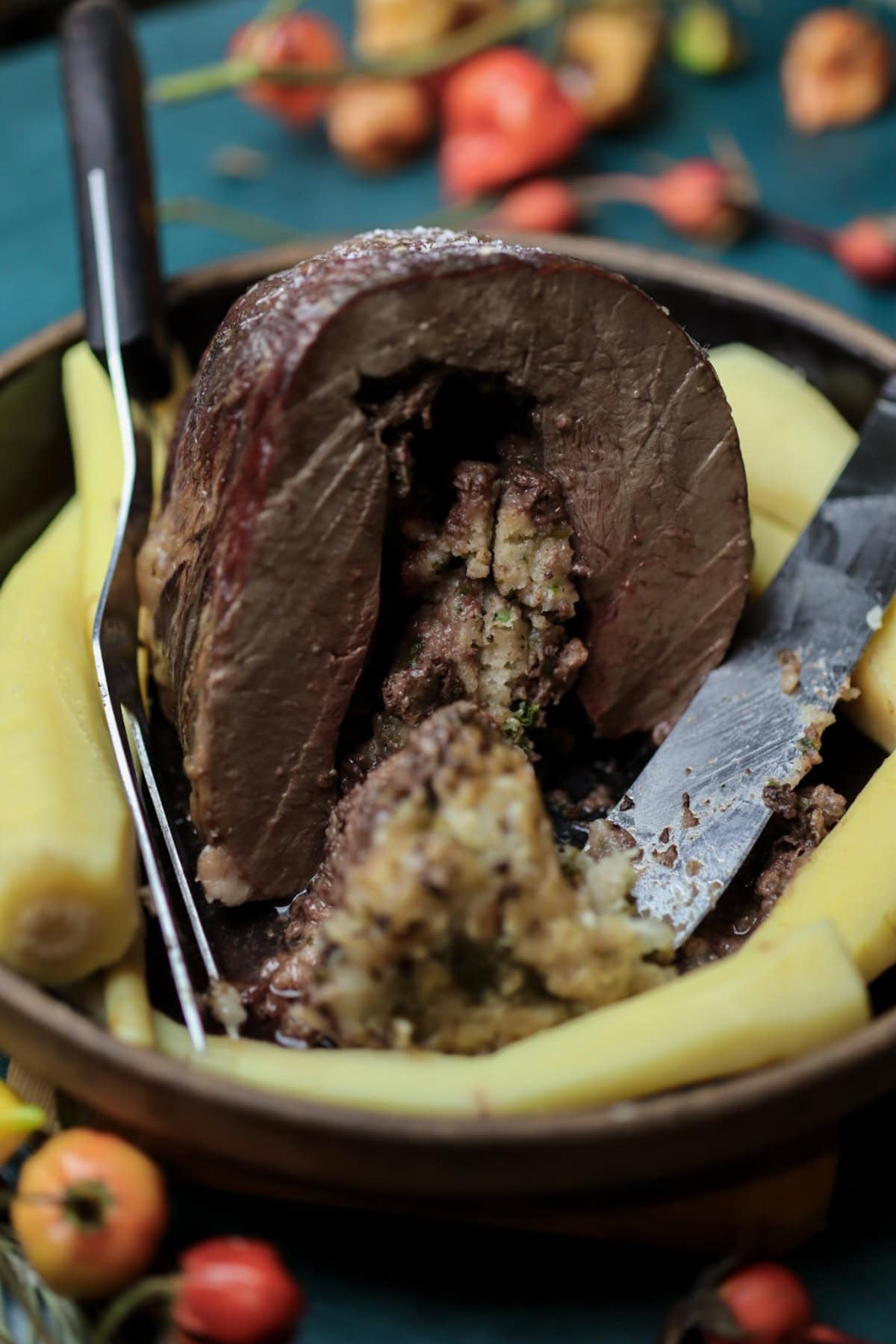
I love following guidance of the recipe, and serving it with parsnips and homemade bread. You can easily slice the heart cross-wise to serve it in slices, along with a portion of that lovely stuffing.
I like to thicken the drippings from the baking dish by simmering them with a little flour, to make a nice gravy to go with it. And if you make Father Adam with the leftover beef, any leftover gravy will come in handy!
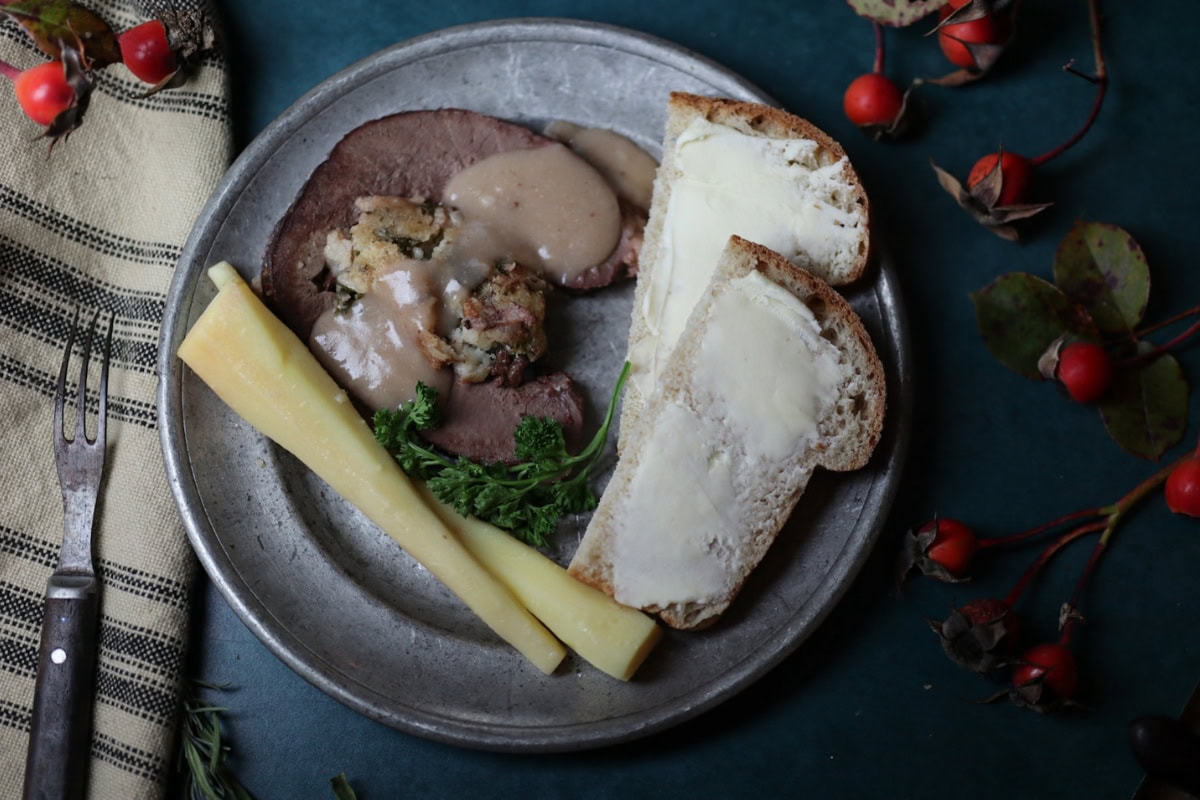
Beef heart isn’t a favorite with everyone, and the texture can take a little getting used to. I love it though, and really enjoy this way of preparing it. If you give it a try, I hope you like it as much as I do!
In other news, I’ve been trying something new this week. Is anybody on TikTok? I started an account, and have been working on learning how to make videos. If you’re over there, please come find me, I’d be grateful for the follow!
I think I’ve successfully embedded one of my videos below, but you can also find me here. Feel free to go vote on what we should make next…a baked Apple Pudding, or Brown Betty!
Until next time, ~ Anna
As always, feel free to send me an email anytime, with recipe requests! Until next time, ~ Anna
This recipe was originally shared in the 1800’s Housewife newsletter. Not on the mailing list? You can join here to receive full recipes with cooking notes straight to your inbox!
If you liked this recipe, here are some others you may enjoy:


Comments
No Comments