
This delicious and simple cough syrup is one that won’t make you grimace. It’s also alcohol-free which is fairly unusual for period cough remedies, so you can share it with the kids!
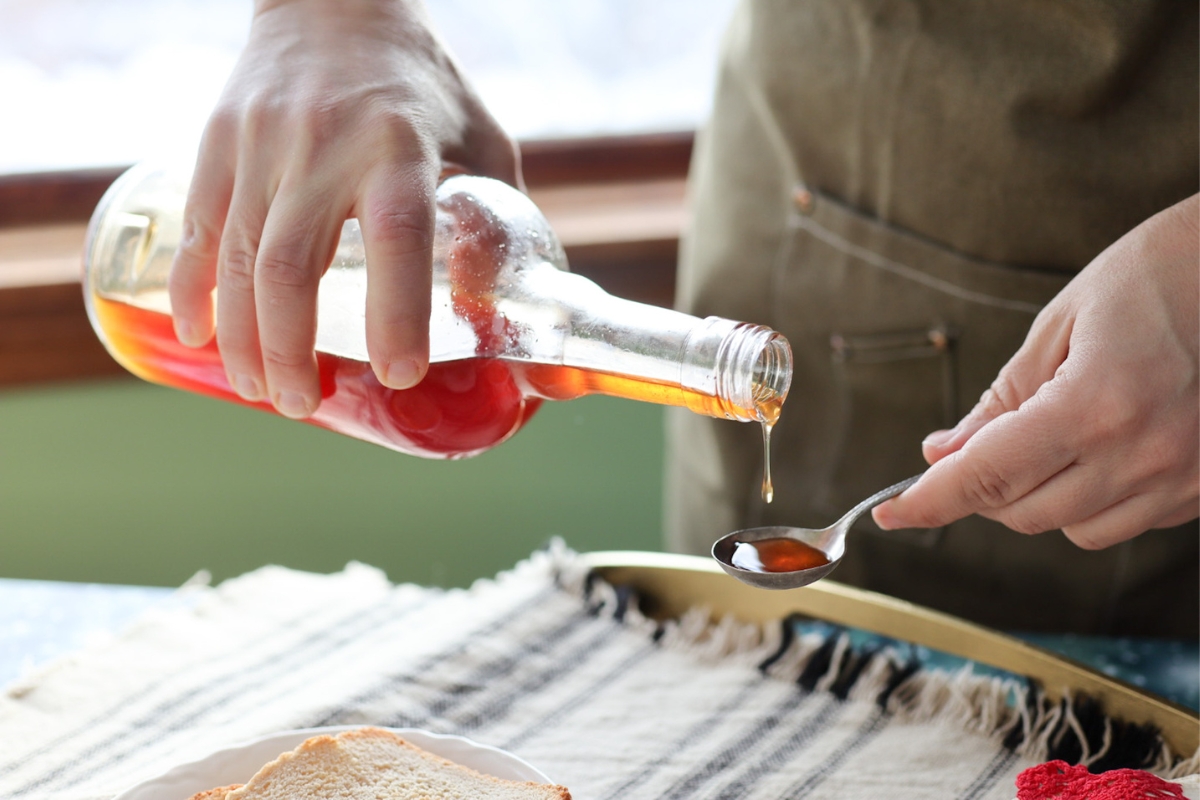
Dear friends ~
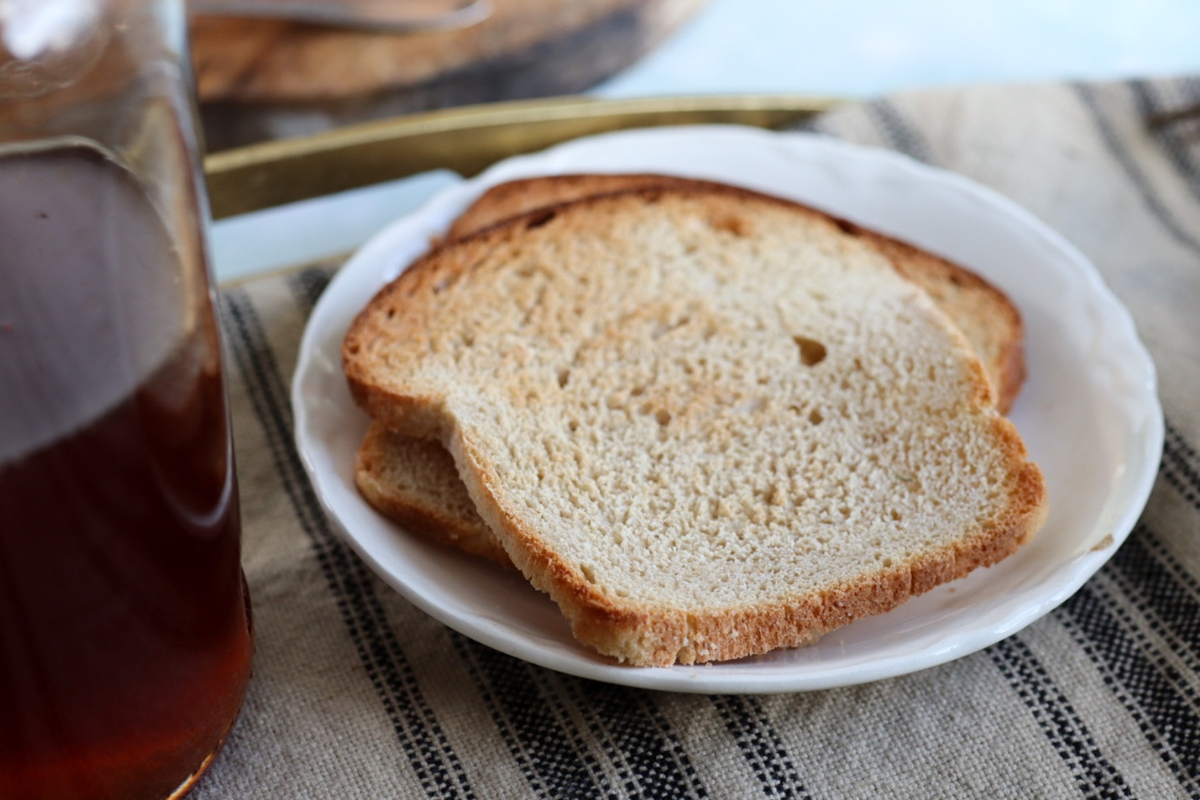
Well, I had intended to make a lovely batch of hard gingerbread and share that with you for today’s newsletter. As luck would have it though, my kids have been home sick this week, so we’ve been doing lots of soup and tea, and toasty slices of homemade bread, but not much in the way of sweets.
There HAS been a lot of coughing around here though, and I think we’ve gone through three big boxes of tissues in as many days.
It seemed an appropriate time to try one of the 1800’s cough syrup recipes I’ve had my eye on. Many of the cough remedies from the nineteenth century call for alcohol, opium, morphine, or other ingredients that range from “not for children” to “downright illegal”.
This simple little recipe requires no contraband, and doesn’t even call for spirits of any kind, so it’s one I could safely share with the kids. After two days of begrudgingly imbibing a common, over-the-counter purple concoction, both kids declared this “SO much better!” and “Delicious!”
“1800s cough medicine is…honey?” was also a first impression from one of them. While the efficacy of this has yet to be tried (I just made it this morning), I can say that it goes down easy, and is so very soothing. It’s worth calling one’s cough “very troublesome” just to score that double-dose!
Every-Day Cookery for Every Family, 1868
SYRUP FOR A COUGH
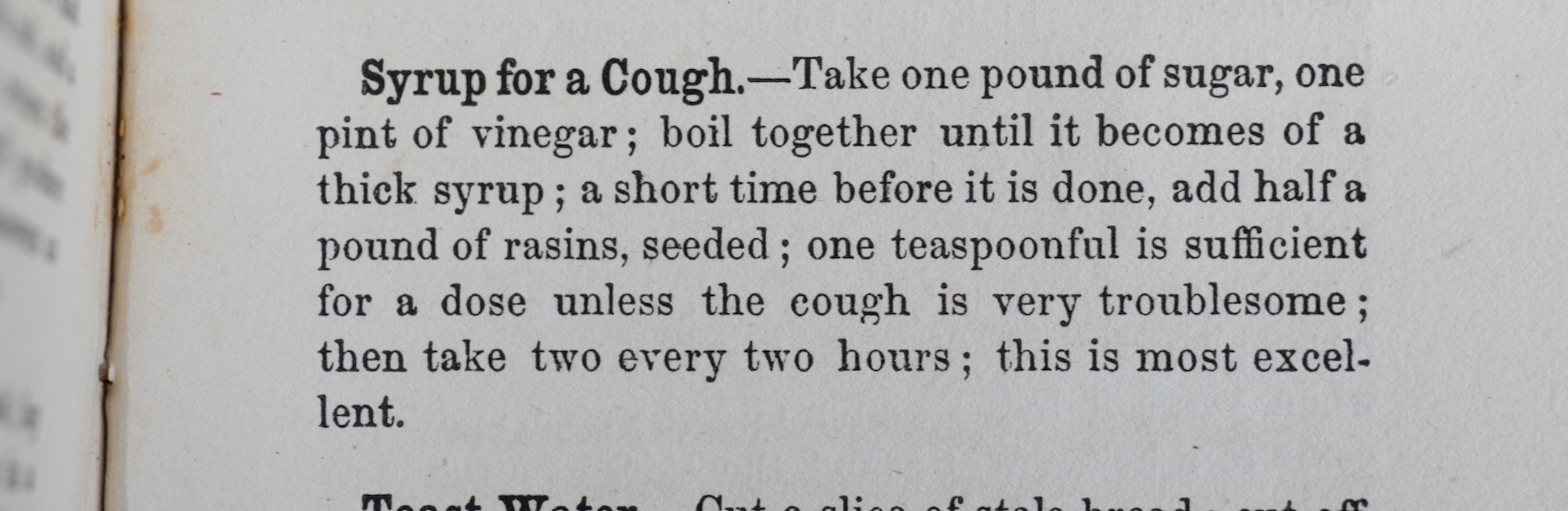
Take one pound of sugar, one pint of vinegar; boil together until it becomes of a thick syrup; a short time before it is done, add half a pound of raisins, seeded; one teaspoonful is sufficient for a dose unless the cough is very troublesome; then take two every two hours; this is most excellent.
Here’s a photo of the recipe as it appears in the cookbook:
A FEW COOKING NOTES:
This is a quick and easy remedy, so not many notes today! My nine-year old (runny nose and all), was today’s photographer. Even if it’s because of illness, extra “home days” together are special.
What kind of vinegar to use?
This recipe doesn’t specify, but most other contemporary medicinal recipes that call for vinegar specify apple cider vinegar, so that’s what I went with. I used Bragg’s raw apple cider vinegar, and liked the result it gave me.
How long to boil this?
Much depends on the temperature, and even the size and shape of your pot, in determining exactly how long your syrup will take to boil. I found that with maintaining a very slow simmer, in a two-quart pot, this recipe took me about 1.5 hours from start to finish.
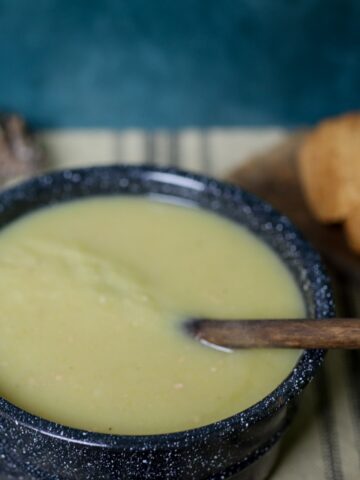
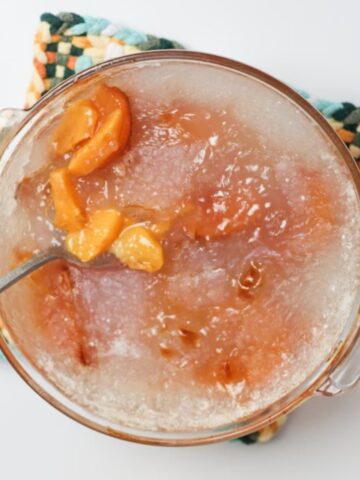
You can see in the photos below the progression from start to finish, in the appearance of the mixture. It starts off light in color, with loose, round bubbles that sit on top of the liquid as it starts to boil. As the mixture thickens to a syrup, it darkens, and bubbles create thin bubble “streams” as they make their way up from the bottom of the pot.
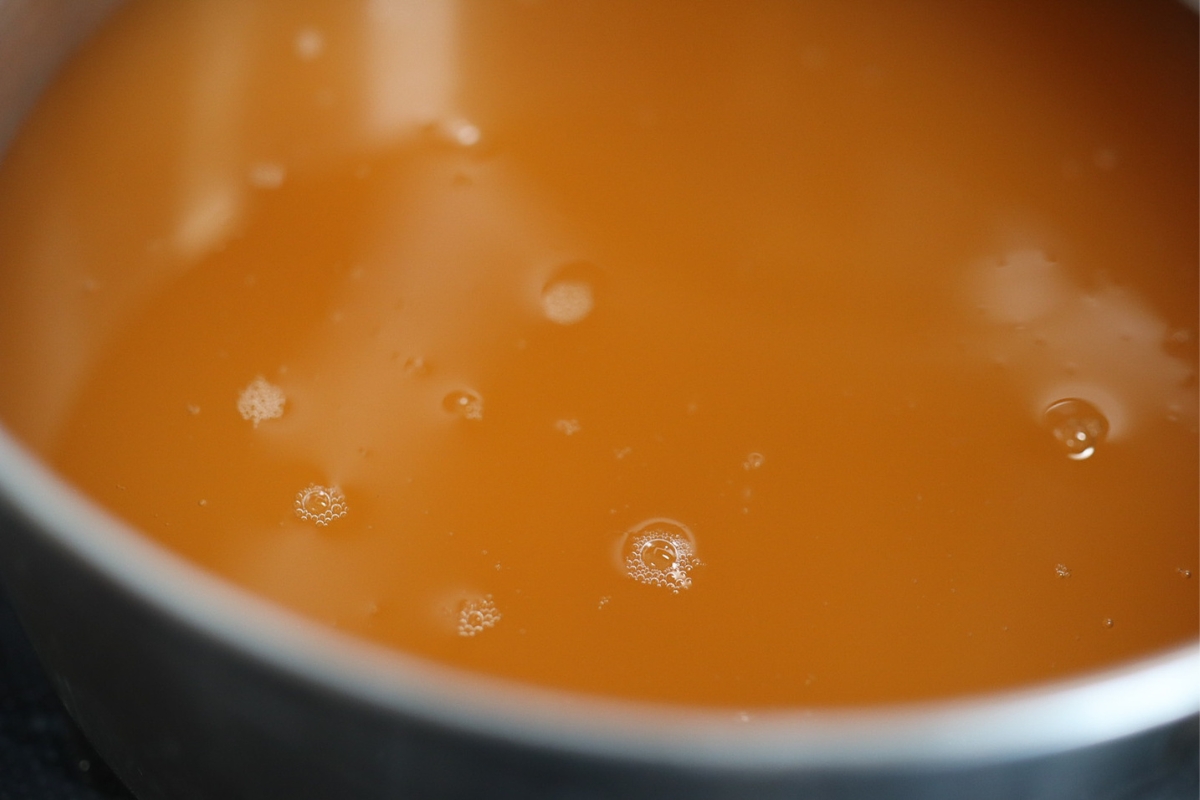
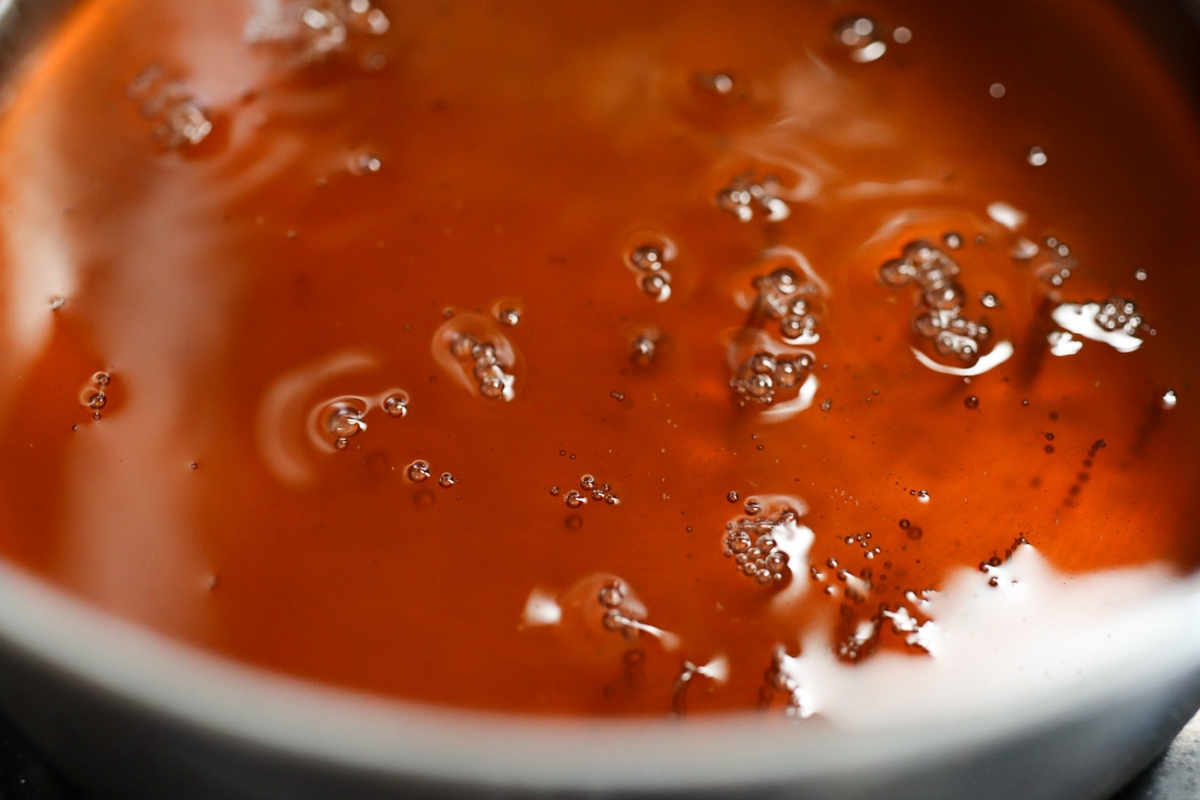
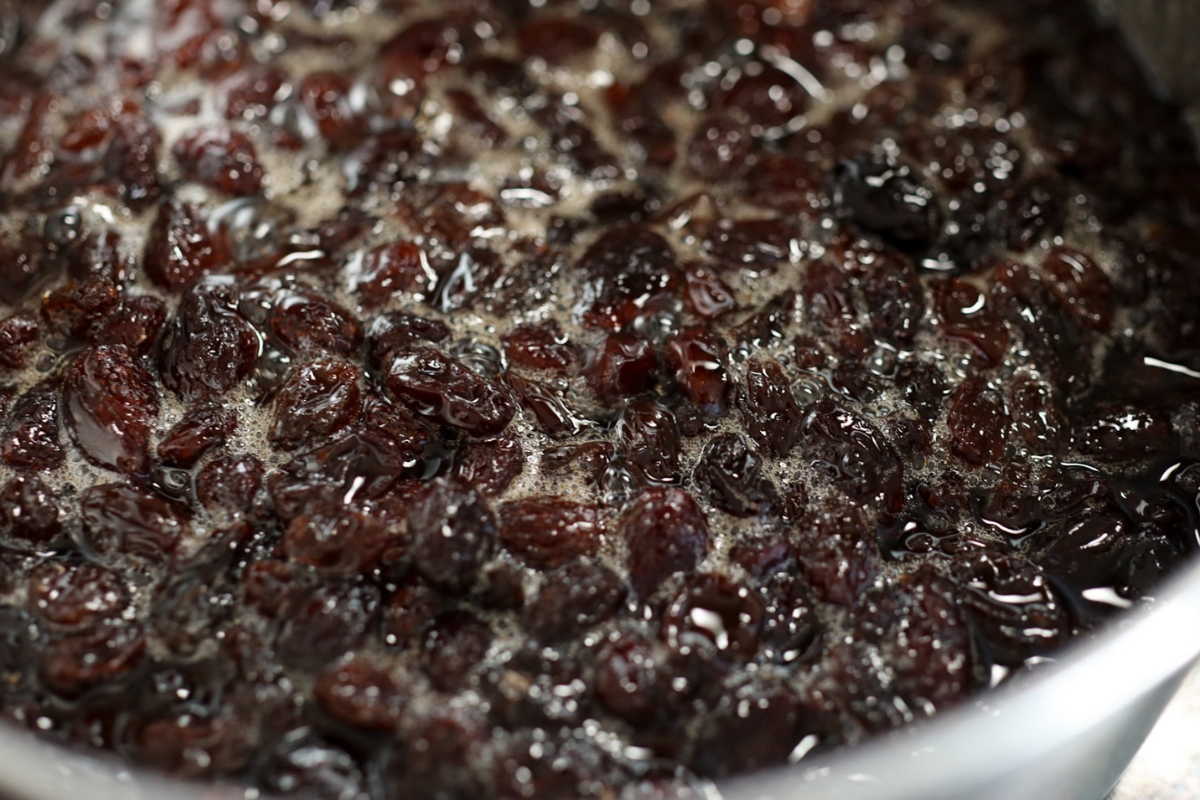
One hour was enough to make the syrup fairly thick, but not quite thick enough for the finished remedy. At this point, I added the raisins, and then simmered very gently for another 20 minutes, until the mixture was golden from the coloring of the raisins, and a little thicker.
To strain, or not to strain?
You will notice that the recipe does not call for straining out the raisins. I’m not prone to assuming that non-existent instructions are “missing”, but in this case I feel fairly confident that we are meant to strain out the raisins before bottling.
I haven’t found another cough medicine recipe that doesn’t call for straining out any “stuff” before bottling, so I’m thinking that in this case, the step of straining may have seemed obvious enough to not require inclusion.
You should definitely feel free to make your own conclusion here. For myself, I did go ahead and strain out the raisins, first with a fruit strainer, then by putting the syrup through a fine mesh sieve to remove any small fragments.

Bottling and Storage
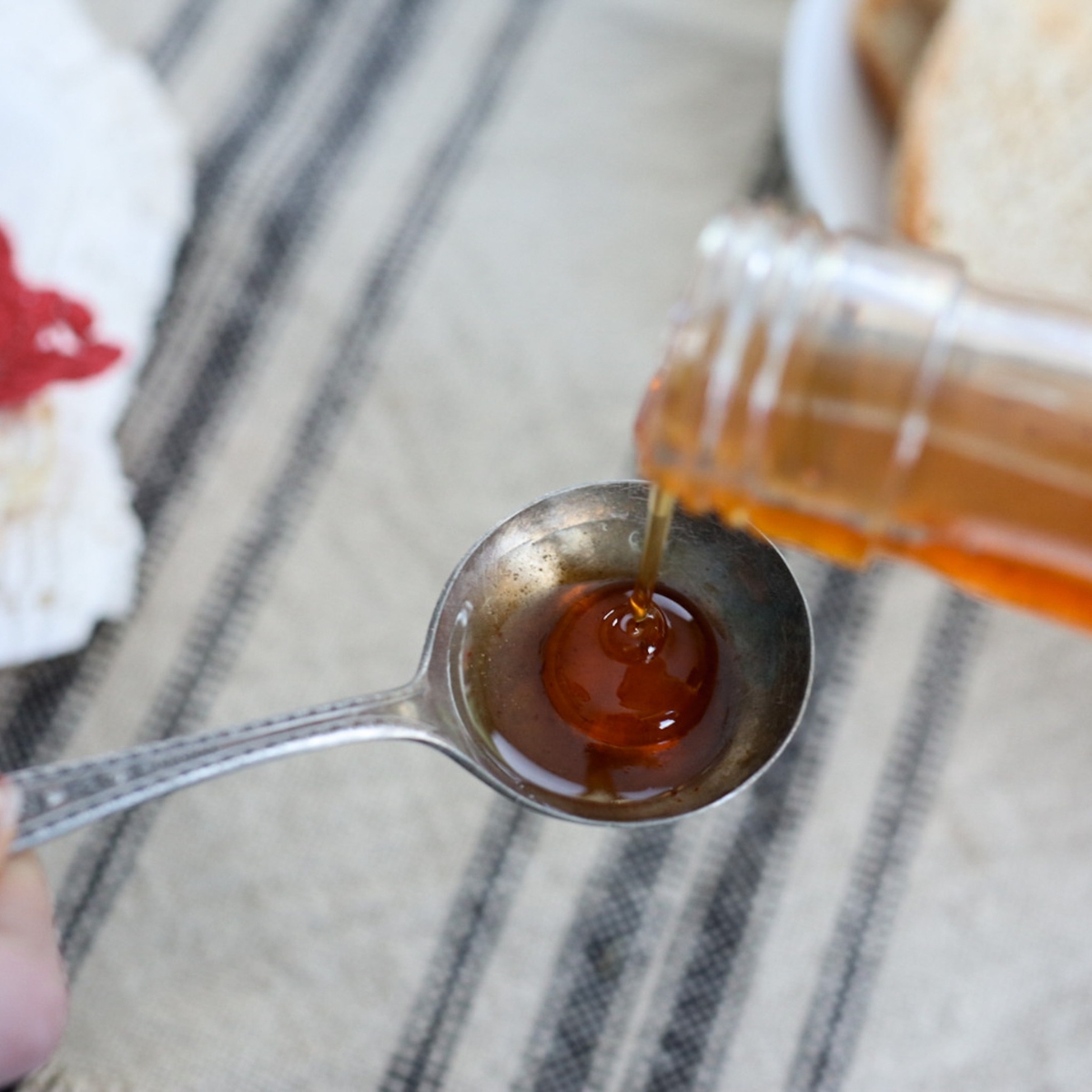
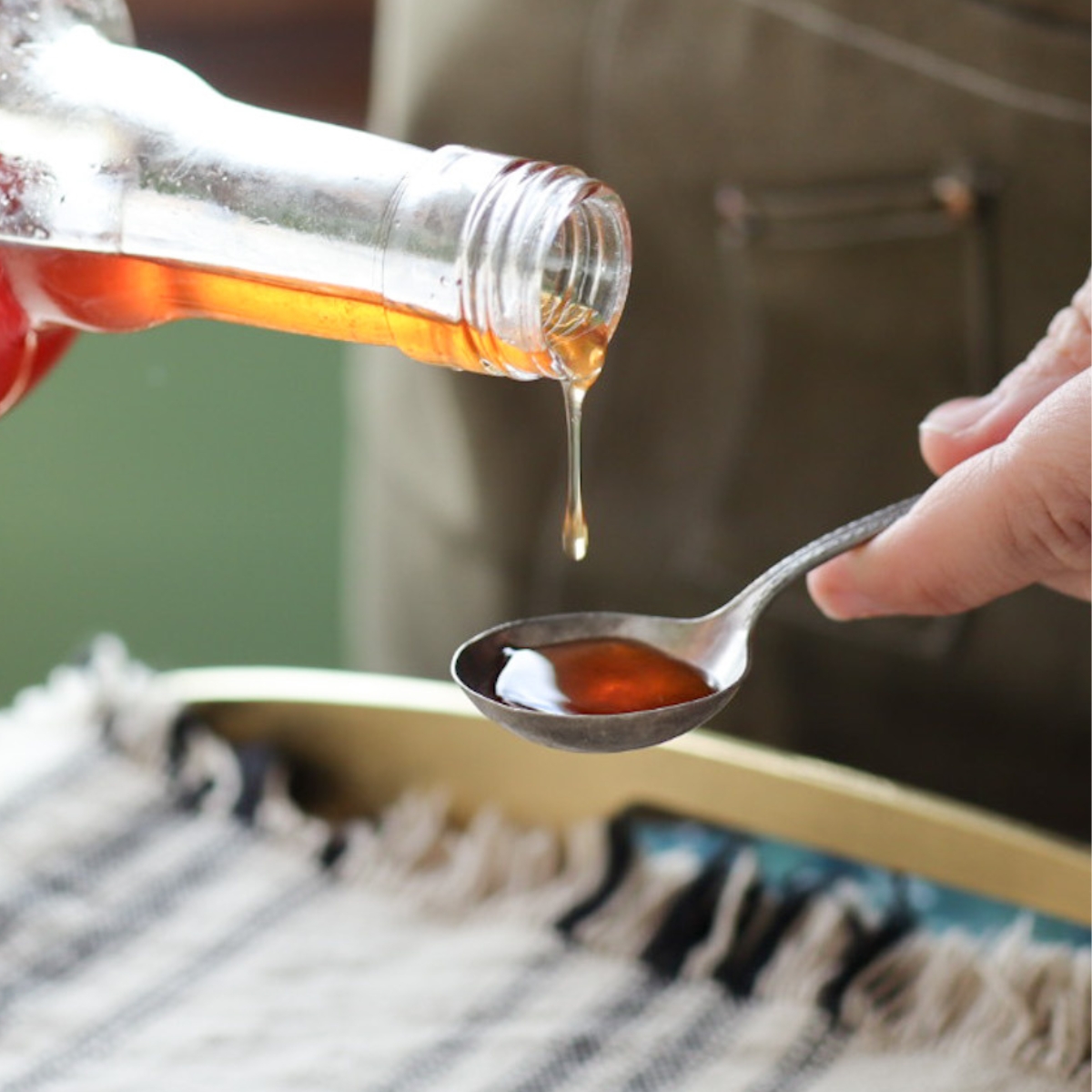
I bottled mine in an empty whiskey bottle, but any good bottle that allows you to pour a teaspoon at a time, works well.
This of course would have been kept in a cool pantry, and would have been considered shelf stable, with all that sugar and vinegar.
If you choose to store this in the fridge, you’ll want to let it warm to room temperature before pouring, since it really does thicken up when it’s at cold refrigerator temps.
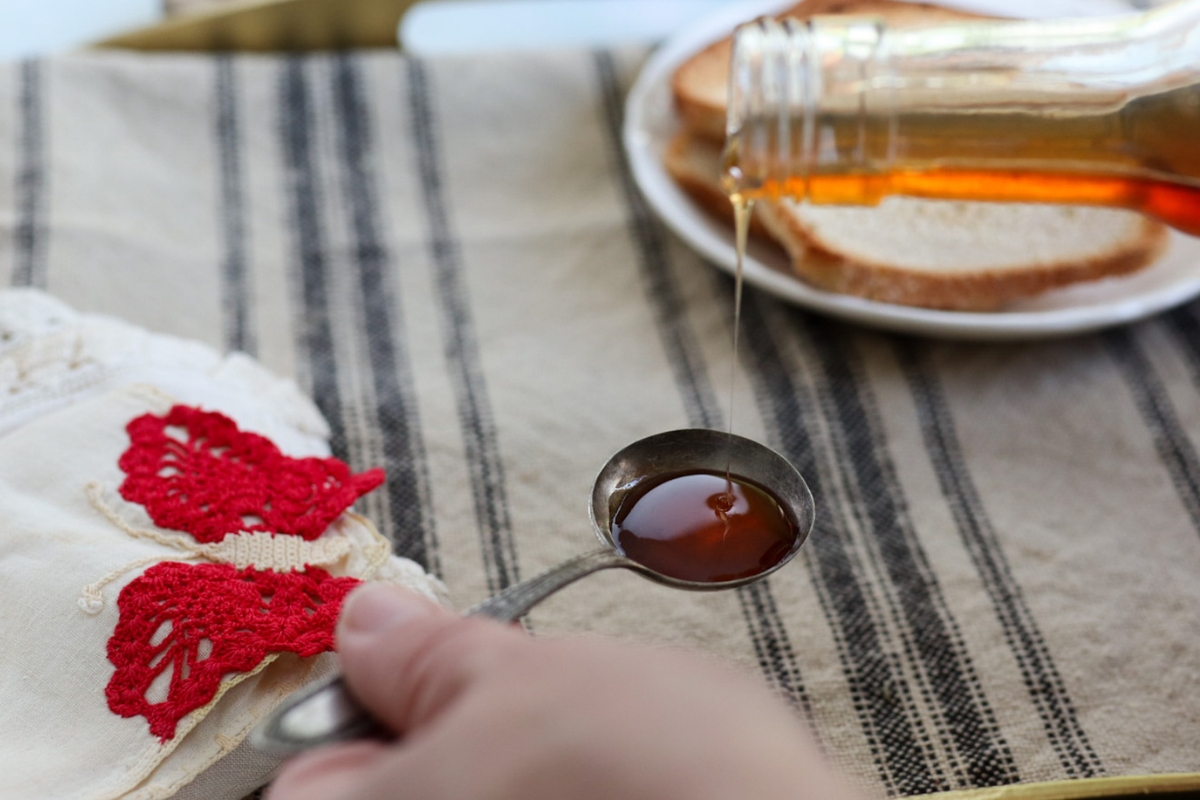
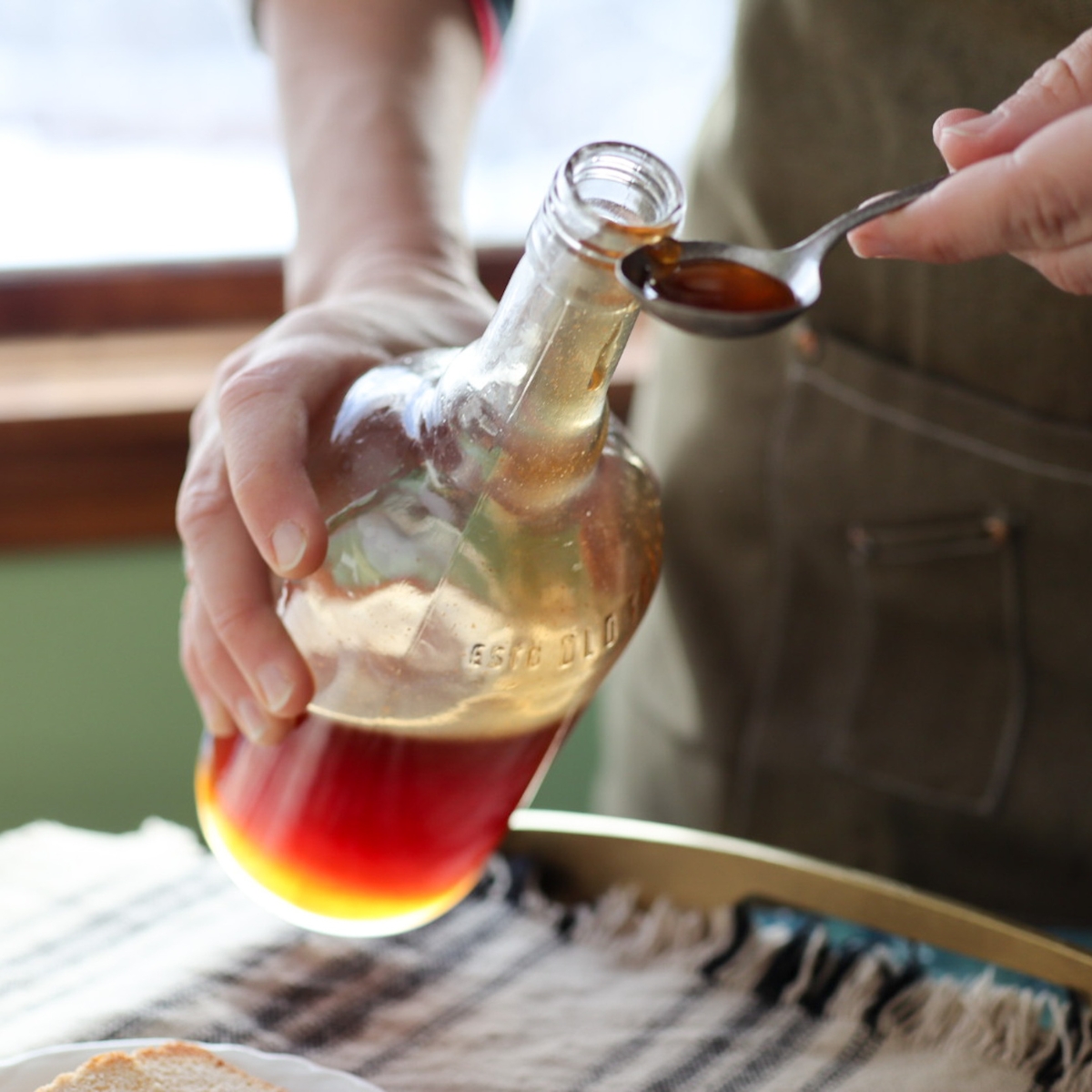
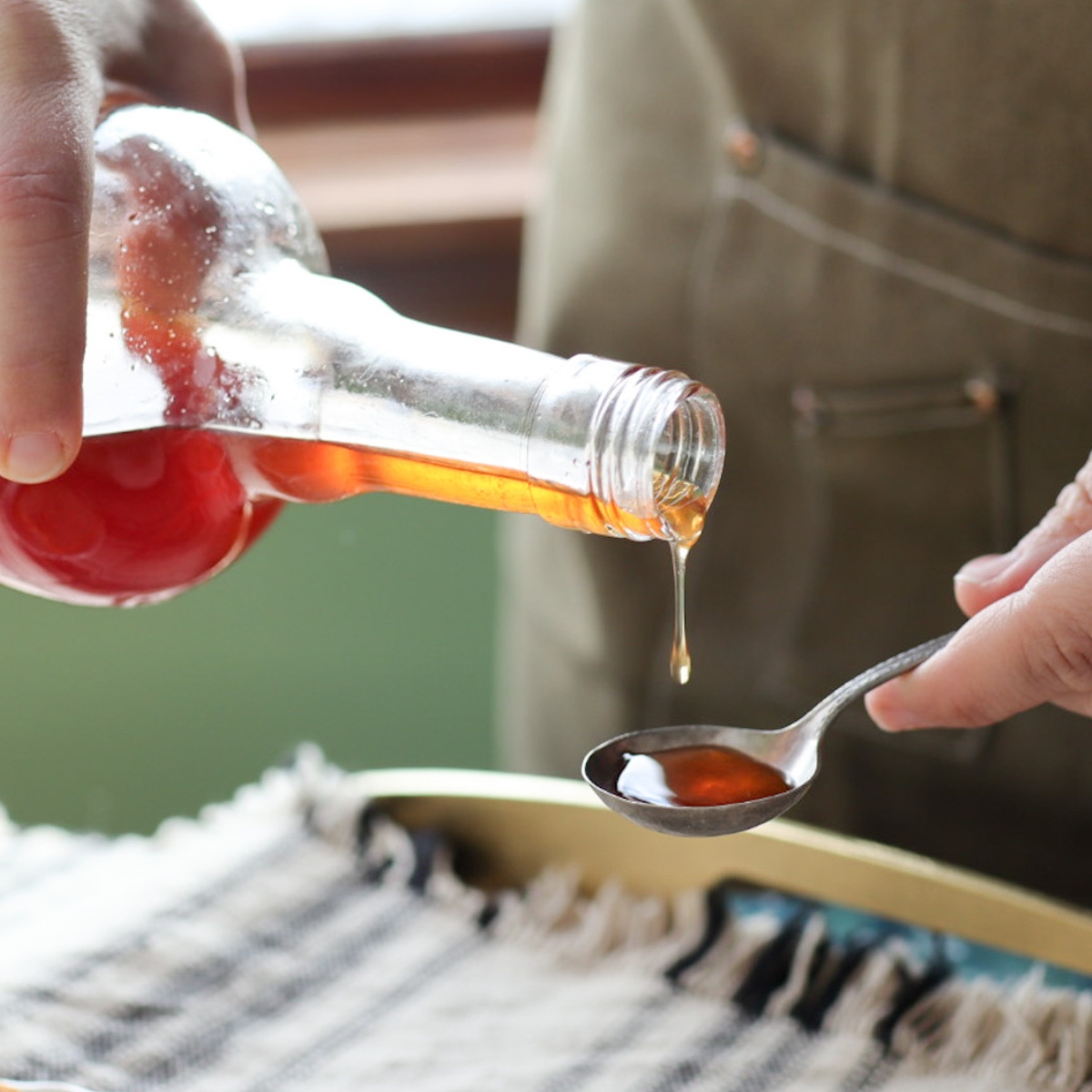
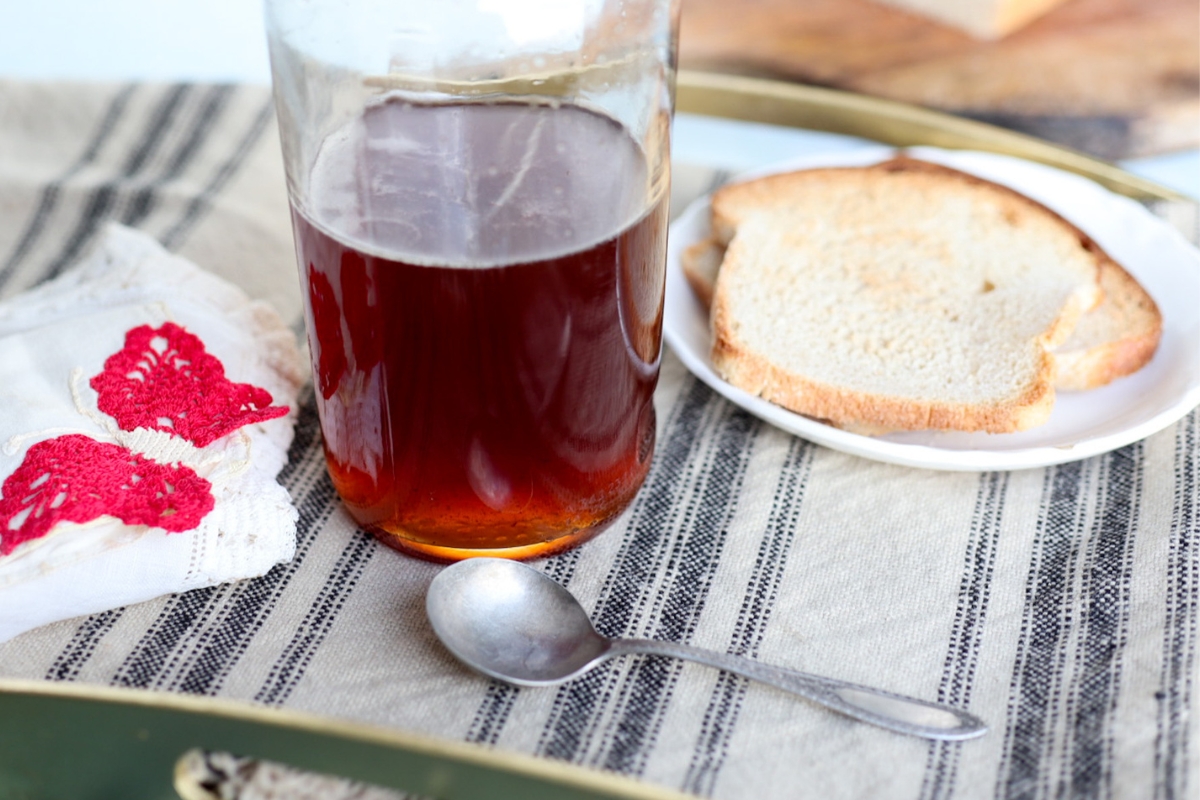
I think the little guy did a good job with his picture-taking!
Also, I’d like to give a grateful mention to a kind reader who recently drew my attention to the errant apostrophe in the title of my website. Of she is correct that it’s 1800s, not 1800’s. Whew, and I think of myself as a grammar lover! It may take me a while to weed out all instances of it, but slow and steady will get it done.
Please wish us well as we kick these head colds, and I’ll be back with that gingerbread in the next newsletter. Stay warm out there!
Until next time, ~ Anna
📖 Recipe
Ingredients
- 1 pound sugar
- 1 pint apple cider vinegar
- 8 ounces seedless raisins
Instructions
- Take one pound of sugar, one pint of vinegar; boil together until it becomes of a thick syrup;
- a short time before it is done, add half a pound of raisins, seeded;
- one teaspoonful is sufficient for a dose unless the cough is very troublesome; then take two every two hours; this is most excellent.
Nutrition
If you liked this recipe, here are some others you may enjoy:


Comments
No Comments