
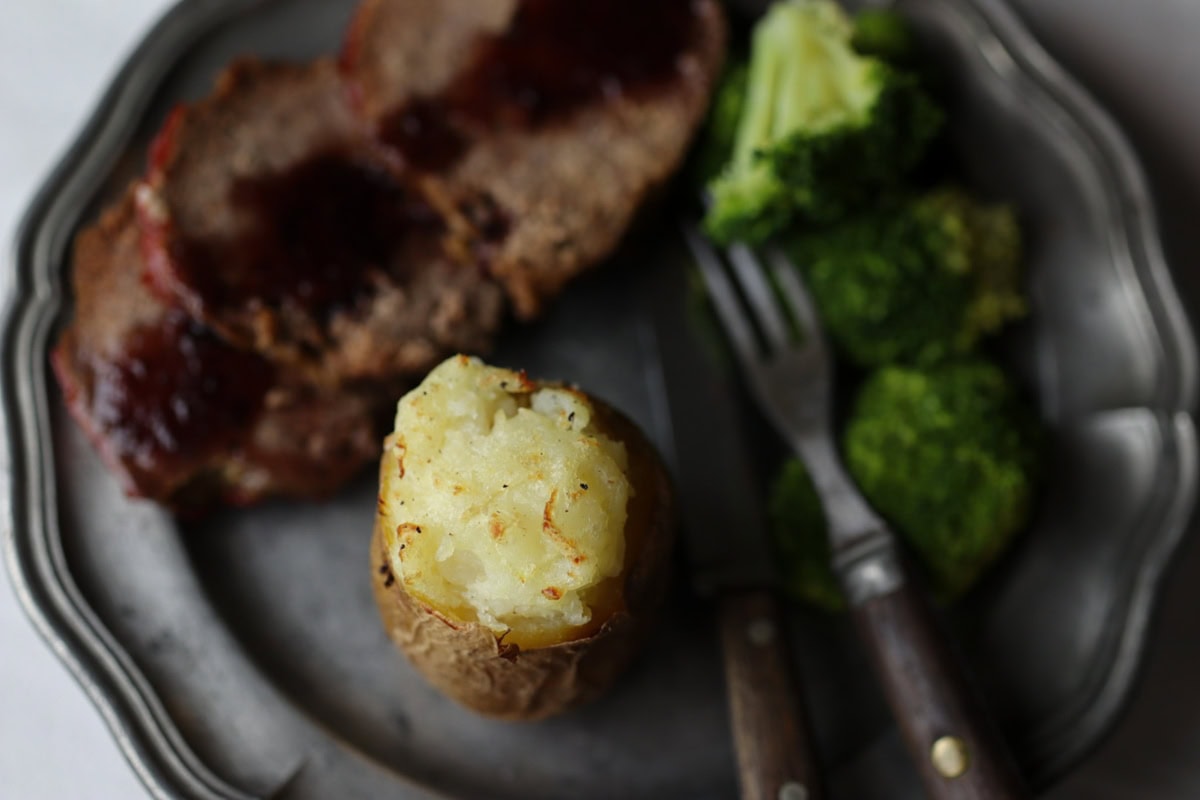
This delicious potato recipe is easy to make, and really dresses up a simple spud as a lovely side dish.
Dear friends ~
I’ve been making so many 1800’s recipes lately, that I’ve built up a bit of a backlog of favorites I’d like to share with you. Usually I publish recipes first to the weekly newsletter, but I’m going to start putting some of these right on the website, so can stay on a roll and not forget to share some of these gems with you.
Feel free to let me know what you think of this…I know many of you love getting the full recipes right to your inbox, and you appreciate knowing you never miss a recipe. Maybe I should go back to sending the newsletter more than once a week? If you’ve got thoughts on this, let me know in the comments or via email–I love knowing what works best for you all!
This recipe is an easy, timeless one. It’s a simple little potato side dish, that’s an old fashioned version of what many people now think of as “twice baked potatoes”. Don’t skimp on the butter, that’s what makes them so magical!
~ Anna
Practical Cooking and Dinner Giving, 1876
POTATOES IN CASES
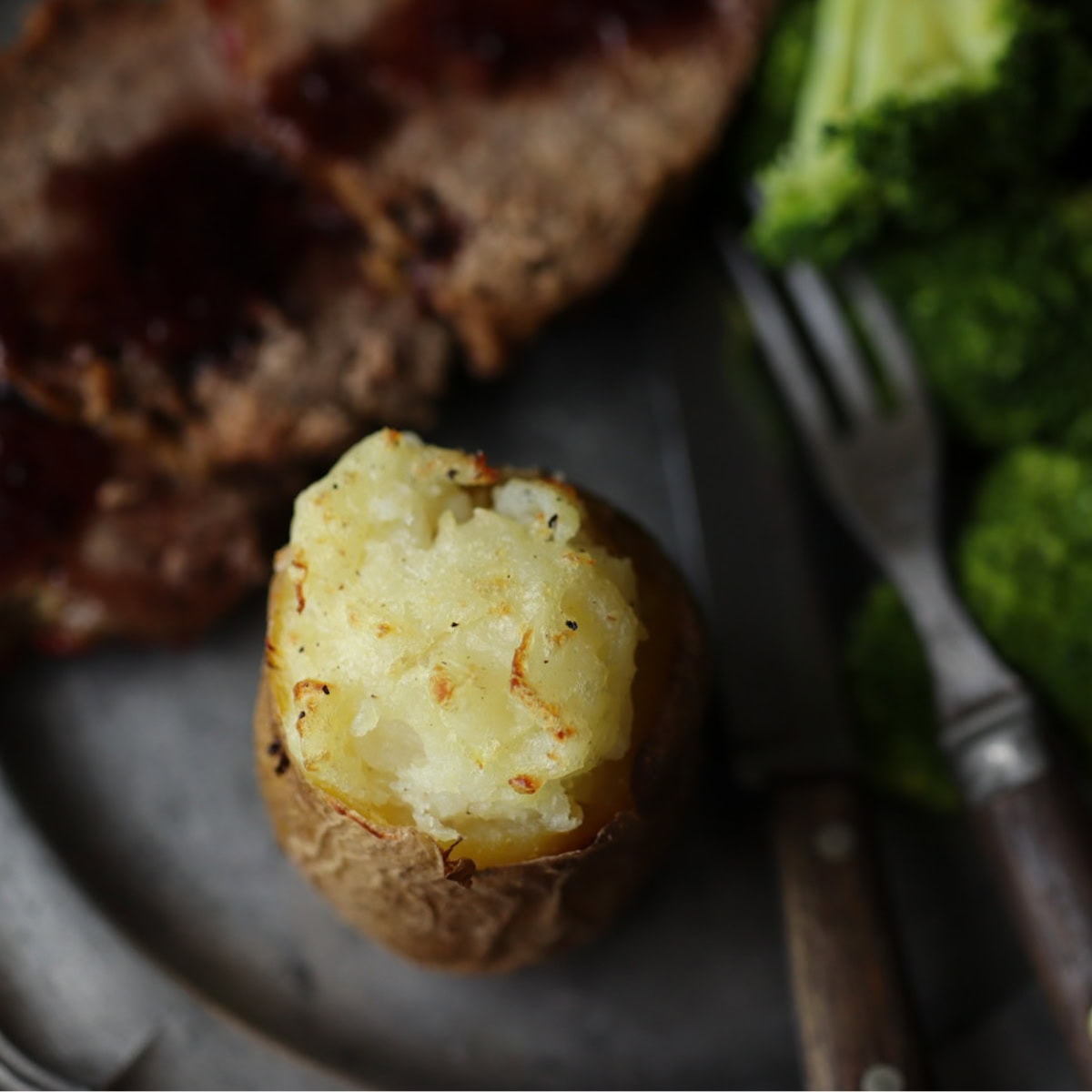
The following is an exceedingly nice way of serving baked potatoes. Bake potatoes of equal size, and when done, and still hot, cut off a small piece from each potato; scoop out carefully the inside, leaving the skin unbroken; mash the potato well, seasoning it with plenty of butter, pepper, and salt; return it with a spoon to the potato skin, allowing it to protrude about an inch above the skin. When enough skins are filled, use a fork or knife to make rough the potato which projects above the skin; put all into the oven a minute to color the tops. It is better, perhaps, to color them with a salamander. They will have the appearance of baked potatoes burst open.
Here’s a photo of the recipe as it appears in the cookbook:

A FEW COOKING NOTES:
Don’t you just love it when these old cook books include an illustration of the recipe? It was fun to have that visual inspiration of “what to go for”, as I was making these!
It’s really such a simple little recipe, with great instructions, but here are a few cooking notes that might help if you make this recipe yourself.
Baking those potatoes
This cookbook is very no nonsense with the directions for baking potatoes, which precede this recipe in the book. “Put them into a hot oven and bake until tender.”
Personally, unless I’m baking potatoes along with another dish that requires a different baking temperature, I bake them at 350ºF, having washed and pierced them just once with a fork. Don’t go crazy poking holes in your potatoes, out of fear they’ll explode in the oven.
This doesn’t happen often, and having a bunch of little holes in your potatoes is really going to make it harder to nicely scoop out the inside, and replace them beautifully once mashed.
Medium sized potatoes take nearly an hour, or a little more, to fully bake. I like to start checking on them at about 45 minutes, and keep a close eye until they’re nicely tender when poked with a fork.
Scooping out the “cases”
You’ll want to let the potatoes sit a moment once you take them out of the oven, or you’ll end up with burned fingers. Once they’ve cooled just enough to handle, you can slice a piece off the top, and then hollow them out.
One thing I found was that also taking a very tiny bit off the bottom helped the potatoes to stand upright, like the illustration shows. The instructions don’t specify to do this, but after much trial and error I found this really does help, with getting that picture perfect result, so the potatoes don’t topple once they’re filled.
For scooping out the potatoes, I’ve found that my smallest ice tea spoon works beautifully for hollowing them out. It’s easier to carefully hollow them out, without breaking the skins, using a small spoon rather than a big one.
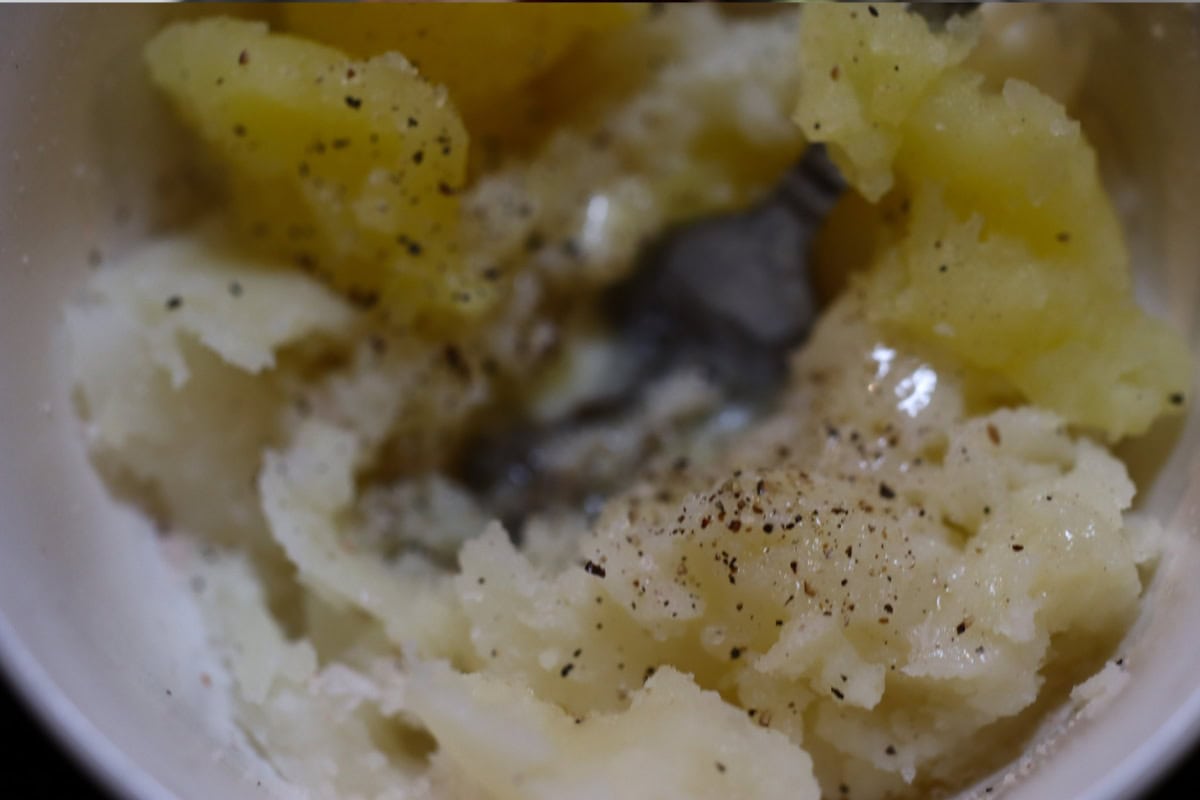
How much butter, salt, and pepper to use.
This is all going to be a matter of personal preference, but I do take those instructions to use “plenty of butter” to heart, when making these. Personally, I allow 2-3 teaspoons of butter for each medium-sized potato. When using salted butter, it doesn’t take much additional salt to nicely season the mashed filling, but
I always think it’s a good idea to sample the mashed potato as you’re seasoning it to taste, to make sure you’ve got it just how you like it. Plenty of freshly-ground pepper is indispensable in my opinion, but again, season this how your family likes it!

Browning the potatoes
The directions say to put them into the oven again to color the tops, but then also adds, “It is better, perhaps, to color them with a salamander.”
If you’ve never seen the kitchen device called a salamander, this page from Miss Corson’s Practical American Cookery and Household Management (1885) is a perfect introduction.
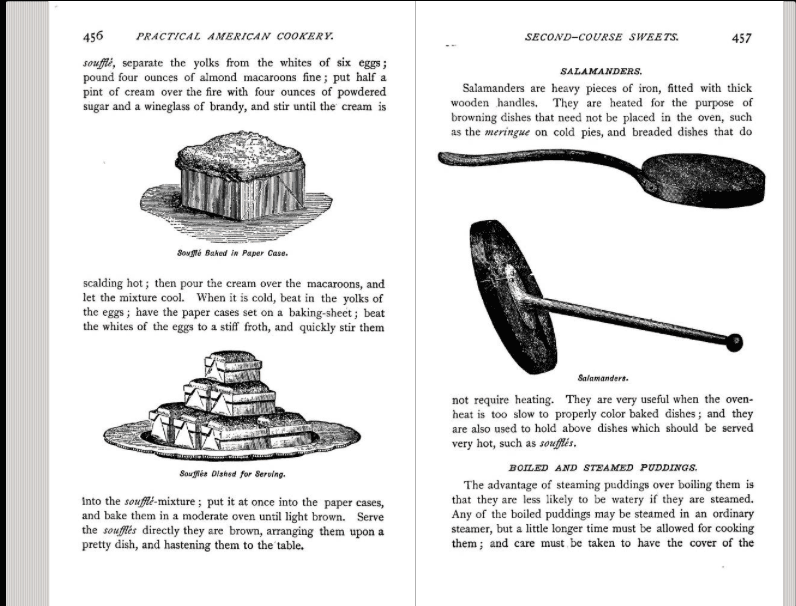
While modern salamanders do exist, most of us aren’t lucky enough to have one. We do, however, have that magical “Broil” setting on our ovens, and that’s what I found worked best for this recipe.

I did try both methods for browning the tops, baking and broiling. The broiling really did work well to quickly add some color and crispness to the tops of the potatoes, without taking a long time, and giving the potatoes a chance to toughen up. It only takes a minute, so watch them carefully.

That’s really all there is to this simple, yet dressed-up, side dish. They don’t take much more work than a regular baked potato, but feel a little extra special.
I’ve been making more little every day dishes like this, so lots more simple side dishes and vegetables coming to the site soon. We love those cake and dessert recipes, but real food is fun too!
As always, feel free to send me an email anytime, with recipe requests! Until next time, ~ Anna
This recipe was originally shared in the 1800’s Housewife newsletter. Not on the mailing list? You can join here to receive full recipes with cooking notes straight to your inbox!
If you liked this recipe, here are some others you may enjoy:

Comments
No Comments