
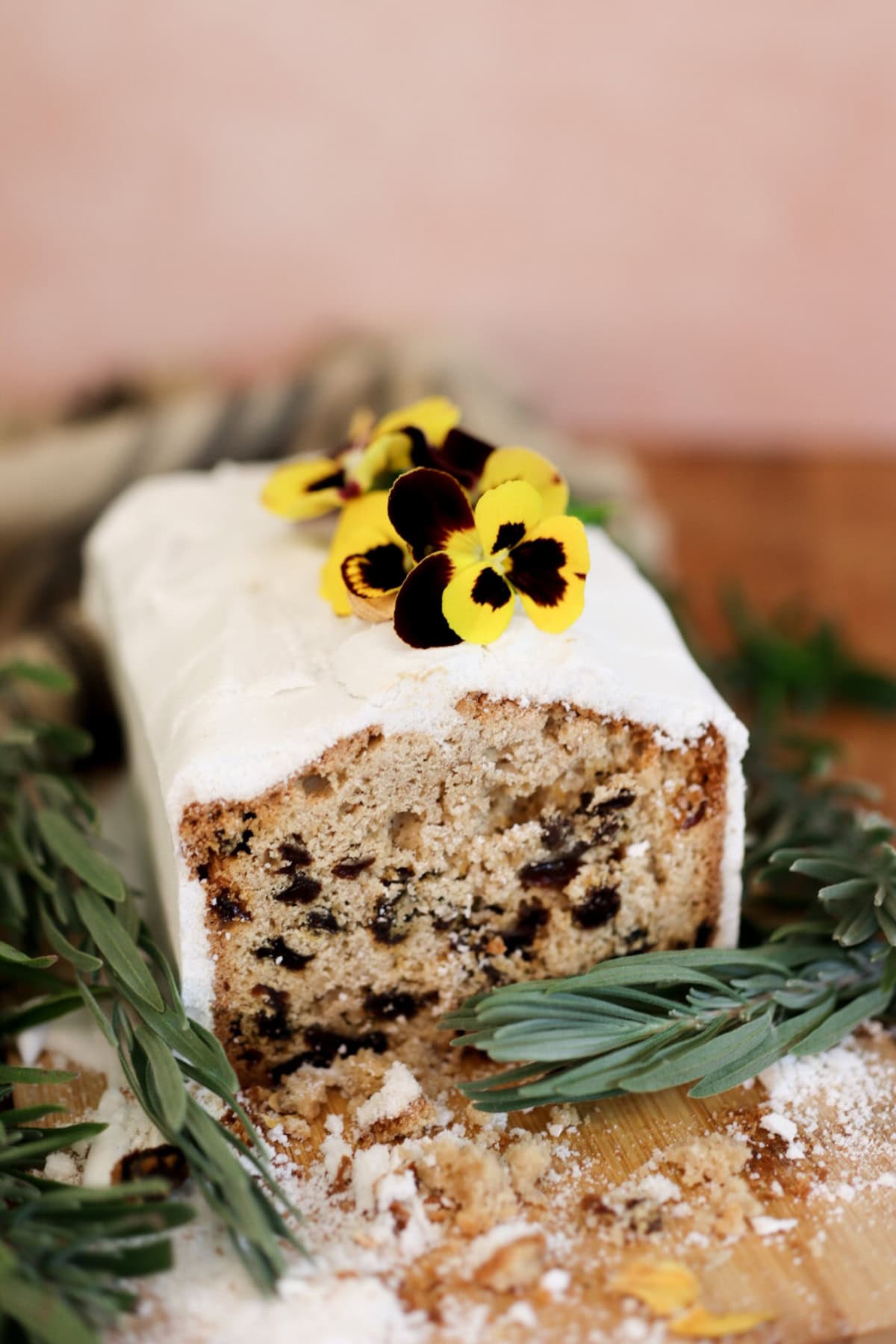
This loaf cake is flavored with both brandy and wine, and is such a lovely treat to share with company.

Dear friends ~
Today’s recipe is such a tasty one! If you were a housekeeper in the 1800’s, this is the sort of cake you’d make on baking day, then stash in the pantry to have on hand. It was considered wise housekeeping to always have something nice on hand that you could bring out, in case of unexpected guests.
Cakes made with brandy, and frosted with the quintessential hard frosting of the era, were famous for “keeping” well…for days, weeks, or according to some recipes, months!
Now, you know how seriously I take this historical recipe project, so you may be wondering if I have tried keeping cake for months.
I have not.
However, I DID bake two loaves when I made this recipe, and while we devoured one immediately, I hid the other away for three weeks to test how well cakes of this sort actually keep.
It needed to be done. In the name of understanding history, and all.
After three weeks, I found that the flavor had deepened, and felt more complex (according to my notes and memory, anyway). The texture was amazingly the same. That hard crust of frosting had completely prevented it from drying out, and the crumb was remarkably similar to the loaf I’d sliced right after it was made and cooled.
There was not a speck of mold, no stringiness to the texture, and no sour taste…all things one might suspect when sampling a three week old loaf of cake.
Now, I’m not suggesting you make this cake and wait weeks before serving it, but I am suggesting you give it a try and let yourself partake right away. It’s a wonderful, old-fashioned cake to try, aged or otherwise.
~ Anna

The Kitchen Directory and American Housewife, 1858
PHILADELPHIA LOAF CAKE
One and a half pounds of flour, three quarters of a pound of sugar, half a pound of butter, three eggs, three tea spoonfuls of cream of tartar, one and half of soda, a cup of sweet milk, a wine-glass of wine, the same quantity of brandy, a pound and a half of seeded raisins, a quarter of an ounce of pounded mace, or a couple of nutmegs, and add, if you like, a little cloves or cinnamon.
Stir to a cream the butter and sugar, then add the eggs, previously beaten to a froth, part of the flour, the brandy, and wine.
Dissolve the soda in the milk, and strain it into the mixture, then put in the rest of the flour, and spice. Stir the whole together three or four minutes, then add the cream f tartar; when thoroughly mixed with the other ingredients, put in the fruit, and bake it immediately in buttered pans.
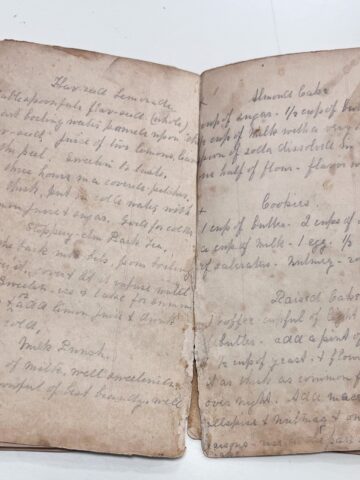
Here’s a photo of the recipe as it appears in the cookbook:


A FEW COOKING NOTES:
The directions for this cake recipe are unusually detailed for the era, so there’s not much need for baking notes from me this time around. I also somehow neglected to take ANY process photos from baking this cake, my apologies for that!
I do have just a few notes that might help if you’d like to make this cake yourself:
What is “sweet milk”?
I often forget to clarify this term when it shows up in a recipe, and when I do, I get quite a few emails asking what is this sweet milk? “Is it sweetened condensed milk?”, many wonder.
It’s actually just regular fresh milk that hasn’t soured yet. Because it was very common to bake with sour milk in the 1800’s, many recipes specified “sour milk” or “sweet milk”. Sour milk provided an acidity that made cream of tartar unnecessary, for the baking soda to properly react and allow the cake to rise.
If you used sour milk, you were supposed to omit the cream of tartar, so it was helpful to have it specified whether the milk should be fresh (sweet milk), or soured. You can go ahead and use the regular milk in your fridge for this recipe.
How much is a “wine glass”?
Over the course of the 1800’s, the size of “a glass of wine” slowly increased from about 3.4 ounces, to about 5.4 ounces. There are many interesting articles that mention this shift, but this is one of my favorites if you’d like to read more.
4 ounces is good volume to use, when a “wine glass” is specified.
For this recipe, I used fairly inexpensive French Brandy, and a mid-grade organic red wine that I had an open bottle of.
The spices
I used two freshly grated nutmegs, and ½ teaspoon of cloves for this recipe. If you don’t have fresh nutmegs to grate, this works out to about 4 or 5 teaspoons of pre-ground nutmeg. If I were opting for mace, and didn’t have a kitchen scale that could measure small amounts like ¼ of an ounce, I’d go for 4 teaspoons of pre-ground mace, or a little less if you don’t love spice.
Buttering that cake pan
By all means do grease your loaf pans well. This recipe makes two nice large loaves. (If your loaf pans are on the petite side, I’d suggest dividing the batter among three pans).
Many cook books of the era exhort the baker to properly prepare pans by both buttering and then flouring the pans. As an experiment, I buttered one loaf pan, and buttered and floured the other.
The loaf in the pan that was both buttered and floured turned out more cleanly, with less “teasing”, than the loaf in the butter-only pan.
While this recipe only specifies buttering the pan, and you may want to do that for the sake of following this particular recipe to a “T”, do know that buttering and flouring was also authentic to this era, so please don’t feel like you’re cheating if you’d like to also flour the pan, to ensure a cleaner turning-out of the loaves.

How hot should the oven be?
I baked these cakes at 350° F, and found that worked well.
How long to bake this cake
At 350°, in two loaf pans, these cakes cooked in about 55 minutes. I’d suggest starting to check them at 45 minutes, and keeping an eye on them until a toothpick (or fresh broom straw, if you want to be authentic!), comes out clean when inserted in the center.
How should this cake be frosted?
Cakes of this nature were generally frosted, with a hard icing made of egg whites and sugar. I followed this recipe below, from the same cookbook as this Philadelphia Loaf Cake recipe.

Flowers and greenery were common, simple embellishments when serving a cake, so I brought in the last few pansies from the garden to dress this up when we served it. Roses and rose petals are also authentic embellishments, if you want to add “a little something” when serving your cake.

We enjoyed this cake so much, it’s almost right up there with my favorite Clove Cake recipe (that’s a hard one to top!).
Yesterday I made a big batch of hop yeast, so we’ll have some old fashioned bread and raised donuts coming up in the near future.
As always, feel free to send me an email anytime, with recipe requests! Until next time, ~ Anna
This recipe was originally shared in the 1800’s Housewife newsletter. Not on the mailing list? You can join here to receive full recipes with cooking notes straight to your inbox!
If you liked this recipe, here are some others you may enjoy:

Comments
No Comments