
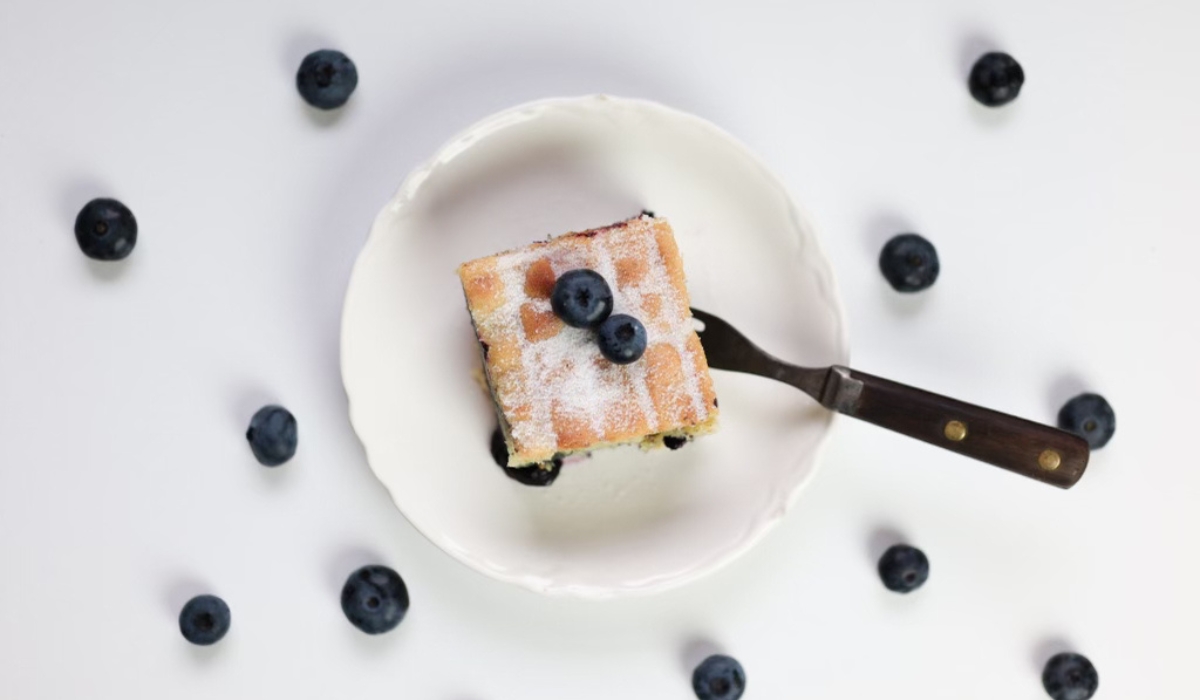
This might berry well be the best blueberry cake you’ve ever tried! It’s absolutely delicious!
Dear friends ~
It’s late August, which means that most of the time right now, I’m in the garden, berry patches, and orchard–or in the kitchen putting up everything I’ve been picking.
Yesterday, it was peach butter. The day before, it was blackberry jam. Today’s it’s “brandy peaches”.
Right now, though, I’m stealing a quick minute to share with you the 1871 Huckleberry Cake I made last week. Wow, was it good!
Are huckleberries the same thing as blueberries, you might wonder? A brief answer is that both our wild Maine blueberries, and the lovely high bush blueberries I grow in my berry patch, fall under the 1800’s category of “huckleberries”.
So yes, this is a cake you can and should make with blueberries, while they’re in season!
For a deeper dive into huckleberries and blueberries, you might enjoy the recent YouTube video I recorded about it.
This is a classic berry cake, with a light texture that’s not heavy or gummy like some berry baked goods tend to be. It’s perfect for brunch or “tea time”, and is a delightful way to enjoy fresh blueberries during this precious season while they’re ripe and abundant!
~ Anna
Common Sense in the Household, 1871
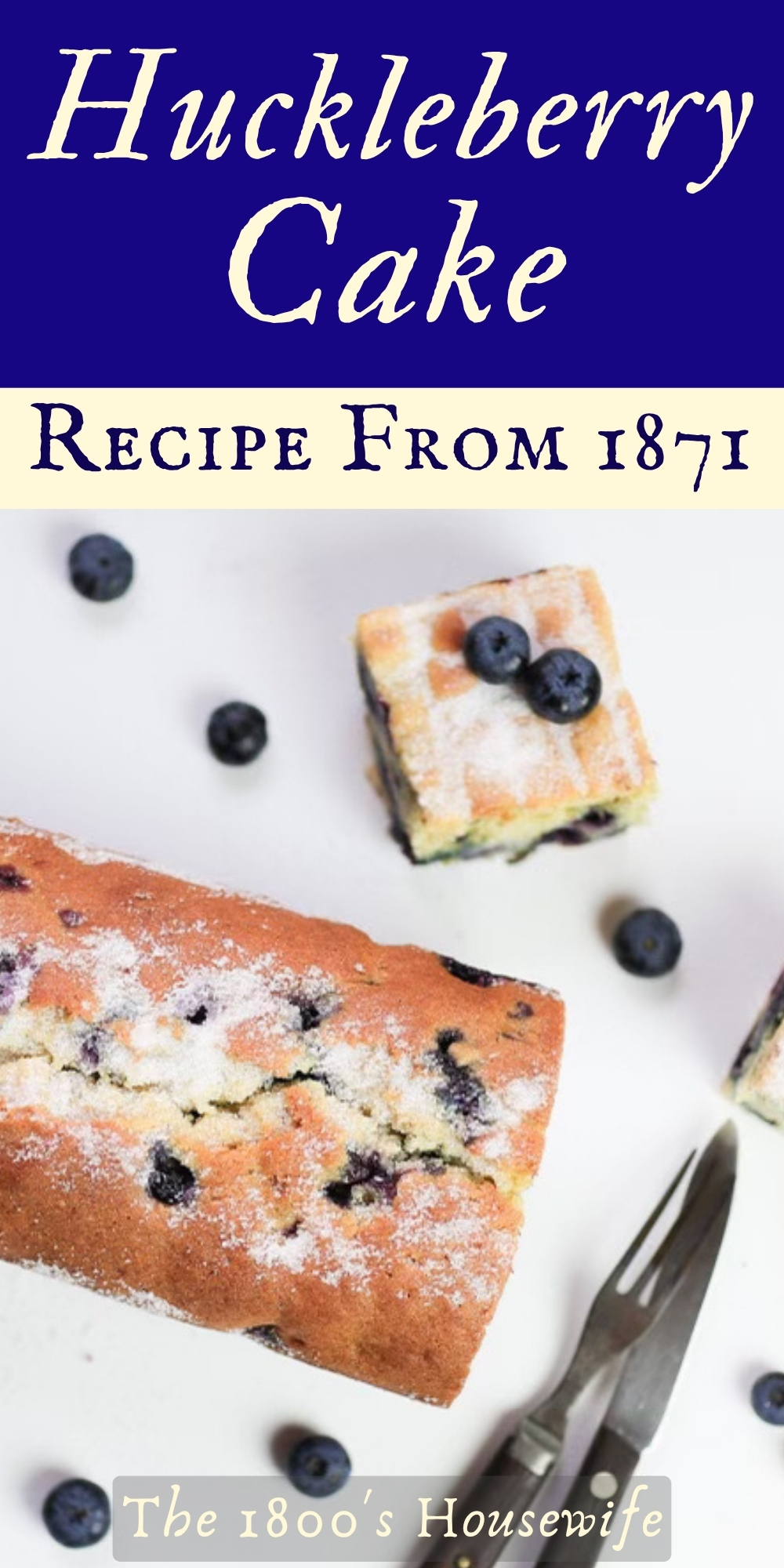
HUCKLEBERRY CAKE
1 cup butter.
2 cups sugar.
3 cups flour.
5 eggs.
1 cup sweet milk.
1 teaspoonful soda dissolved in hot water.
1 ” nutmeg, and the same of cinnamon.
1 quart ripe, fresh huckleberries, thickly dredged with flour.
Stir the butter and sugar to a cream, add the beaten yolks; then the milk, the flour, and spice, the whites whipped stiff, and the soda. At the last stir in the huckleberries with a wooden spoon or paddle, not to bruise them. Bake in a loaf or card, in a moderate but steady oven, until a straw comes out clean from the thickest part.
This is a delicious cake, and deserves to be better known.
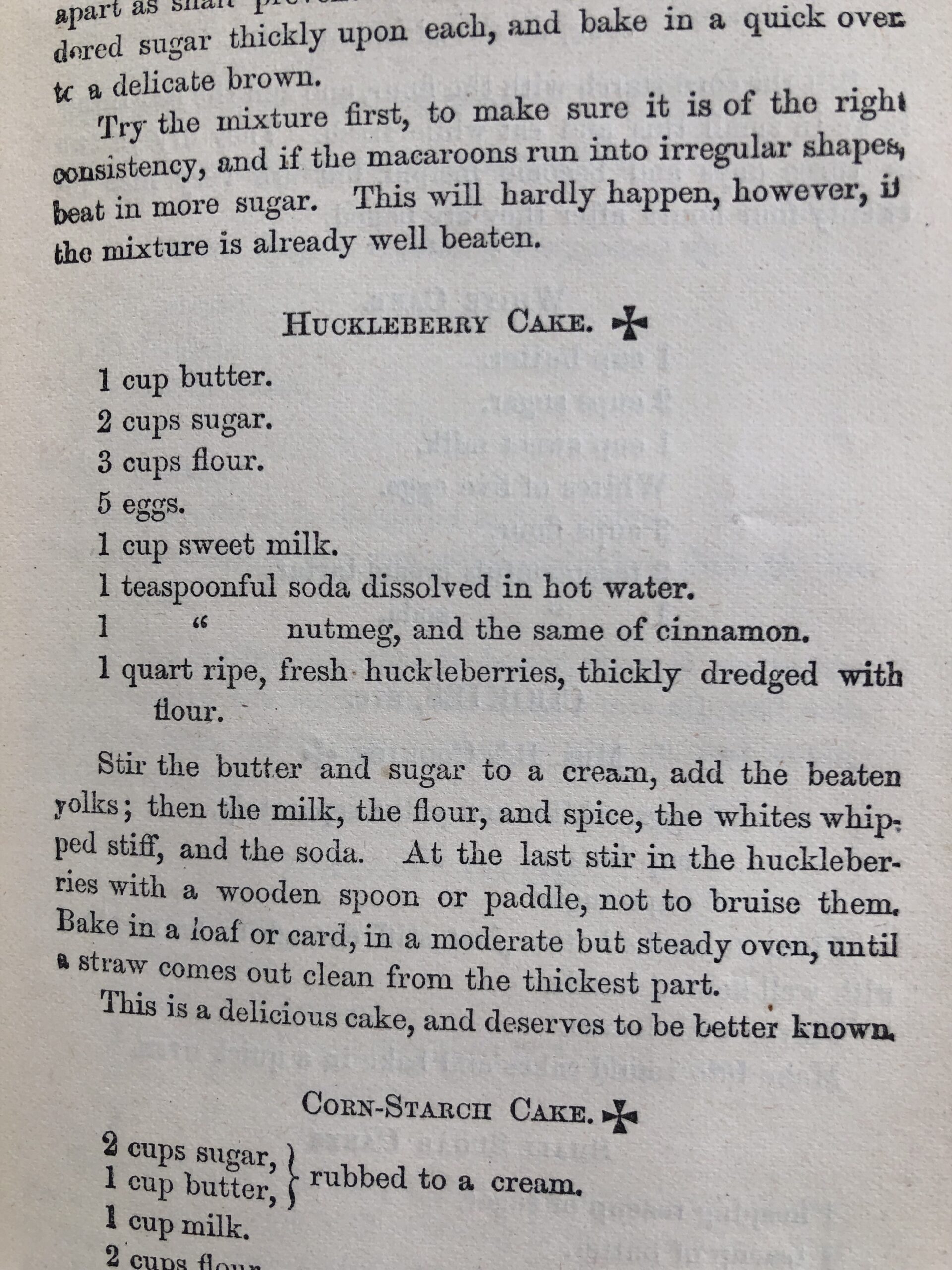
Here’s a photo of the recipe as it appears in the cookbook:
A FEW COOKING NOTES:
Here are a few cooking notes that might be helpful, if you make this yourself!
Those berries
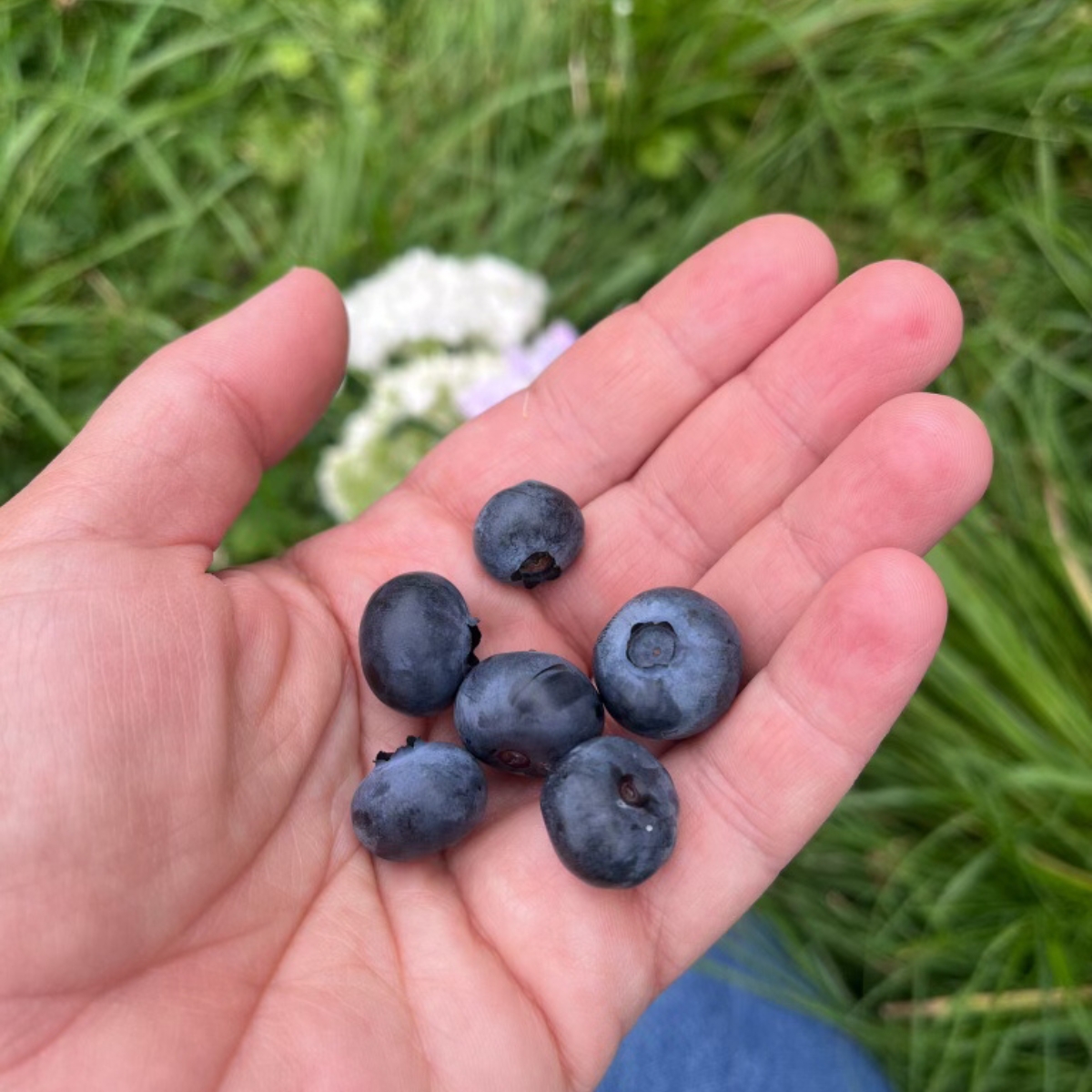
As we talked about above, all of the small blue berries in the Vaccinium and Gaylussacia families, fell under the broad term “huckleberry”. From small low-bush blueberries, to larger high-bush blueberries, to the 10-seeded huckleberries of all varieties, everything was a huckleberry.
In the video I did about this, we look at an 1800s book on fruit culture, and that really helps to illustrate this. Under the chapter called “Huckleberries”, are all the small wild blueberries, both types of huckleberry, and the large high-bush “swamp” blueberries that were the parents of all the modern blueberry bushes commonly sold, like Duke, Patriot, Blue Ray and Blue Crop…you get the idea.
This cake comes out beautifully made with any of these. Use what you have that’s fresh and in-season!
Assembling this cake in order
This cake is light and fluffy, without relying on a huge amount of baking soda. It’s not gummy and dense, like SO many baked goods with berries tend to be.
A big reason for that, is the care that goes into assembling the ingredients.
Before beginning to mix this cake, it’s important to take time to beat those egg yolks and egg white, separately. Beat the yolks until they’re light, thick, and lemon colored.
Beat the whites until they’re stiff, and you can clearly see the bottom of the bowl or plate, when drawing a spoon or knife through. Unless you want the full experience of making this cake the 1800s way, don’t feel you have to do this by hand. (It’s a fun project with kids though!)
However you beat those yolks and eggs, by hand or with a machine, the quality of your finished cake really does depend on not skipping or skimping on this step. Beat them well!
Once those eggs are properly prepared, it’s easy to go ahead and mix the cake in the order it’s given in the receipt.
Dredging the berries
Sometimes when 1800s recipes call for dredging fruit, they specify to reserve some of the total flour called for, to use in dredging. That doesn’t seem to be the intention here, though.
I took the wording to mean dredging the berries with extra flour in addition to the three cups in the ingredient list, and that worked well. Depending on the size of your berries, anywhere from 2-4 tablespoons should be plenty to dredge them well. Just sprinkle on the flour and give them few very gentle tosses, until all the berries have a light coating of flour. It doesn’t take much, and you don’t want to bruise them.
What baking pans to use
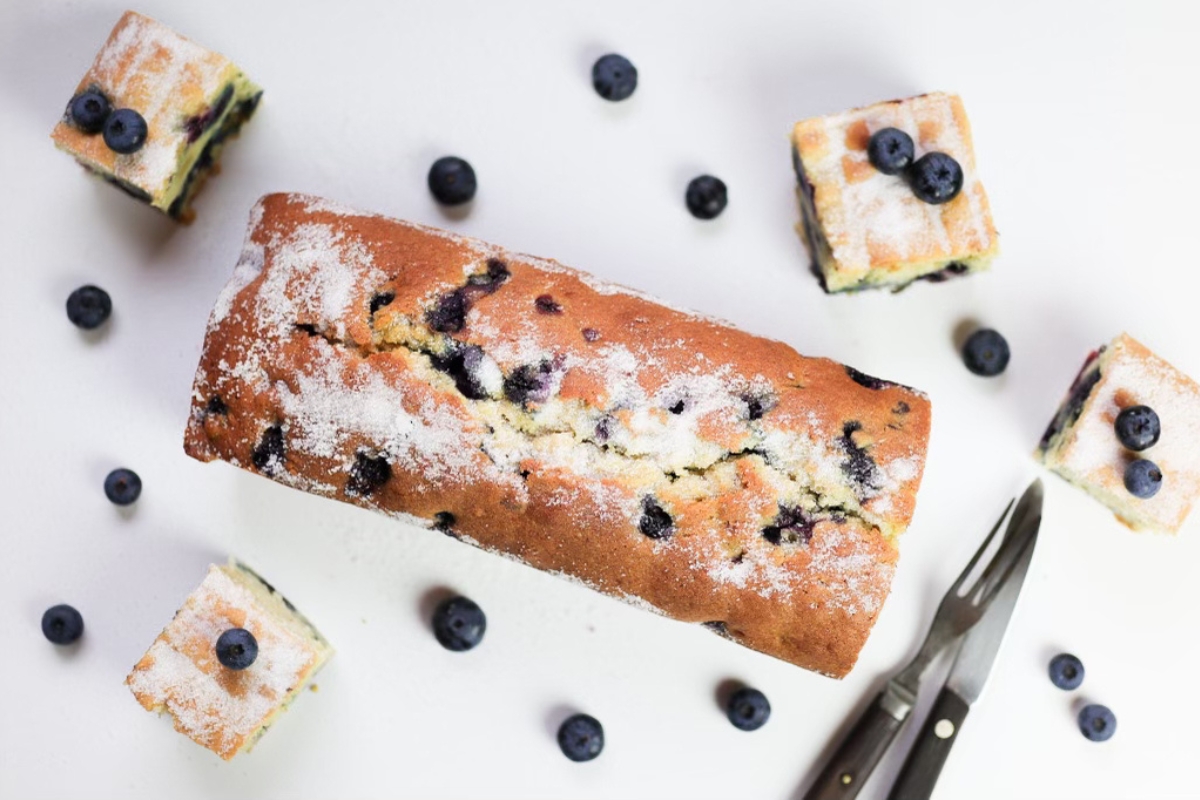
The directions say to bake this in a loaf or a card, so I tried both.
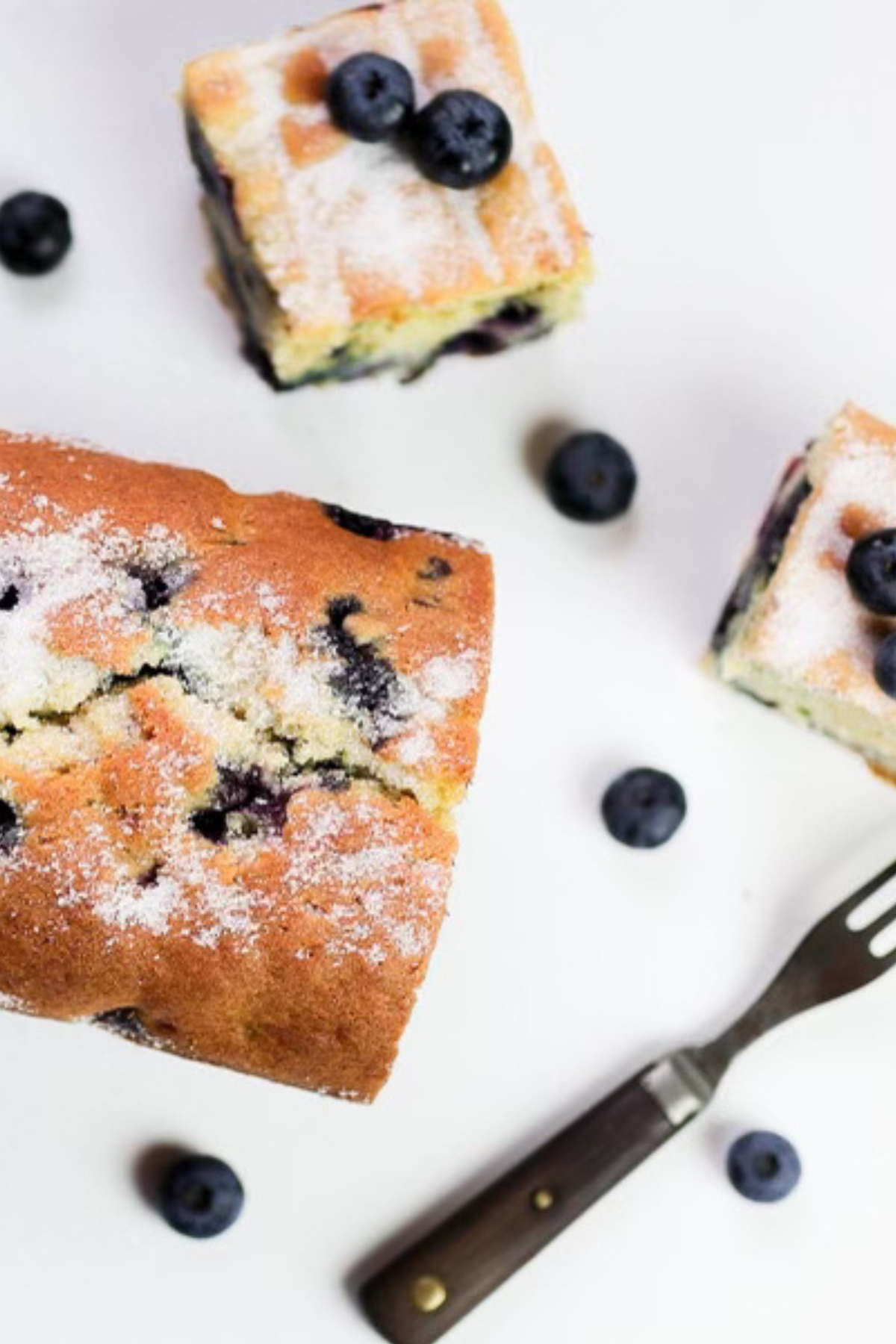
This recipe nicely makes either two large loaves, or two 9×9 pans. While the loaf is beautiful, and makes an especially nice centerpiece to a tea table, I actually preferred the cake baked in the 9×9 pan, for the texture and lightness of the finished cake.
In the future, I’ll make both cakes in a “card”, using two 9×9″ pans.
Although the directions don’t specifically include this within the recipe, we are meant to prepare those pans well, so the cake doesn’t stick.
This was usually done by greasing and flouring the pans. Alternately, cake pans could be prepared by lining them with buttered paper. (Using parchment paper is a good substitute.) This is one of those cake recipes that will stick, if the pans aren’t greased or lined.
I’ve tried greasing and flouring, and lining the pans, when making this recipe, and both ways work well.
Oven temperature and baking time
I’ve found that 300° F works well, when a “moderate but steady oven” is called for. That’s what I’ve used for this cake, and it came out nicely.
Cakes baked in “a card” will be done more quickly than those baked in a loaf. For the 9×9″ pan, you can expect that to be done in 45-55 minutes. A loaf will likely take an hour, or even a tad more.
If you have a nice clean broom straw, by all means use that to test for done-ness. It should come out clean when inserted in the center. A toothpick works well, if you don’t have a straw.
Serving this huckleberry cake
This really is a delicious cake, as the recipe says.
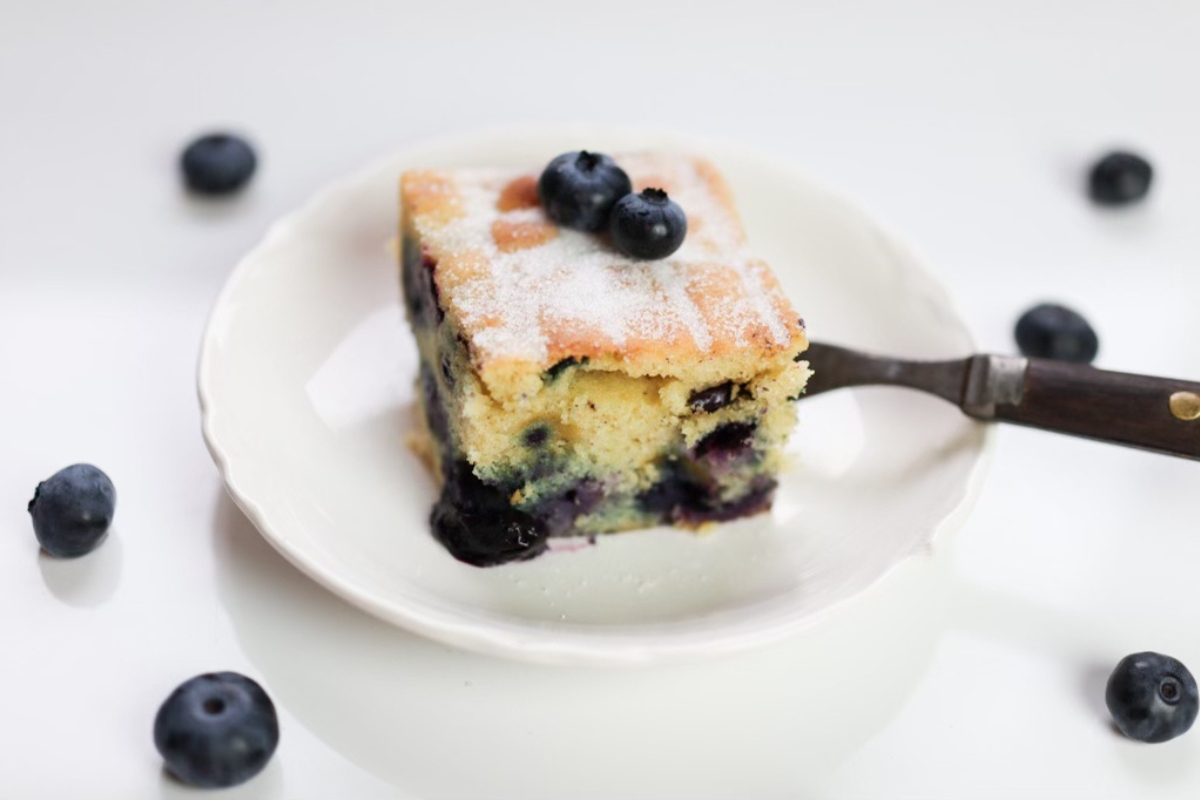
Cakes were generally not served warm, so this would be one to make in the morning, if you wanted to serve it for afternoon tea. It was common to sprinkle a little sugar or powdered sugar on cakes that weren’t frosted, so feel free to dress it up a little with sprinkling of sugar when you put it on the table. That would be perfectly era-appropriate.
With or without sugar, this is a beautiful cake that is a joy to serve, and feels like a wholesome indulgence with all those gorgeous berries in there. I hope you give this one a try!
Until next time, ~ Anna
📖 Recipe
Ingredients
- 1 cup butter
- 2 cups sugar
- 3 cups flour
- 5 eggs
- 1 cup milk
- 1 teaspoon soda (dissolved in 1 T hot water)
- 1 teaspoon nutmeg
- 1 quart fresh blueberries
- 2 tablespoon flour (for dredging)
Instructions
- Stir the butter and sugar to a cream,
- add the beaten yolks;
- then the milk, the flour, and spice, the whites whipped stiff, and the soda.
- At the last stir in the huckleberries with a wooden spoon or paddle, not to bruise them.
- Bake in a loaf or card, in a moderate but steady oven, until a straw comes out clean from the thickest part.
- This is a delicious cake, and deserves to be better known.
Notes
Some other 1800s cake recipes you might enjoy:
- New Year’s Cakes (1871)
- Connecticut Cookies (1875)
- Bachelor’s Buttons (1868)
- Ginger Cake (1877)
- Philadelphia Loaf Cake (1858)
- Ginger Snaps ( c. Mid 1800s)
- Clove Cake (1877)
- Sugar Cookies (1877)
- Lemon Snaps (1881)
- Hermit Cookies (1894)
- Christmas Cookies (1845)
- Hickory Nut or Walnut Cake (1887)
- Coffee Cake (1877)
- Coffee Cake (1887)
- Soft Gingerbread (1856)
- Composition Cake (1892)




Pin for later:
Comments
No Comments