The 1800s Housewife

  • Bookshelf
    • Cookbooks
    • Books for Children
    • Informative Books
    • Fiction of Good Merit
  • Home & Garden
    • Frugal Living
    • Gardening
    • Food Preservation
    • Family Life
    • Maintenance of Good Health
  • Recipes
  • Podcast
  • About
    • Contact
menu icon
go to homepage
  • Home
  • Recipes
  • Subcribe
    • Email
    • Facebook
    • Pinterest
  • subscribe
    search icon
    Homepage link
    • Home
    • Recipes
    • Subcribe
    • Email
    • Facebook
    • Pinterest
  • ×
    Home

    Apple Pie (1845)

    November 14, 2024 by Anna 2 Comments

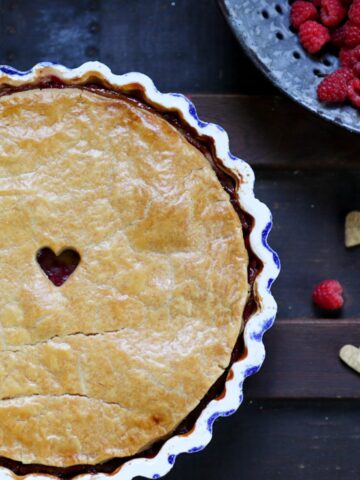
    an apple pie from an 1845 apple pie recipe

    If you only try one 1800’s recipe this Thanksgiving, I’d suggest it be this apple pie from 1845!

    an apple pie from an 1845 apple pie recipe
    Photo Credit: The 1800’s Housewife.

    Dear friends ~

    This apple pie recipe is from an 1845 cook book called The New England Economical Housekeeper. 

    It’s one of the cook books that lists a suggested menu for Thanksgiving Day, which I shared in a recent newsletter. (You can find those menus from 1845 and 1887 here.)

    Now, I’ve never in my life put molasses into an apple pie, and let me tell you, it did give me pause. However, the result was flavorful, comforting, perfection. 

    It’s probably worth saying that apple pie has never really been my thing. If you turned me loose with the Thanksgiving dessert sideboard, and a miraculously endless appetite, those mince and pumpkin pies would be history before I’d ever bother touching the apple pie. Unless it was THIS apple pie. 

    The flavor of this pie, with the grounding earthiness of the molasses, is just different…delightfully different.

    If you’re looking for a holiday recipe that’s comfortingly familiar, while still being unique enough to wow your friends with a noticeably “un-modern” flavor profile, this apple pie recipe would be a perfect choice. Hope you enjoy it as much as I do!

    ~ Anna

    an apple pie from an 1845 apple pie recipe
    Photo Credit: The 1800’s Housewife.


    APPLE PIE


    Peel the apples, slice them thin, pour a little molasses, and sprinkle some sugar over them; grate on some lemon-peel, or nutmeg. If you wish to make them richer, put a little butter on the top.

    The New England Economical Housekeeper, 1845

    Here’s a photo of the recipe as it appears in the cookbook:
    An 1845 recipe for apple pie.
    From The New England Economical Housekeeper, 1845. Photo Credit: The 1800’s Housewife.

    A FEW COOKING NOTES: 

    I love how this recipe is written, with not one single measurement specified. It really does feel like getting a recipe from your grandmother over the phone, doesn’t it? “Oh, you know. You put some of this, and then a little of that…“

    Thankfully, you can’t go too wrong with any combination of these ingredients, but I’ll share how much I used of everything in case you find it helpful.

    a pie crust filled with apple slices
    Photo Credit: The 1800’s Housewife.

    What kind of apples to use?

    Crisp, hard, and fairly tart apple varieties have long been the standard for pies, going back well before the 1800’s. Among the varieties you’re likely to have easy access to in today’s grocery stores, a combination of McIntosh, Cortland, and Granny Smith serves pretty well. 

    If you’re lucky enough to have access to a heritage apple orchard, varieties like Northern Spy, Newtown Pippin, or Duchess of Oldenberg would be lovely. Or ask the orchardist what they recommend for favorite pie apples.

    an antique colander with pie apples
    Photo Credit: The 1800’s Housewife.

    How much molasses?

    I used ¼ cup of molasses in my 10″ pie. 

    The pie plate I used for this is probably turn of the century, or just a tad earlier, and it’s the usual depth of a 9″ plate, so a bit shallower than most 10″ pie plates these days. 

    I felt the ¼ cup amount was absolutely perfect. For a larger, deeper pie, I’d bump that up to a generous ⅓ cup.

    How much sugar to put in?

    I used ⅓ cup of white sugar, and loved the result. Next time, I might even bump that down to ¼ cup, but most people like desserts sweeter than I do, so if I were making this for company, I’d use exactly the same measurements I did this time. 

    If you’re making a deeper dish pie, you may want to bump that up to ½ cup.

    apple pie filling from an 1800's recipe
    Photo Credit: The 1800’s Housewife.

    Lemon peel or nutmeg?

    Totally baker’s choice! I went with lemon peel for two reasons. First, when multiple options are given in these old recipes, I usually opt for the first one, since I imagine that may have been the more usual or preferred option at the time. (This is purely supposition on my part.)

    The other reason was that I’ve had nutmeg in apple pies all my life, but never lemon peel. The brightness that the lemon zest lent to the finished pie was subtle, but it was definitely there, and I loved it. If you’re making two pies, it would be fun to try one each way.

    About that butter.

    I meant to put some on, because I really did want to experience what that “richer” result tasted like. But honestly I got distracted by trying to decide how to dress that top crust (I do really love making pies!), and just plain forgot to put the butter on. I’ll remember next time. 

    Having tasted the finished pie without it, I can imagine it would be great. 

    That said, if you choose to make it without the optional butter, I can vouch that the finished pie, sans butter, does not in any way taste like it’s lacking anything. It’s pretty special even without it.

    an unbaked apple pie from an 1800's apple pie recipe
    Photo Credit: The 1800’s Housewife.

    Top crust or no?

    You can tell from the photos that I opted for a top crust on mine, and in the places where I’ve seen it specified in other 1800’s cook books, apple pie generally seems to have been considered a “two crust pie”. 

    Don’t forget to cut at least one vent in the center of that top crust. This particular cook book doesn’t specify the importance of that, but it’s a caution I’ve seen mentioned several times in other nineteenth century cook books. 

    Hearts and circles were popular shapes for cutouts during that era, both for cookies and pastry, which is why I opted for the heart motif. Don’t feel you need to skip ornamentation of the crust, to be historically accurate. Especially for a holiday, a pie crust may have been quite elaborate. Feel free to have fun and make it beautiful…if you lived in 1845, you probably would have.

    This is the 1800’s pie crust recipe I used for this pie in the photos, by the way.

    an apple pie from an 1800's recipe
    Photo Credit: The 1800’s Housewife.

    How hot should the oven be?

    I baked this pie at 350 F, and that worked well. It’s what I’d use again.

    How long does it take to bake?

    Mine actually took an hour and 18 minutes to seem like it was baked to perfection. That felt long to me, but for the apples I chose (Cortland, Granny Smith and McIntosh) that was the time it needed. 

    With other apple varieties, the same recipe might bake in less time, or for a deeper dish pie, it might take a bit longer. 

    I’d start peeping in on it after 45 minutes, and keep a good eye on it after that, until it’s done. You want the crust to be golden brown, and the center should be good and juicy.

    a slice of apple pie from an 1800's recipe
    Photo Credit: The 1800’s Housewife.

    If you try this, please feel free to let me know what you think. I really love hearing about readers’ results with these recipes!

    As always, feel free to send me an email anytime, with recipe requests! ‘Til next time, ~ Anna

    This recipe was originally shared in the 1800’s Housewife newsletter. Not on the mailing list? You can join here to receive full recipes with cooking notes straight to your inbox!

    If you liked this recipe, here are some others you may enjoy:

    • a ham sandwich
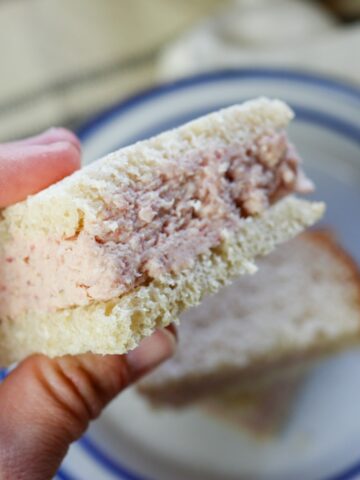
      Ham Sandwiches (1887)
    • 1800s cough medice
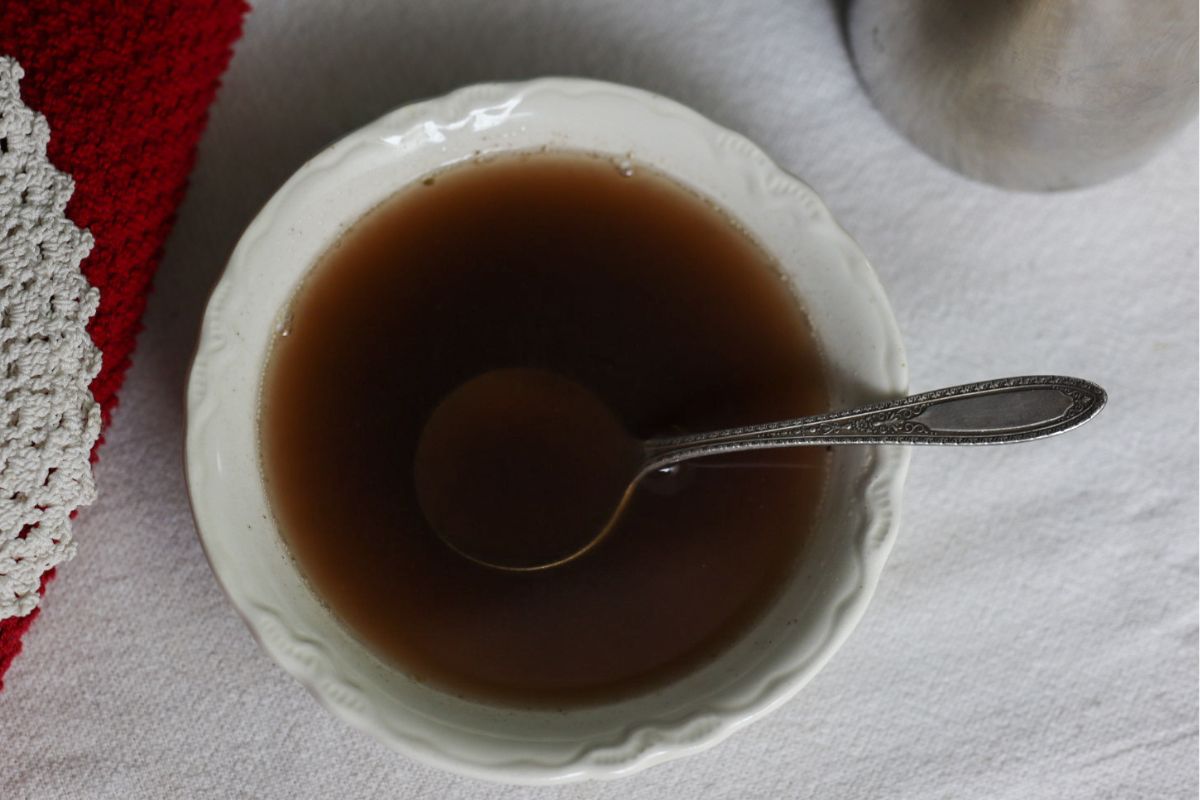
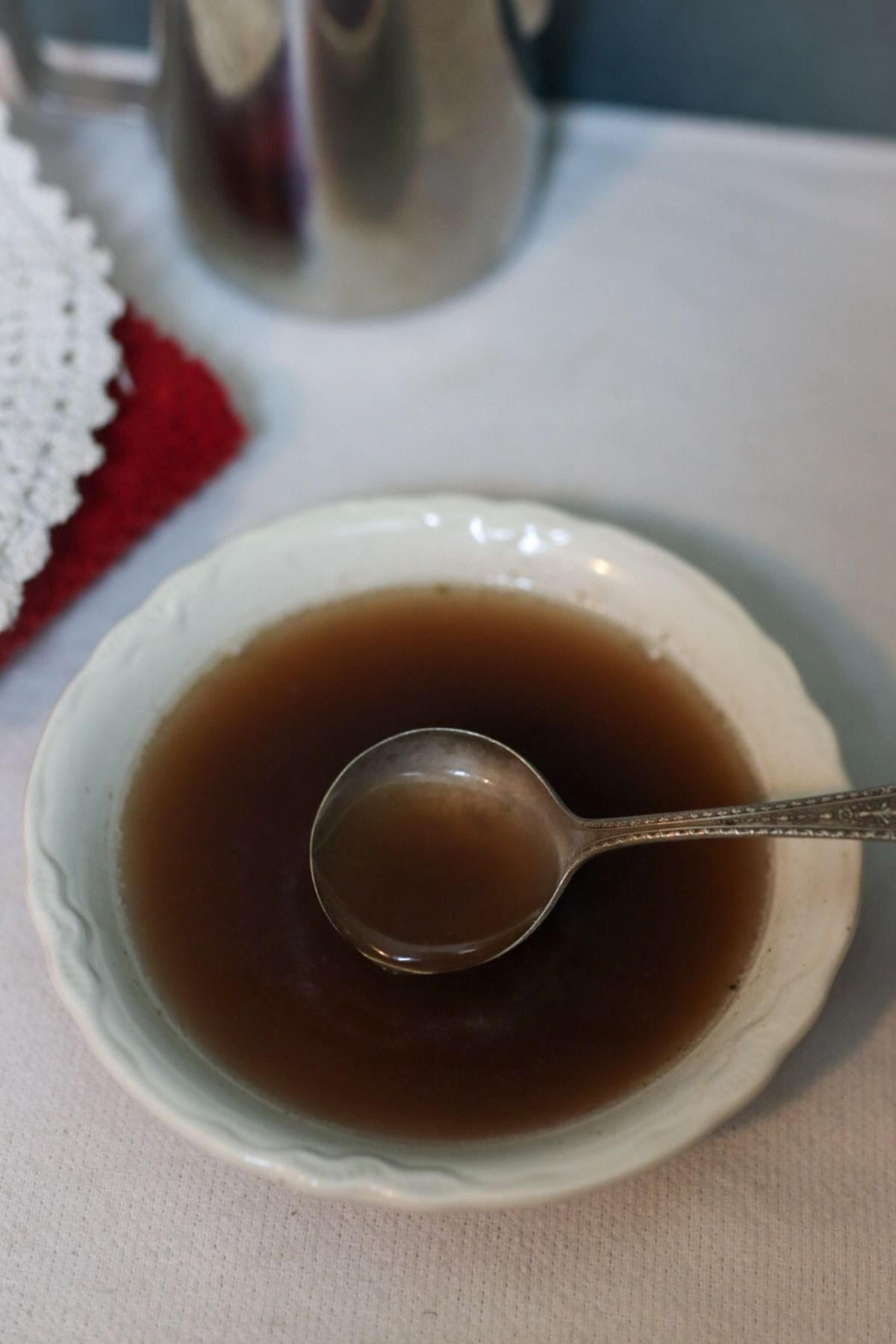
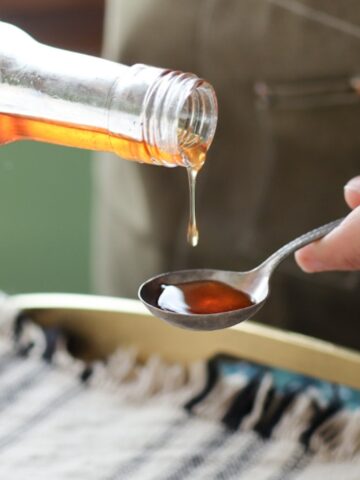
      Syrup for a Cough (1868)
    • a bowl of 1800's style oatmeal
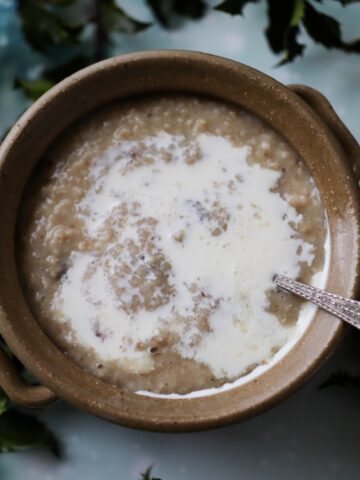
      Oatmeal (1883)
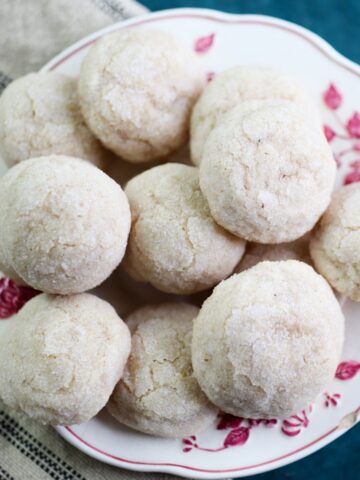
    • a plate of Connecticut cookies
      Connecticut Cookies (1875)
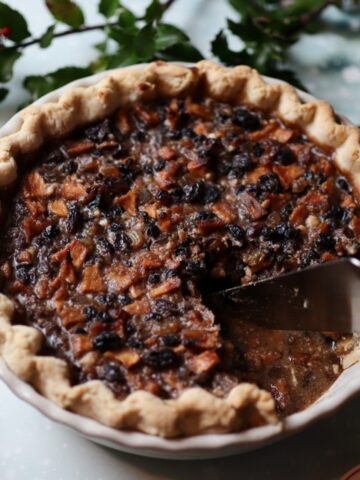
    • an apple mincemeat pie from an 1800's mince recipe
      Apple Mince-Meat (1877)
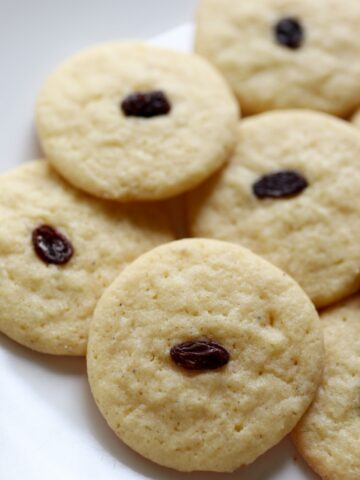
    • A plate of Bachelor's Button cookies
      Bachelor’s Buttons (1868)
    • Homemade Cranberry Sauce made from an 1800's recipe
      Cranberry Sauce (1845)
    • a slice of pumpkin pie
      Pumpkin Pie (1845)

    1800’s Thanksgiving Day Menus

    November 13, 2024 by Anna Leave a Comment

    1800's cook books
    cook books from the 1800's
    Photo Credit: The 1800’s Housewife.

    Dear friends ~

    Thanksgiving Day is just three weeks from yesterday, can you believe it? 

    This fall has whipped right by, and it’s really boggling my mind that we’re already on the brink of the holiday season, but here we are! 

    If you’d like to celebrate with an 1800’s style Thanksgiving meal this year, today’s email has some inspiration you might enjoy. Now and then, these nineteenth century cook books contain menu suggestions, for various occasions throughout the year. 

    Below, you’ll find the suggested menus for Thanksgiving Day, from both The New England Economical Housekeeper (published in 1845), and The White House Cook Book (1887). 

    From now until Thanksgiving, all of the recipes you’ll see here in the newsletter will be from one or the other of these menus, so keep your eyes open for some fun old-fashioned holiday recipes. (Real mince pie? Yes, please!)

    ~ Anna


    THE NEW ENGLAND ECONOMICAL HOUSEKEEPER
    and Family Receipt Book

    ​By Mrs. E. A. Howland
    ​
    1845

    a page from an 1800's cook book
    The New England Economical Housekeeper, 1845. Photo Credit: The 1800’s Housewife.

    I try to not have favorites among my cook book collection, but as one of the oldest volumes on my shelves, it’s hard not to have a special place in my heart for this one. 

    It’s a small, no-nonsense sort of cook book, so it feels especially significant that an entire page is dedicated to the suggestion of what to serve on Thanksgiving Day. 

    It’s also convenient that the instructions for most of these dishes are included right there on the page. I’m especially looking forward to trying the Plum Pudding, as well as the Gravy, Oyster, and Turnip Sauces. They did take their sauces seriously in the 1800’s, and I love that! 

    This cook book also has the apple pie recipe that I’m looking forward to trying and sharing here.


    THE WHITE HOUSE COOK BOOK

    By Mrs. F. L. Gillette
    and Hugo Ziemann, Steward of the White House
    ​
    1887

    a thanksgiving menu from an 1800's cook book
    The White House Cook Book, 1887. Photo Credit: The 1800’s Housewife.

    After looking at this menu, all I can think about is how I want Porterhouse Steak, Buckwheat Cakes, and Maple Syrup on Thanksgiving morning. Talk about a holiday breakfast!

    I’m also especially looking forward to trying that Hickory Nut Cake (which sounds just amazing), the Venison Pastry, and the Mince Pie.

    a winter luxury pie pumpkin in a field
    First introduced in 1893, “Winter Luxury” will always have my heart as the ultimate pie pumpkin variety. Photo Credit: The 1800’s Housewife.

    The Thanksgiving Day menus from these two cook books are ones I’m focussing on this year, but I do feel quite certain I’ve encountered at least one other Thanksgiving Day menu while reading through 1800’s cook books. As I come across any others, I’ll come back and add them.

    As always, thanks for being such a part of what I do. Your emails, questions, and input make my day. Feel free to send me an email anytime, with recipe requests! ‘Til next time, ~ Anna

    This article was originally published in the 1800’s Housewife newsletter. Not on the mailing list? You can join here to receive full recipes with cooking notes straight to your inbox!

    If you liked this recipe, here are some others you may enjoy:

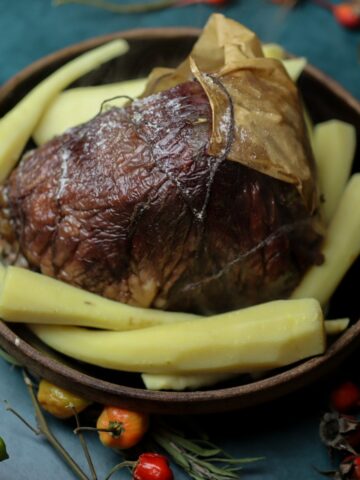
    • a baked stuffed beef heart
      Baked Heart (1885)
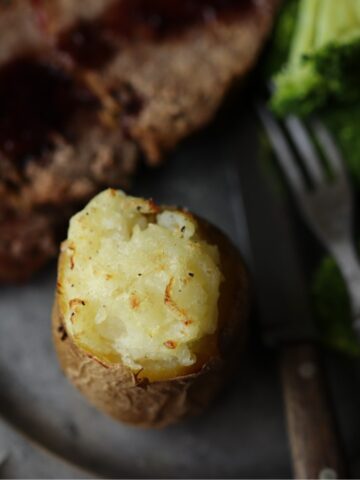
    • a baked potato on a pewter plate with antique knife and fork
      Potatoes in Cases (1876)
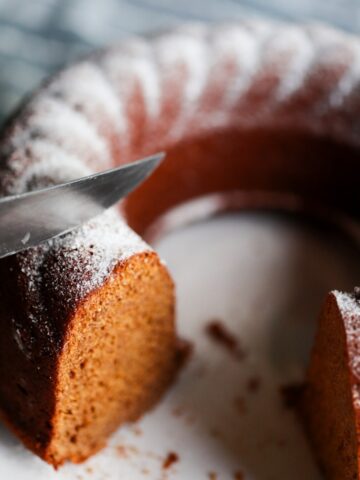
    • a round ginger cake
      Ginger Cake (1877)
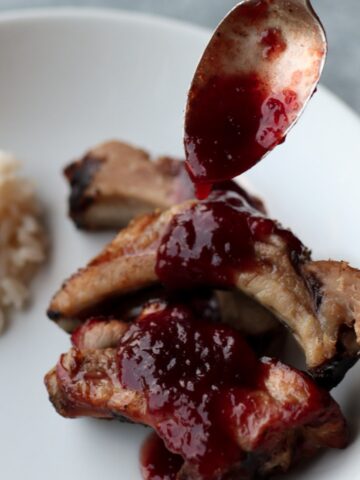
    • plum catsup on ribs
      Plum Catsup (1894)
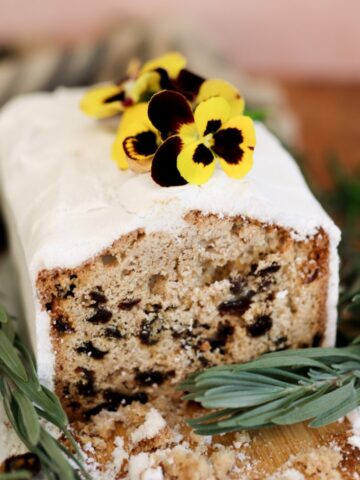
    • Philadelphia Loaf Cake
      Philadelphia Loaf Cake (1858)
    • a plate of ginger snaps
      Ginger Snaps ( c. Mid 1800s)
    • a peach pie with peaches
      Peach Pie (1894)
    • a bottle of blackberry cordial
      Blackberry Cordial (1871)
    • Homemade catsup from 1859 recipe
      Catsup (1859)
    • Lemonade (1881)
    • Peach marmalade in a glass jar
      Mrs. Hale’s Peach Marmalade (1873)
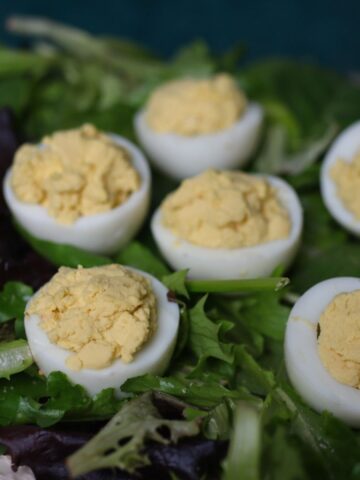
    • Devilled Eggs (1877)

    Coffee Cake (1877)

    November 7, 2024 by Anna Leave a Comment

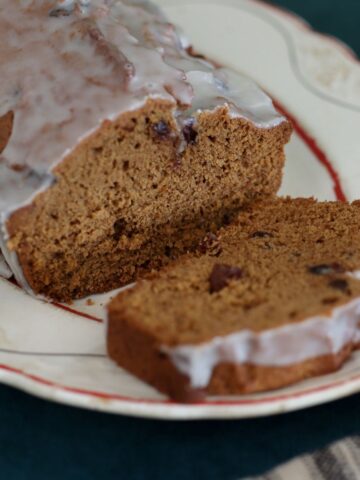
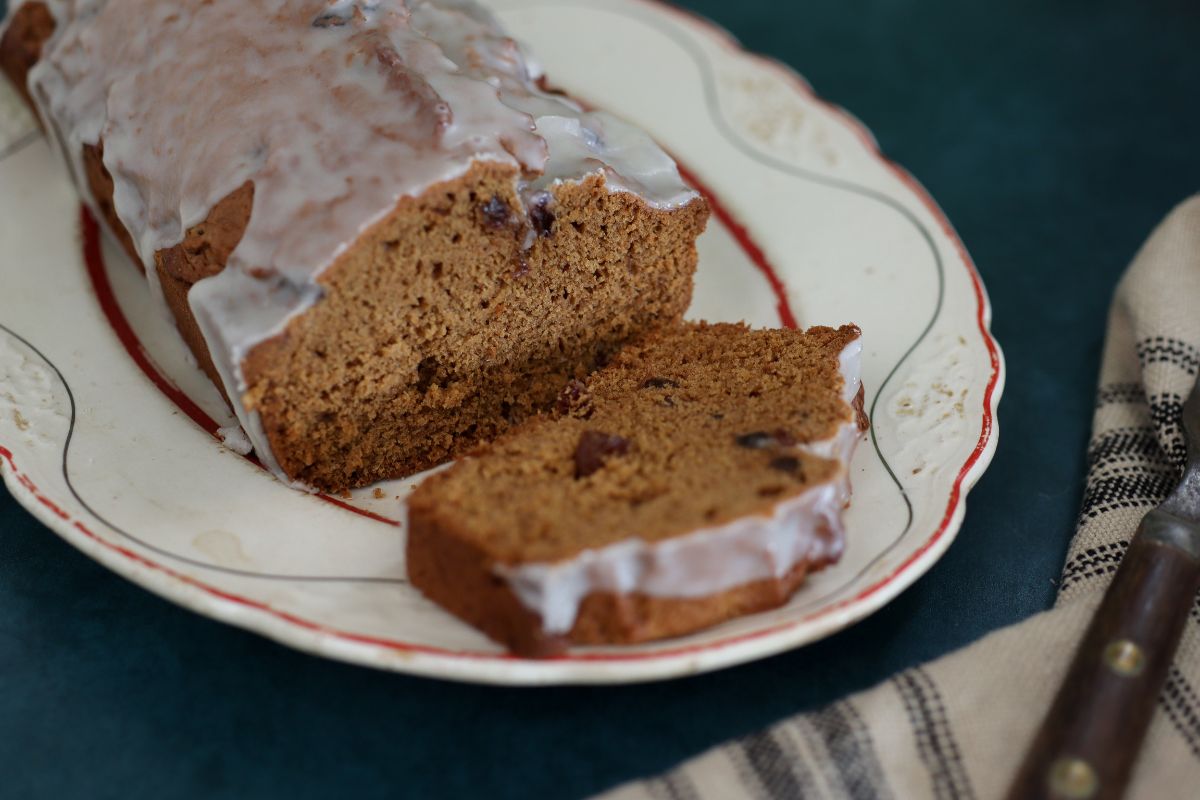
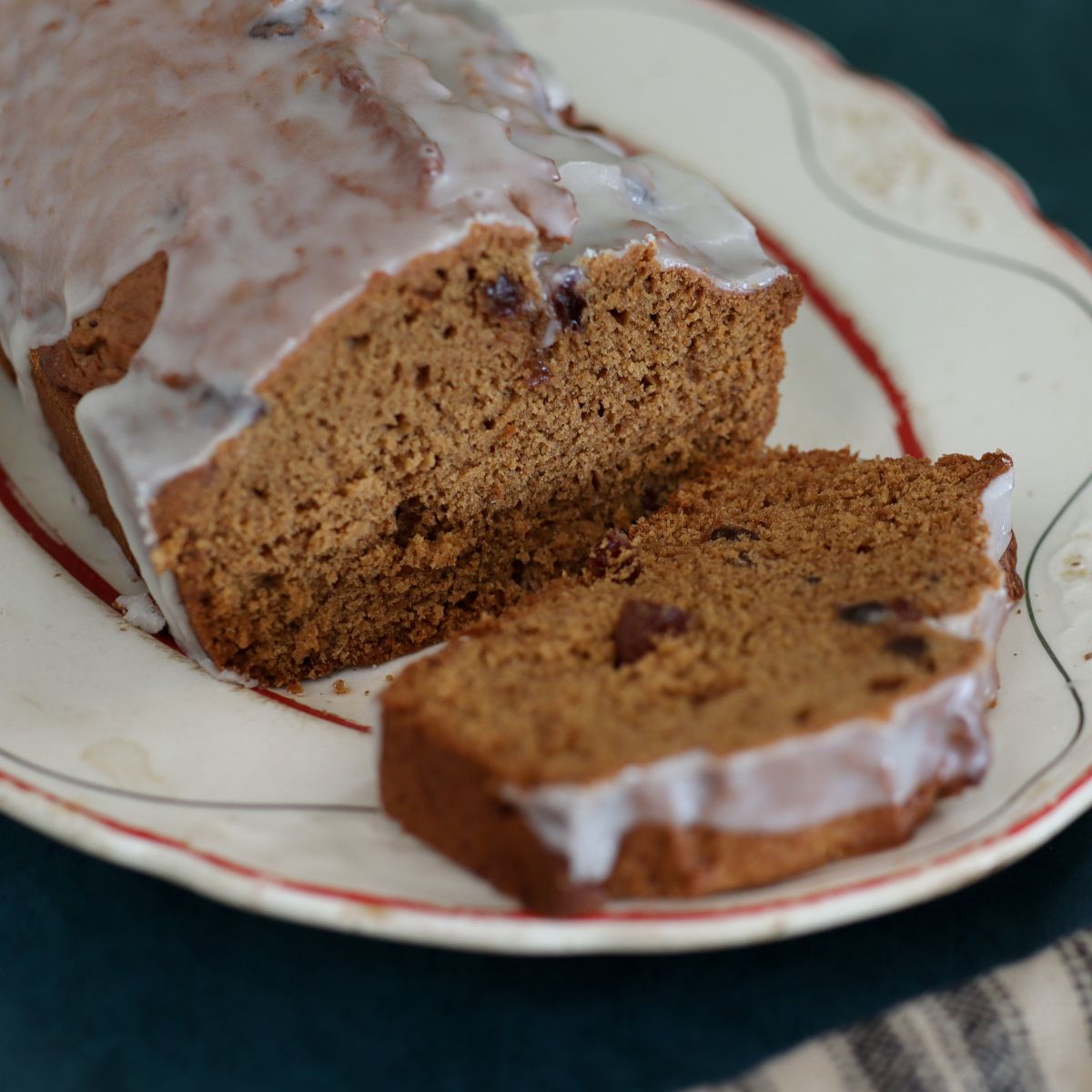
    slices of iced coffee cake

    If you’re looking for a good 1800’s coffee cake recipe to try, this is the one I recommend. So far, it’s the best-tasting one I’ve tried!

    slices of coffee cake
    Photo Credit: The 1800’s Housewife.

    Dear friends ~

    Just a quick little note this morning, and an easy recipe. 

    Much the way I’ve tried and shared multiple 1800’s recipes for gingerbread (some better than others), so too, I’ve been trying various 1800’s Coffee Cake recipes from different cookbooks, printed throughout different decades of the nineteenth century.

    In my opinion, this Coffee Cake recipe I’m sharing today is both tastier and less dry than the 1887 recipe I shared last winter (you can find that one here.) I’m far from exhausting the Coffee Cake recipes in these cookbooks, but so far, this is the one I’d choose to make again. It’s perfect for a chilly fall weekend. 

    Speaking of fall–do you realize that Thanksgiving is just 22 days away? From now until then, all of the recipes I’m making and sharing will be ones specifically suggested for serving on Thanksgiving Day, in the “suggested menus” sections from a couple of these 1800’s cookbooks. 

    Pumpkin pie, cranberry sauce, and oysters on the half-shell, here we come…

    ~ Anna

    slices of coffee cake
    Photo Credit: The 1800’s Housewife.


    COFFEE CAKE


    One cup of butter, one cup of sugar, one cup of molasses, one cup of coffee cold, one cup of currants, one teaspoonful of soda, one teaspoonful of mixed spices, two or four eggs, flour to thicken.

    The Home Cook Book, 1877

    Here’s a photo of the recipe as it appears in the cookbook:

    an 1800's recipe for coffee cake.
    From The Home Cook Book, 1877. Photo Credit: The 1800’s Housewife.

    A FEW COOKING NOTES: 

    Here are a few observations that might be helpful, if you’d like to give this recipe a go:

    sliced coffee cake
    Photo Credit: The 1800’s Housewife.

    What kind of pan to use?

    Loaf, round, or square pans all would have been common choices for a coffee cake like this one. Another popular style through the late 1800’s was a fluted round pan, with a hole in the middle…something of a wider, more-shallow predecessor to the bundt pan, which wouldn’t be introduced to most American kitchens until the 1950’s. 

    I found that this recipe works well in two loaf pans. It’s also easy to make a half-batch of this recipe, which makes a nice single loaf.

    Should you grease the pan? ​

    Absolutely! In the 1800’s, it wasn’t common to include instructions on greasing pans, or even baking temperature, along with every single recipe, the way these things are noted in modern cook books. 

    You’ll want to grease the pan well (butter or lard would be the right choice, if you want to be authentic.) Then dredge the well-greased pan lightly with flour.

    What kind of coffee? ​ ​

    Most coffee cake recipes of the 1800’s specify that the coffee should be “as brewed for the table”, and sometimes it’s suggested that it be “made strong”. 

    Without any clarifying notes in this particular recipe, I simply made an extra cup of the Ethiopia Sidamo I’m loving right now (and you know I make it strong), then let it get cold before using it to make this cake.

    an iced coffee cake from an 1800's recipe
    Photo Credit: The 1800’s Housewife.

    What to use for spices?

    I used ¼ teaspoon allspice, ¼ teaspoon mace, and ½ teaspoon cloves, to make up the 1 teaspoon of mixed spice, and really liked the resulting flavor profile. As a die-hard spice lover, I honestly could have doubled the spice in this, and been happy.

    As it was, the spice did not overpower the flavor of the coffee (this is a coffee cake after all!), and honestly that coffee flavor would have been overpowered if the spices were more pronounced. 

    All that said, any combination of cloves, nutmeg, mace, allspice, ginger, or cinnamon, would be appropriate spices to reach for in this era, and you really can’t go wrong with any of these. 

    Also, if you love spice cake as much as I do, this is the recipe you need to try.

    slices of iced coffee cake
    Photo Credit: The 1800’s Housewife.

    Two eggs or four?

    Now, the simple solution here would be to use three, and that would certainly make a lovely cake. It was not uncommon for cake recipes of the era to specify a range in the number of eggs to use. Eggs were dear in the winter months when chickens were not laying abundantly (or at all), and were cheap in the summer. 

    The general idea was that putting in the maximum number of eggs called for in a given recipe, would result in a richer, better cake. Basically, “put in this many if you can, but don’t worry if you can’t”. 

    (Next time I come across one of the recipes that mentions this concept specifically, I’ll need to take a picture and share it. I couldn’t put my finger on one in time for hitting “send” on this email today, but I’ll keep my eyes open!) 

    With this in mind, I went with four eggs and loved it. Would it be great with 2? I’m sure it would still be good. If you try it this way, please let me know how it comes out for you!

    How much flour to put in?

    I found that 3 and ¼ cups of flour seemed about perfect for this recipe, when made with 4 moderate-sized chicken eggs. If using only 2 eggs, you’d want to tweak this, perhaps starting with 2 ¾ cups and going from there. 

    Save out a couple tablespoons of the flour when you’re putting it in, so you can use it to dredge the currants–this helps them to stay nicely dispersed throughout the cake, rather than sinking to the bottom.

    About those currants.

    It’s worth getting your hands on good dried currants if you can, since the flavor of these truly is different from raisins. That said, if you don’t have currants on hand, and want to make this recipe, raisins would be a fine substitute. I would chop them small so they’re more currant-sized. 

    Regardless of whether you use currants or raisins, take those couple of tablespoons of flour that you reserved, put it in a bowl, and add the dried fruit. Give them a good toss, until the fruit is well floured, then add it all to the cake batter. This was a common practice in 1800’s cake making, and really makes a difference with keeping your dried fruit nicely sprinkled throughout the cake, rather than sinking to the bottom as the cake is cooking.

    Oven temperature

    I went with 350°F for baking this cake, and it’s what I’d use again. I felt the cake cooked through appropriately without getting too dry. 340°F would probably also work well, if you’re looking for a slightly less golden-brown crust, while still attaining a well-set center.

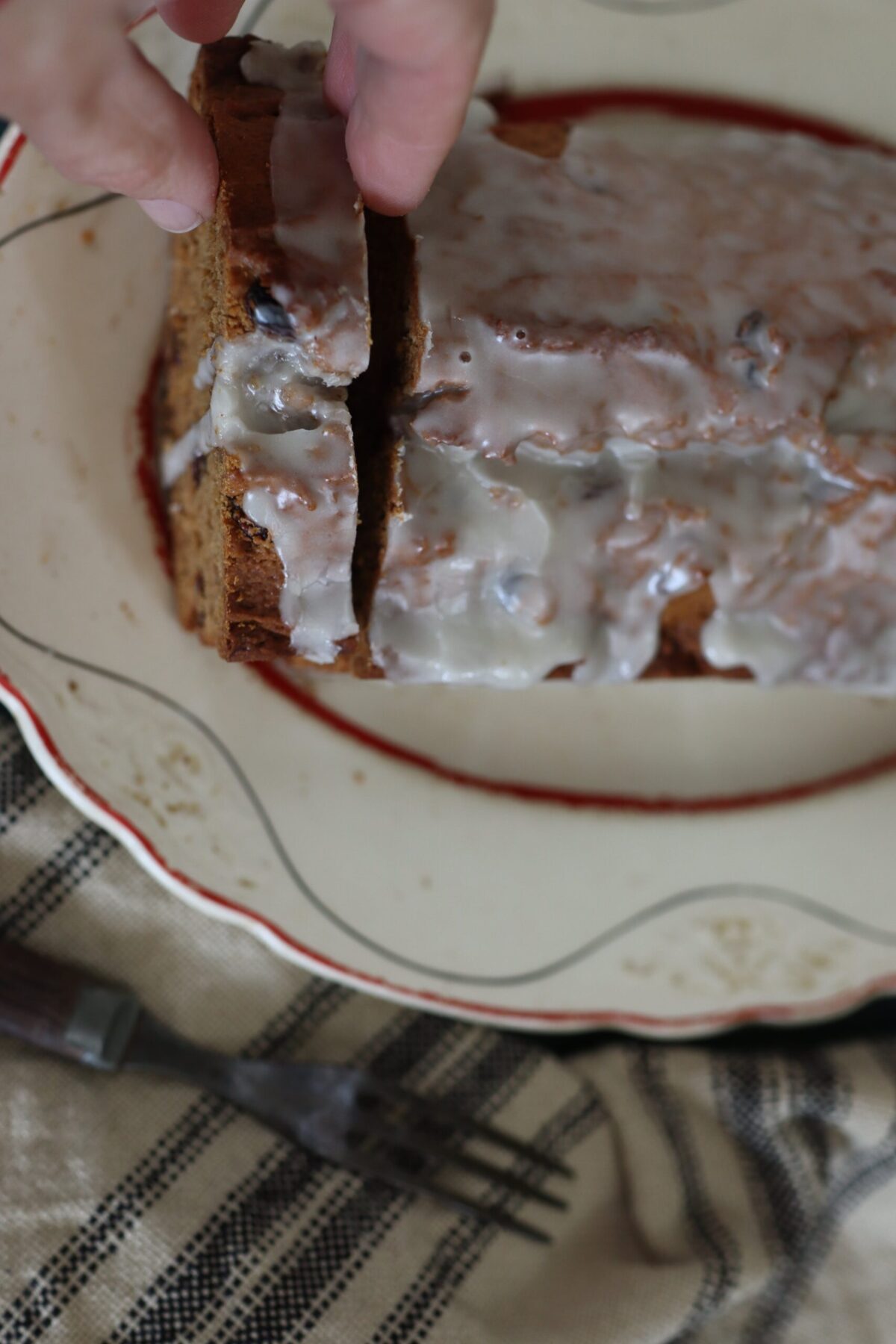
    a hand reaching for a slice of coffee cake
    Photo Credit: The 1800’s Housewife.

    How long to bake this? ​

    In my loaf pans, this took fifty-five minutes to bake. 

    If you use a differently shaped pan, your cake may take a bit more or less time than mine. Check for golden edges and a center that’s fully set. The correct 1800’s way to check for doneness is by inserting a broom straw into the center of the cake. If it comes out clean, the cake is done, if bits of batter adhere to it, the cake needs a little more time. Feel free to use a toothpick, if you don’t keep clean broom straws handy!

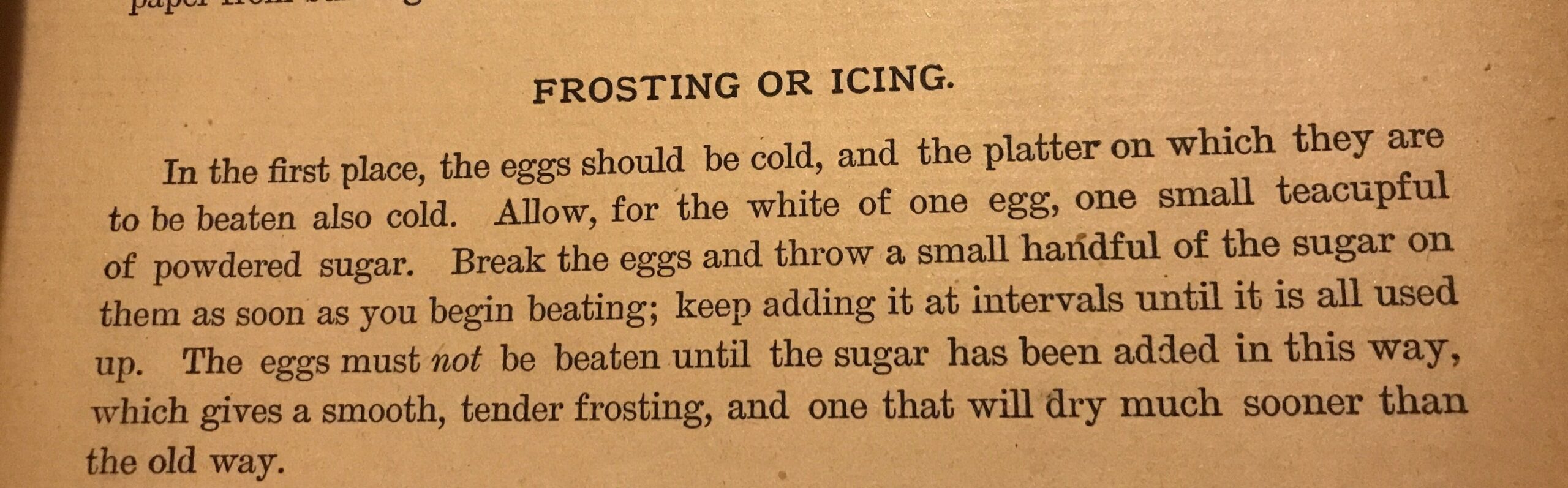
    What about icing?

    Here’s the general icing recipe from this cookbook:

    An 1800's recipe for cake icing
    The Home Cook Book, 1877. Page 296. Photo Credit: The 1800’s Housewife.

    I found that using this recipe, made with three eggs whites, was more than enough for a loaf of this cake. Four egg whites should give plenty of frosting for two loaves. 

    I did not add any additional flavoring to it, since I really wanted the flavor of the coffee to come through.

    a loaf of coffee cake with icing
    Photo Credit: The 1800’s Housewife.

    If you give this recipe a try, I’d love to hear about it!

    As always, feel free to send me an email anytime, with recipe requests! ‘Til next time, ~ Anna

    This post was originally published in the 1800’s Housewife newsletter. Not on the mailing list? You can join here to receive full recipes with cooking notes straight to your inbox!

    If you liked this recipe, here are some others you may enjoy:

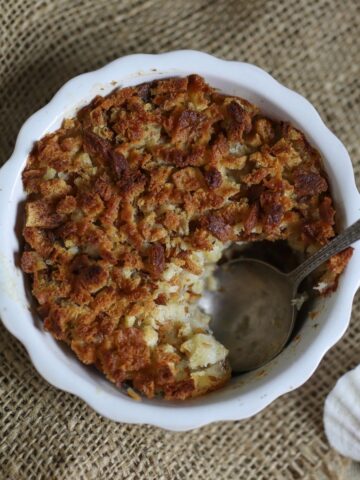
    • Scalloped Fish (1887)
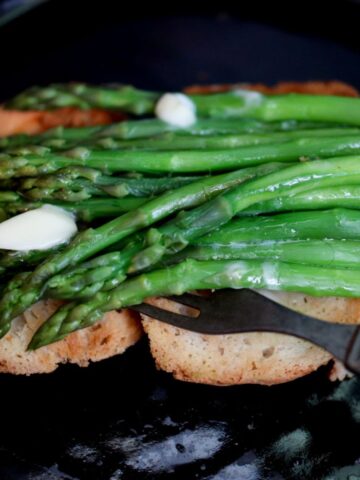
    • Asparagus on Toast (1877)
    • a slice of clove cake from an 1877 recipe
      Clove Cake (1877)
    • a plate of 1800's sugar cookies
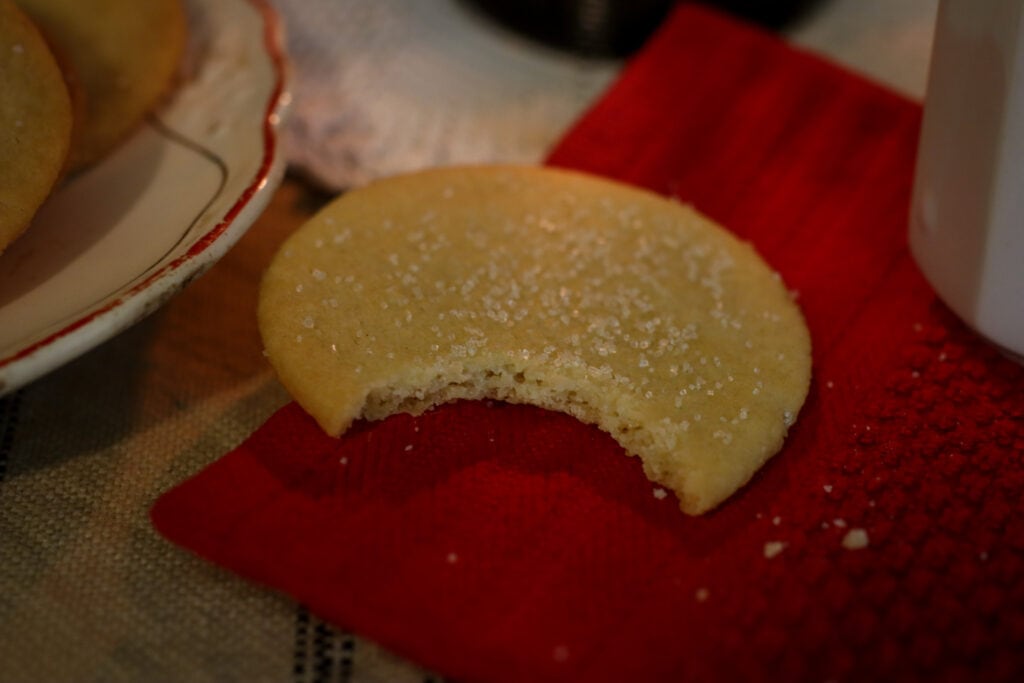
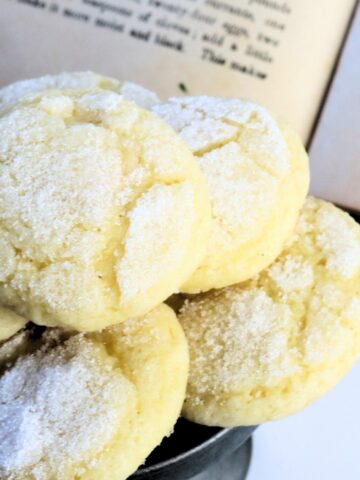
      Sugar Cookies (1877)
    • a bowl of lentil soup
      Lentil Soup (1885)
    • raspberry jam from an 1859 recipe
      Mrs. Rundell’s Raspberry Jam (1859)
    • corn muffins in a cast iron pan
      Corn Muffins (1876)
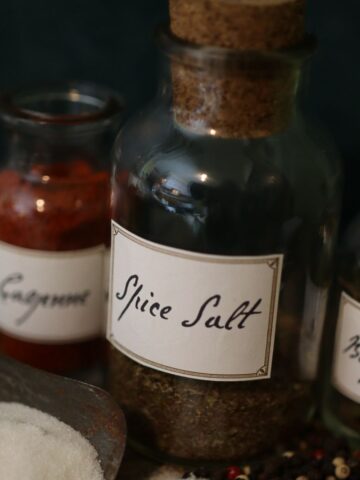
    • Spice Salt (1885)

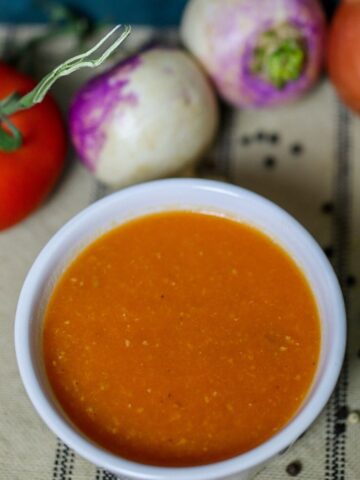
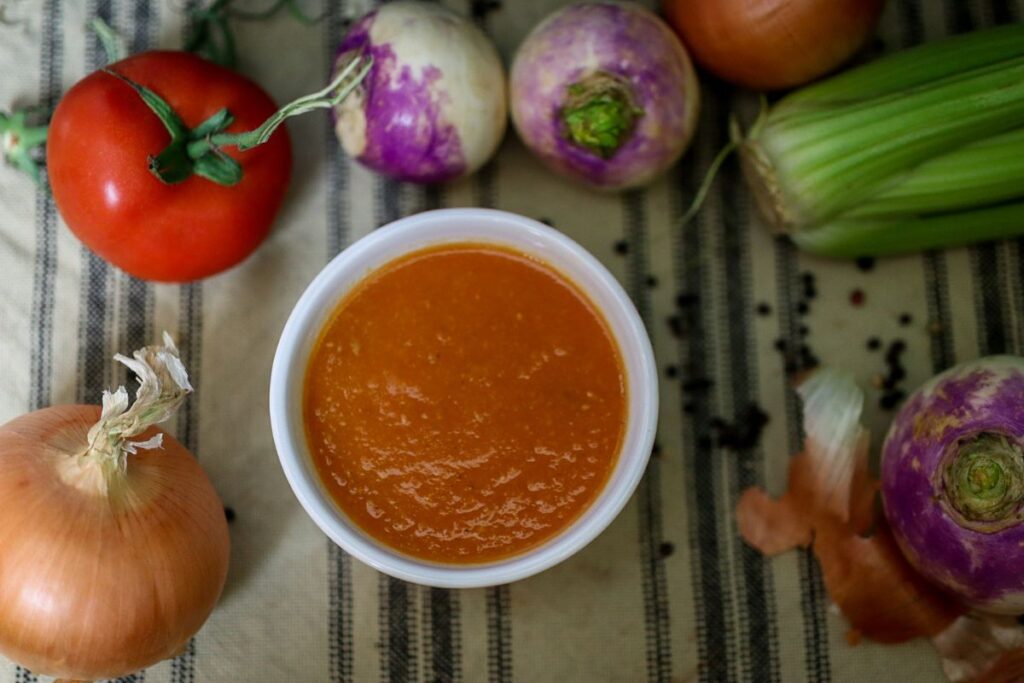
    Tomato Soup (1892)

    December 22, 2023 by Anna Leave a Comment

    Photo Credit: The 1800’s Housewife.

    Hello dear friends ~

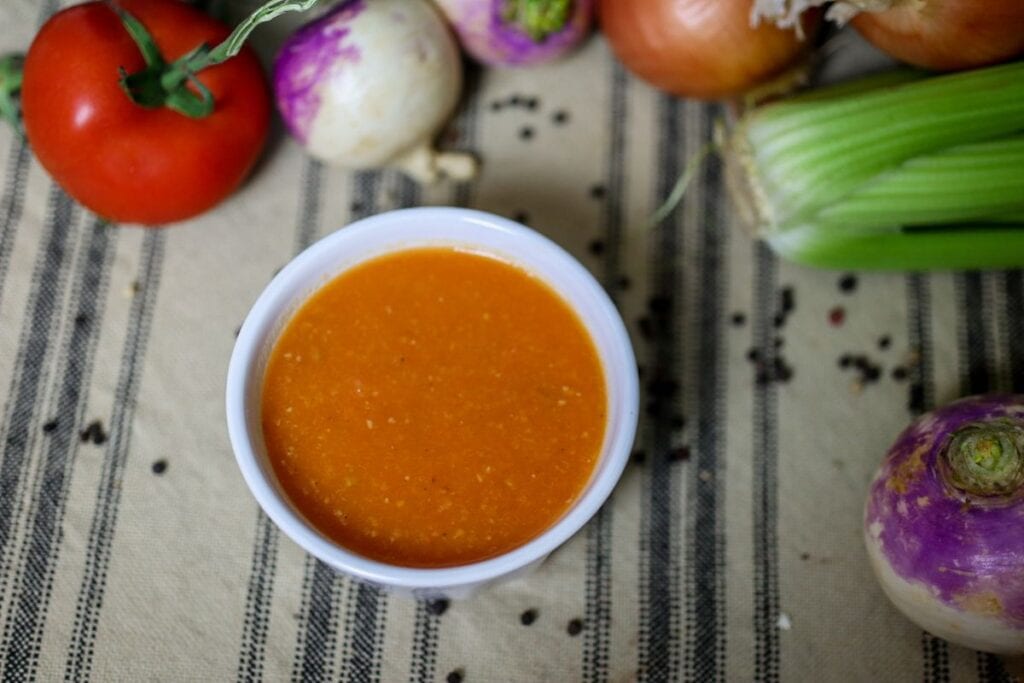
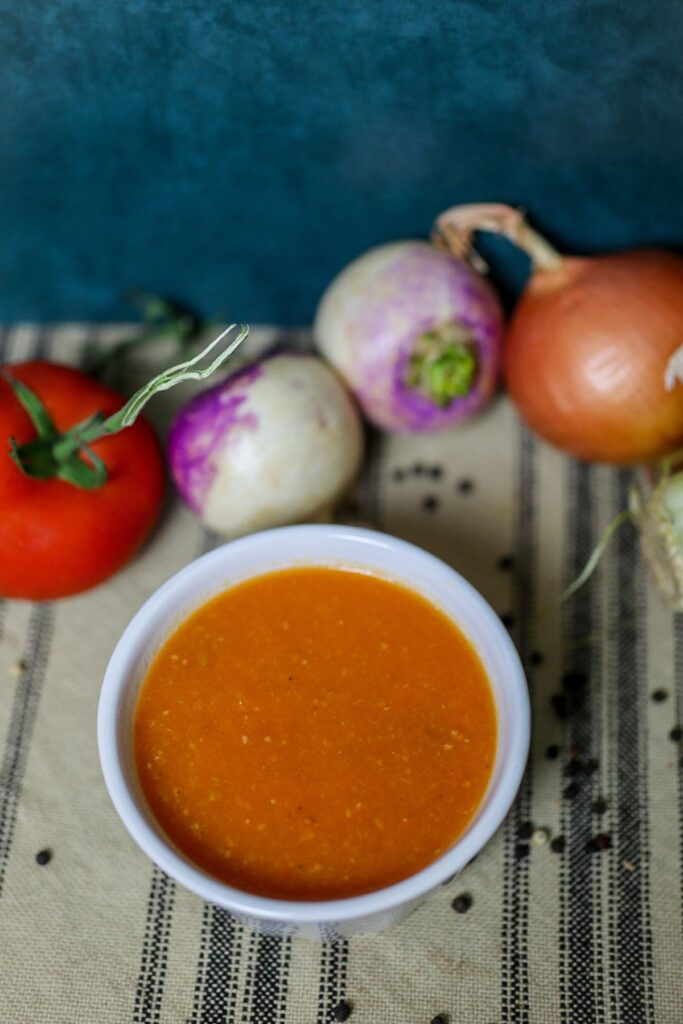
    I could live on this soup. Granted, it’s February in Maine, and living on soup might not be the craziest thing right now. But really, it is THAT good. 

    When it came to putting in the ham, I won’t deny that I did pause a moment. Dear reader, have you ever put ham into a pot of tomato soup? I surely hadn’t, and somehow it just seemed…wrong. But after eating this soup for lunch and dinner today, it won’t be the last time I start a batch of tomato soup with “a mess of turnips, carrots, and onions”…and a half pound of ham.

    Photo Credit: The 1800’s Housewife.

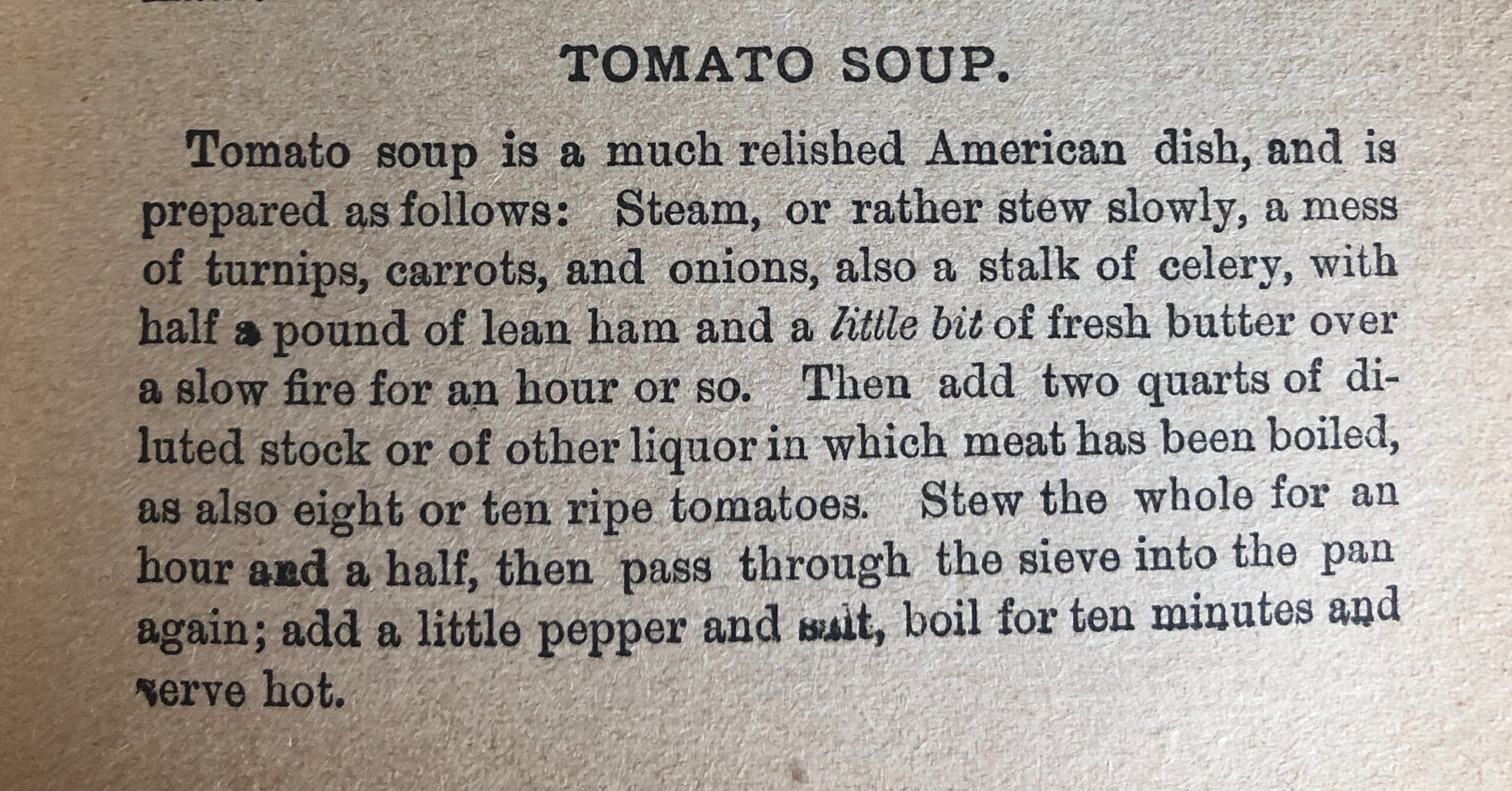
    Here’s a photo of the recipe as it appears in the cookbook:

    from The Snow White Cook Book, 1892. Page 29 Photo Credit: The 1800’s Housewife.

    A FEW COOKING NOTES: 

    How much is “a mess”? ​

    One of the reasons I chose to feature this particular soup recipe, is because it uses that charming old turn of phrase. My paternal grandmother and her brother used this language (for example, to “pick a mess of coltsfoot greens”), and so did my maternal great-grandmother. 

    As Tipper, over at Blind Pig & The Acorn explains, “a mess” was generally considered to be an amount sufficient for a meal. 

    That rather leaves us on our own to decide how much onion, turnip, and carrot is sufficient here. I went with two medium carrots, two small onions, and two turnips about the size of tennis balls. (If all you have available is the huge rutabagas that are often called turnips, I’d go with half of one.)

    Photo Credit: The 1800’s Housewife.

    What type of stock or liquor to use? ​

    I really do think that any meat or bone broth would work just fine in this recipe. I used chicken broth, because that’s what I had on hand. 

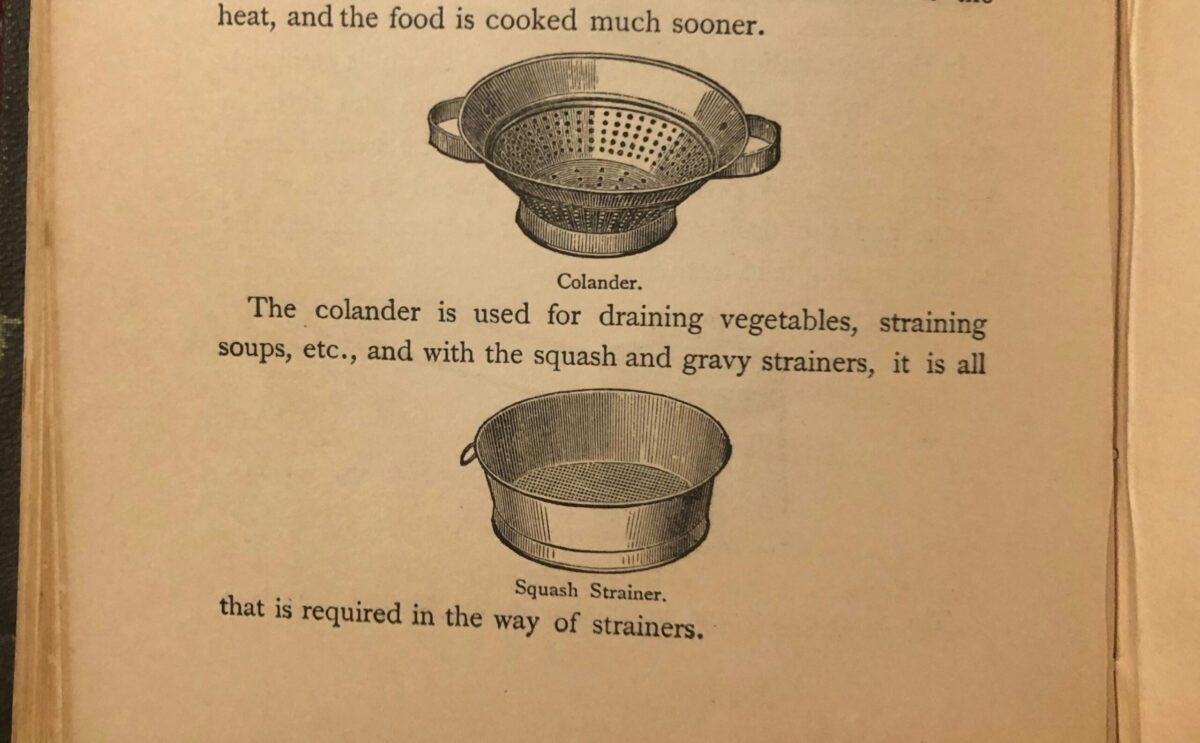
    What if you don’t have a big sieve?​

    I don’t either. Pressing the soup through a colander with a wooden spoon would be a pretty authentic method though. (See this illustration below from Miss Parloa’s New Cook Book, which mentions using a colander for straining soup).

    Descriptions of Kitchen Furnishings, from Miss Parloa’s New Cook Book, 1881 Photo Credit: The 1800’s Housewife.

    Perhaps it was cheating a bit, but I used my circa 1940’s Foley food mill. 

    Why do we associate grilled cheese sandwiches with tomato soup? 

    (Not a cooking note, but something I wondered, and thought you might too.) The ever-helpful Food Timeline website does a lovely job of drawing that connection. In a word, school lunch. The fascinating timeline is definitely worth a read.

    Photo Credit: The 1800’s Housewife.

    📖 Recipe

    Tomato Soup

    The Snow White Cook Book, 1892
    This heavenly tomato soup recipe is just waiting for grilled cheese sandwiches to be invented.
    Print Recipe Pin Recipe Rate Recipe
    Calories: 174kcal

    Ingredients

    • 2 carrots
    • 2 small onions
    • 2 small turnips about tennis ball sized
    • 1 stalk of celery
    • 8 ounces chopped ham
    • 1 tablespoon butter
    • 2 quarts chicken broth or other stock
    • 8-10 ripe tomatoes
    • salt and pepper to taste

    Instructions

    "Tomato soup is a much relished American dish, and is prepared as follows:

    • Steam, or rather stew slowly, a mess of turnips, carrots, and onions, and also a stalk of celery, with half a pound of lean ham and a little bit of fresh butter over a slow fire for an hour or so.
    • Then add two quarts of diluted stock or of other liquor in which meat has been boiled, and also eight or ten ripe tomatoes.
    • Stew the whole for an hour and a half, then pass through the sieve into the pan again;
    • add a little pepper and salt, boil for ten minutes and serve hot."

    Nutrition

    Serving: 1g | Calories: 174kcal | Carbohydrates: 18g | Protein: 12g | Fat: 7g | Saturated Fat: 3g | Polyunsaturated Fat: 3g | Cholesterol: 34mg | Sodium: 1817mg | Fiber: 5g | Sugar: 10g
    Tried this recipe?Let us know how it was!

    Coffee Cake (1887)

    December 21, 2023 by Anna Leave a Comment

    Photo Credit: The 1800’s Housewife.

    The snow is coming down heavily again, and it feels good to have a fire going in the woodstove. A nice slice of cake, a hot cup of Earl Grey, and a new library book are calling to me, and I’m feeling grateful to be hunkered in for a peaceful winter’s night. 

    The cake in question is a coffee cake, baked from the 1887 White House Cook Book. 

    I’ve made this a couple of times now, under the guise of “oven temperature research”, and it really is tasty. Not, perhaps, quite as memorable as the Composition Cake we made last week. But still a pleasant little loaf that’s not too sweet, just spicy enough, and begs to be served with hot coffee or tea.

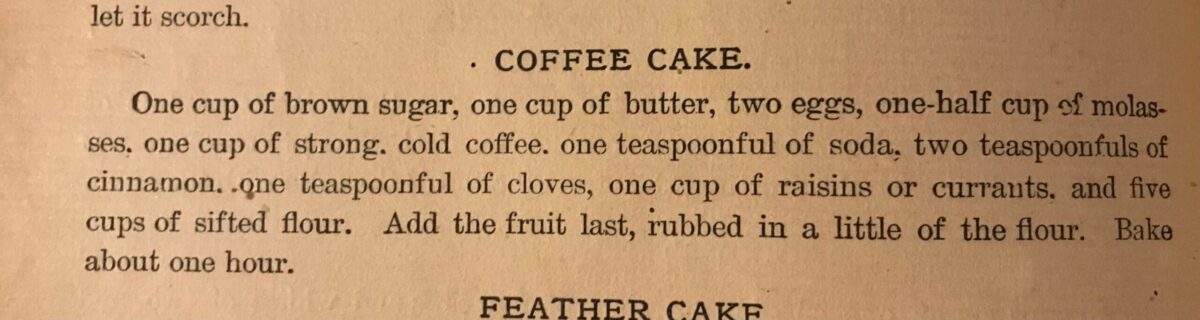
    Here’s a photo of the recipe as it appears in the cookbook:

    Coffee Cake, from The White House Cook Book, 1887. Page 264 Photo Credit: The 1800’s Housewife.

    A Few Cooking Notes: 

    I really did have to make this one a couple of times to nail the oven temperature and pan type. An hour is rather a long baking time, and the White House Cook Book cake recipes tend to require baking in a pretty moderate oven–so finding the right combination of temperature and pan depth was a fun little challenge.

    OVEN TEMPERATURE: 

    I found that 330° F seemed to be the right temperature for this cake. No matter the pan I used, 350° made the hour-long recommended baking time excessive. You’ll know the cake is done when the center is well set, and a toothpick (or broom straw if you’d like to be authentic) comes out clean. 

    WHAT PAN TO USE: 

    This recipe seems meant to be a deep cake, and what worked best for me was making this in a loaf pan, which wasn’t uncommon for 1800’s cakes. It’s still lovely when made in shallower pans, but keep in mind that you’ll need to reduce the baking time. Whatever pan you use, grease it well.

    Photo Credit: The 1800’s Housewife.

    FLOUR. 

    If you’re not sifting your flour (and of course we really don’t need to these days), I do suggest fluffing it before measuring, and using a very light hand when measuring it out. You don’t don’t want a bit more than the recipe calls for. 

    FROSTING. 

    The recipe doesn’t specify that it should be frosted, but frosting cakes of this type was pretty common in this era. Most of the cake recipes in The White House Cook Book don’t contain notes about frosting, yet there are abundant frosting recipes offered. So I felt I wasn’t going out on too much of a limb to frost this. I used just the most basic frosting recipe at the beginning of the frosting section:

    From The White House Cook Book, 1887. Page 253. Photo Credit: The 1800’s Housewife.

    CONSISTENCY.

    This is a thick, thick batter. It is not your usual cake batter consistency, 1800’s or otherwise. And once you’ve followed the instructions, it’s tempting to suspect you’ve done something wrong. 

    “Surely a cake batter this thick won’t turn out”, you’ll likely be thinking. (Seriously, it’s like spreading gingerbread cookie dough in a pan and hoping for cake.) 

    But don’t be dismayed. It does rise, and comes out just fine.(Do leave that oven shut, until toward the end when you’re checking for done-ness though!). 

    And while it’s a definitely a cake with a dryer texture, I appreciate that the level of sweetness isn’t overwhelming, and that the flavors of the spices and raisins are able to really shine through. I’d love to hear what you think, if you make this!

    Photo Credit: The 1800’s Housewife.

    The snow is coming down thick and fast out there now. If the power holds, tomorrow’s recipe will be for Washington Omelet, from 1881. 

    If we do lose power (it is rural Maine after all), I’ll be polishing up my top-of-the-woodstove coffee making skills, and will see you on the other side. ‘Til then, Anna

    📖 Recipe

    Coffee Cake

    The White House Cook Book
    1887
    A slightly dry 1800's coffee cake recipe that really lets the spices and raisins shine through.
    Print Recipe Pin Recipe Rate Recipe
    Calories: 255kcal

    Ingredients

    • 1 cup brown sugar
    • 1 cup butter
    • 2 eggs
    • ½ cup molasses
    • 1 cup strong cold coffee
    • 1 teaspoon baking soda
    • 2 teaspoon cinnamon
    • 1 teaspoon cloves
    • 1 cup raisins or currants
    • 5 cups flour

    Instructions

    • "One cup of brown sugar, one cup of butter, two eggs, one-half cup of molasses, one cup of strong, cold coffee, one teaspoonful of soda, two teaspoonfuls of cinnamon, one teaspoonful of cloves, one cup of raisins or currants, and five cups of sifted flour.
      ​Add the fruit last, rubbed in a little of the flour. Bake about one hour. "
    • Preheat oven to 330° F. Grease a loaf pan, or small bundt pan.
    • Beat butter and sugar until light and fluffy.
    • Stir in eggs, molasses, and coffee.
    • Add flour, spices, and soda. Stir until well mixed.
    • Add raisins or currants, and still until well incorporated.
    • Spread into the prepared pan. Bake 1 hour, or until center is set.
    • Cool, and frost if desired.

    Nutrition

    Serving: 1g | Calories: 255kcal | Carbohydrates: 42g | Protein: 4g | Fat: 8g | Saturated Fat: 5g | Polyunsaturated Fat: 3g | Cholesterol: 36mg | Sodium: 126mg | Fiber: 2g | Sugar: 21g
    Tried this recipe?Let us know how it was!

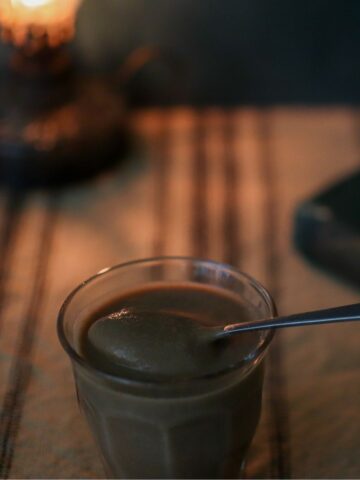
    Chocolate Custard (1883)

    December 14, 2023 by Anna 1 Comment

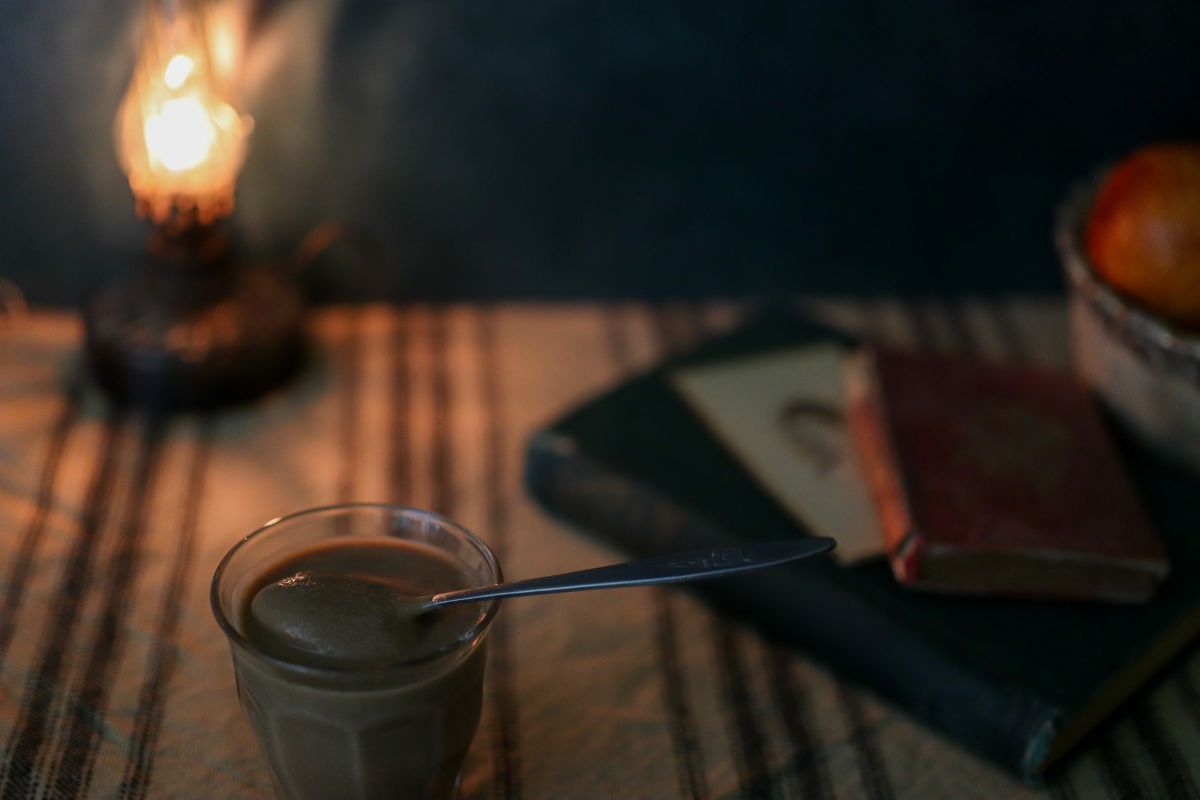
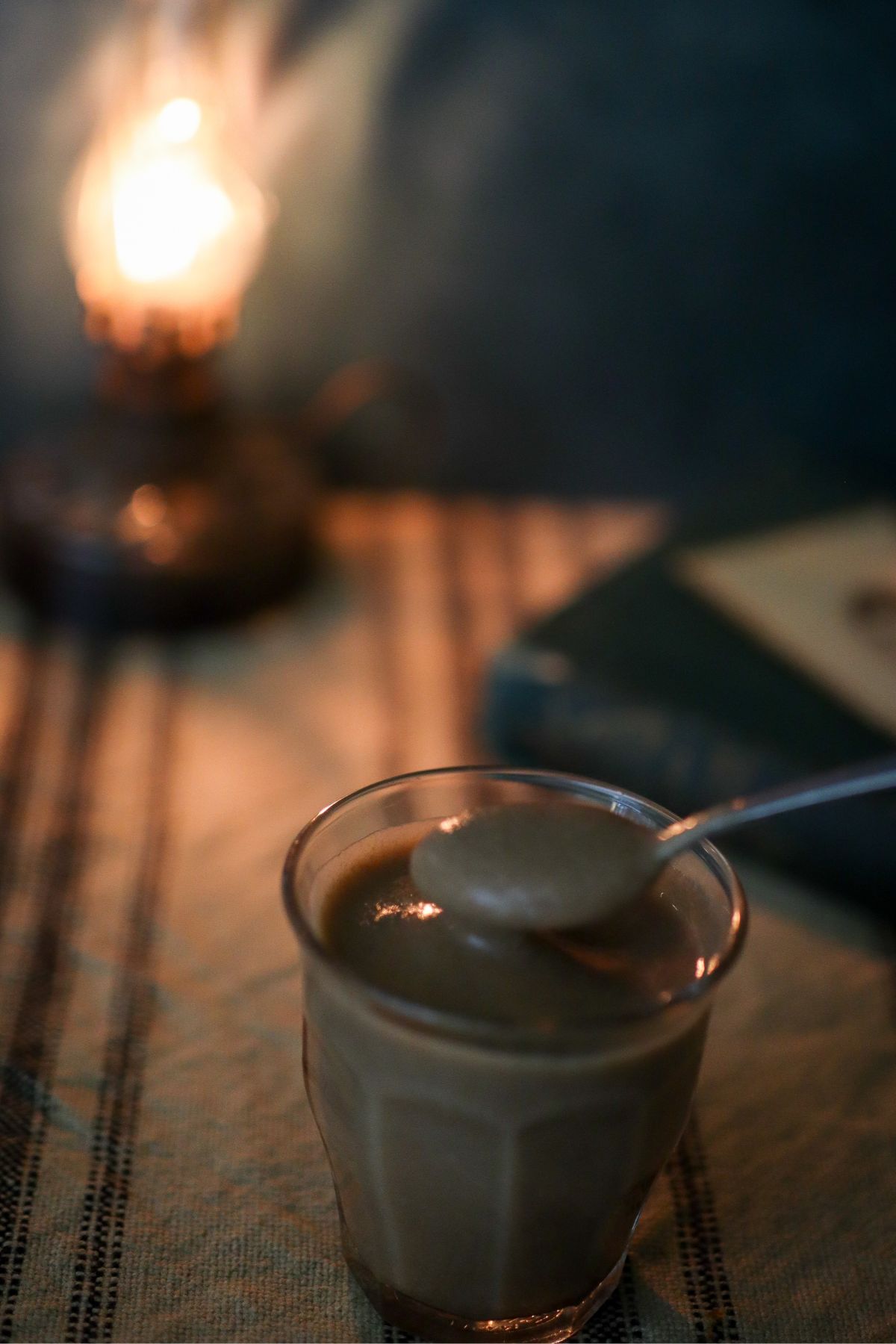
    Photo Credit: The 1800’s Housewife.

    Having fallen in love with the dark and bitter flavors of 1800’s drinking chocolate, I’ve been eager to try some other chocolate recipes. 

    Chocolate custard sounded delicious, so I chose this recipe from 1883. What a surprise to find it a very different flavor experience than the drinking chocolate I’ve come to love.

    Where 1800’s hot chocolate carries a strong, full-bodied chocolate flavor, this custard is only mildly chocolatey. Where drinking chocolate tended toward a less-sweet, even bitter, flavor profile, this recipe is sweet beyond what I was prepared for. 

    Dear reader, I couldn’t finish eating mine.

    I told myself when I started this project that I wouldn’t only share the recipes I loved. That any 1800’s recipe carefully re-created deserves its moment. Today, that moment belongs to this chocolate custard. 

    And my guess is that if you take sugar in your coffee, you may genuinely enjoy it more than I did!

    Photo Credit: The 1800’s Housewife.

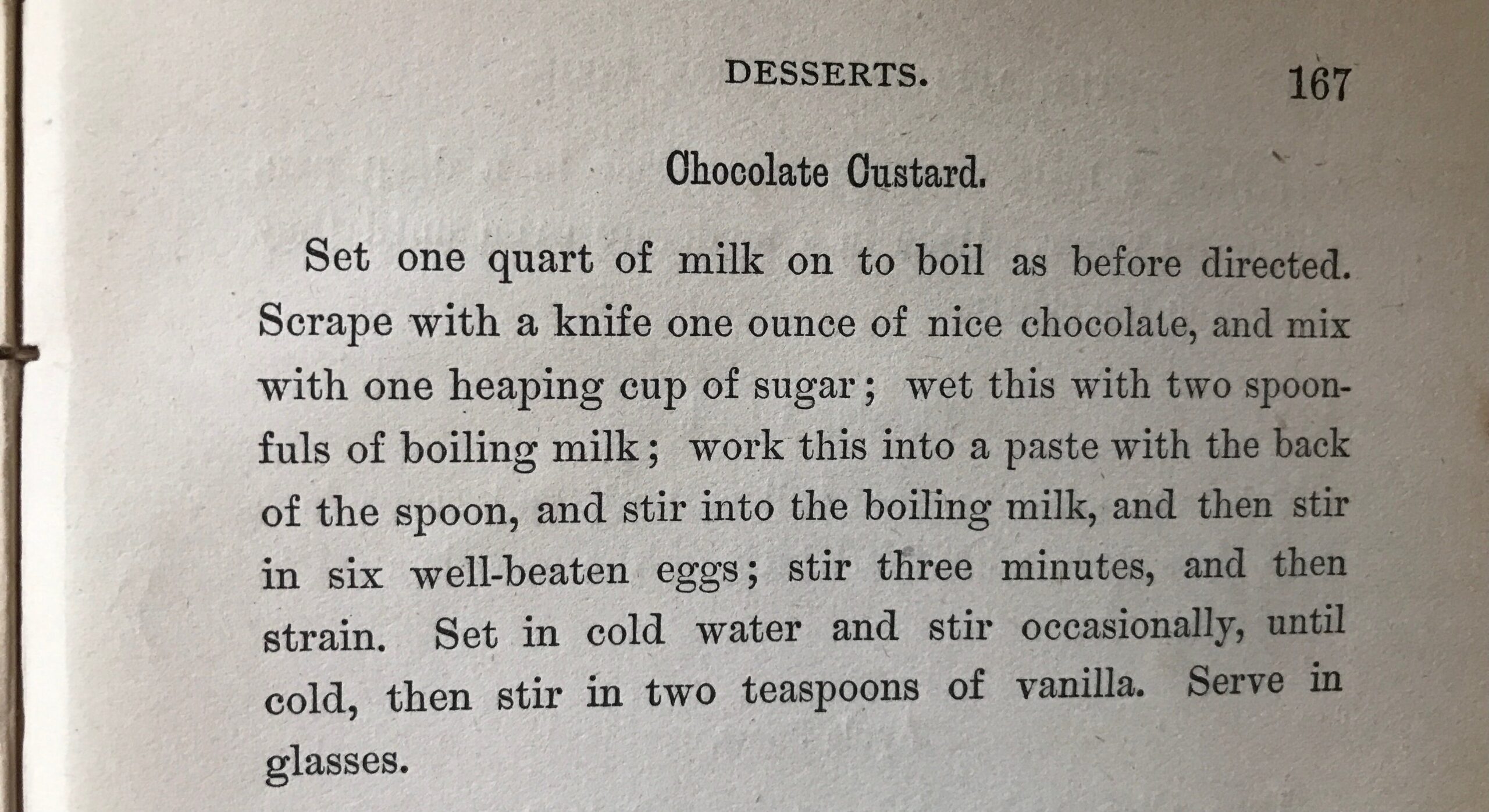
    Here is a picture of the recipe as it appears in the cookbook:

    Chocolate Custard, from The Appledore Cook Book, 1883. Page 167 Photo Credit: The 1800’s Housewife.

    COOKING NOTES: 

    This is another easy little recipe, and it worked very well, following the instructions as written. I was delighted to find that the three minutes really was exactly how long it took this to cook. 

    What type of pan to use: ​

    A double-boiler works very well, in place of the tin pail inside a kettle. 

    What chocolate to use: ​

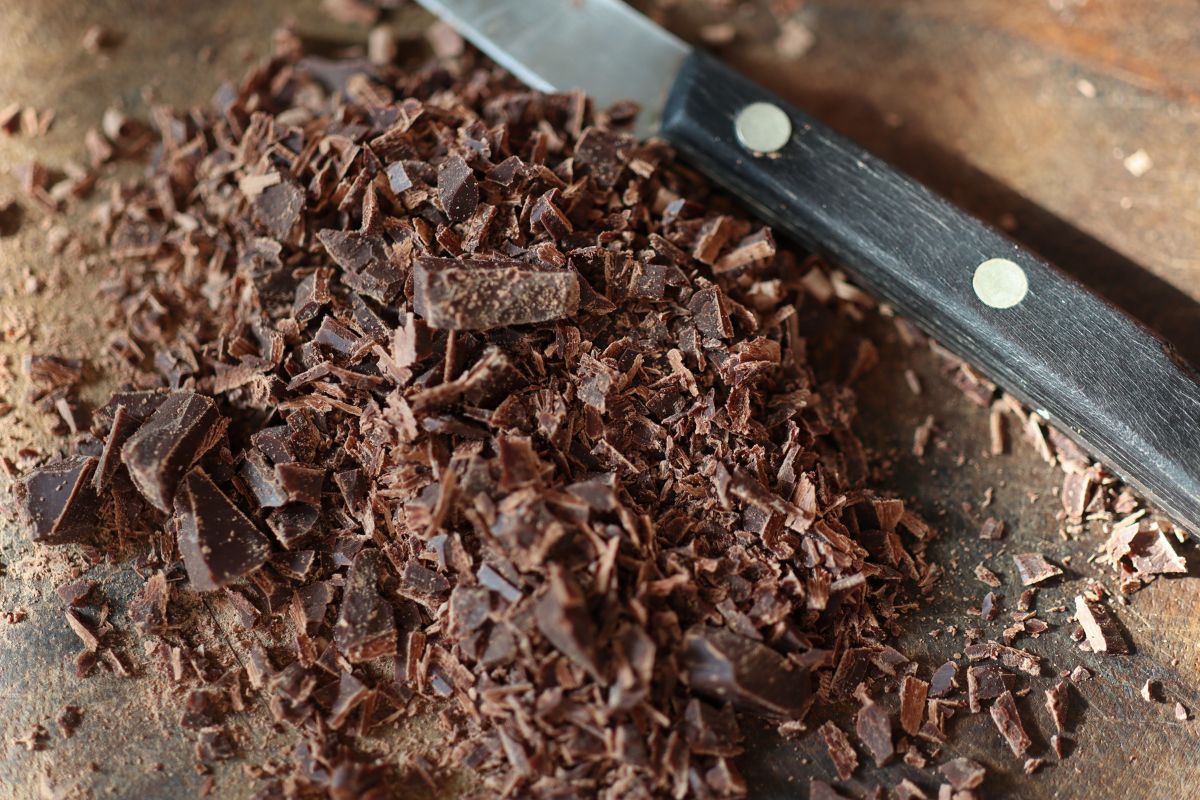
    An unsweetened, or barely sweetened, bar of chocolate would the right thing to use here. Regular unsweetened baker’s chocolate is a good choice, and if you happen to have unsweetened stone-ground chocolate available, that would be about as authentic as you can get.

    Photo Credit: The 1800’s Housewife.

    {We talked at length about 1800’s chocolate when we made the drinking chocolate recipe a couple of weeks ago, so I won’t fully repeat the notes on choosing chocolate for re-creating nineteenth c. recipes as authentically as possible. But if you’d like, you can find those full notes here, along with that delicious hot chocolate recipe}.

    📖 Recipe

    Chocolate Custard

    The Appledore Cook Book, 1883
    A very sweet chocolate custard recipe.
    Print Recipe Pin Recipe Rate Recipe
    Calories: 185kcal

    Ingredients

    • 1 quart milk
    • 1 ounce dark chocolate
    • 1 cup sugar
    • 6 eggs

    Instructions

    • Set one quart of milk on to boil as before directed* (see note).
    • Scrape with a knife one ounce of nice chocolate, and mix with one heaping cup of sugar;
    • wet this with two spoonfuls of boiling milk;
    • work this into a paste with the back of the spoon, and stir into the boiling milk,
    • and then stir in six well-beaten eggs; stir three minutes,
    • and then strain.
    • Set in cold water and stir occasionally, until cold, then sir in two teaspoons of vanilla. Serve in glasses.

    Notes

    *Seems to be referencing this line in the "Soft Custard recipe, previous: "Put one quart of new milk into a tin pail, and set the pail into a kettle with boiling water"

    Nutrition

    Serving: 1g | Calories: 185kcal | Carbohydrates: 27g | Protein: 7g | Fat: 6g | Saturated Fat: 3g | Polyunsaturated Fat: 3g | Cholesterol: 120mg | Sodium: 89mg | Sugar: 26g
    Tried this recipe?Let us know how it was!

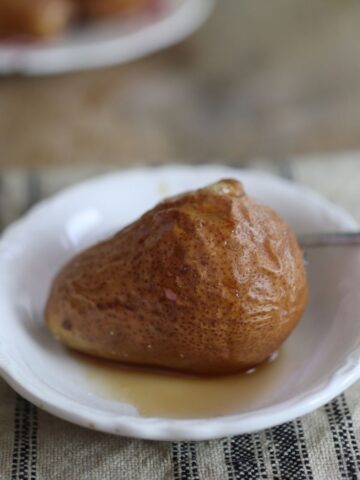
    Baked Pears (1881)

    February 16, 2023 by Anna 4 Comments

    This post was originally published in the 1800’s Housewife daily newsletter, on January 16, 2023. Not on the mailing list? You can join here to receive the daily recipe and cooking notes straight to your email.

    Hi there, friends –

    Today’s recipe is late coming to you, because I neglected to bookmark the particular recipe I intended to make and share, and could not find it again. “How many cookbooks from 1883 does the woman have?” You might ask. ONE. I have one.

    Funny thing about 1800’s cookbooks. Even when they do have an index, these frequently are not exhaustive, containing just the “highlights” or recipes that presumably the editors thought might be most searched-for. And sometimes recipes get printed in sections one might not expect…for example, blackberry jam in the ‘remedies for invalids’ chapter.

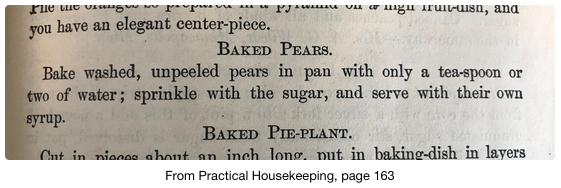
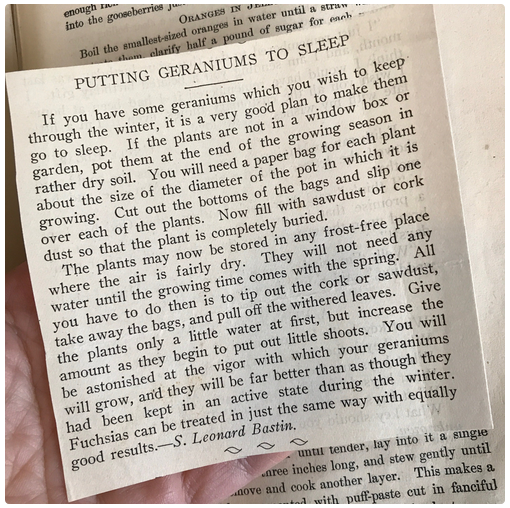
    This baked pears recipe is from 1881, and extremely similar to the one I’d planned to make. And along with it, I’m including something extra–a photo of the clipping that was used to bookmark the page with this recipe. Bookmarking recipes you don’t want to lose track of…what a great idea!

    ~ Anna

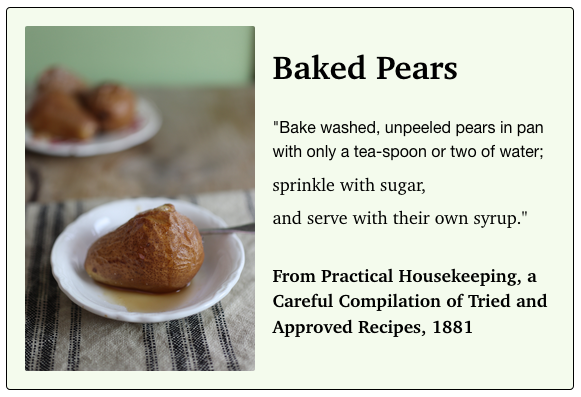
    Here’s a photo of the recipe as it appears in the cookbook:

    A few things I noticed when making this recipe…

    Soft, ripe pears do well when baked with just a very small amount of water as called for in the recipe. If your pears are on the hard side, measuring that “tea-spoon or two of water” on the generous side, ends up being beneficial.

    BAKING TEMPERATURE

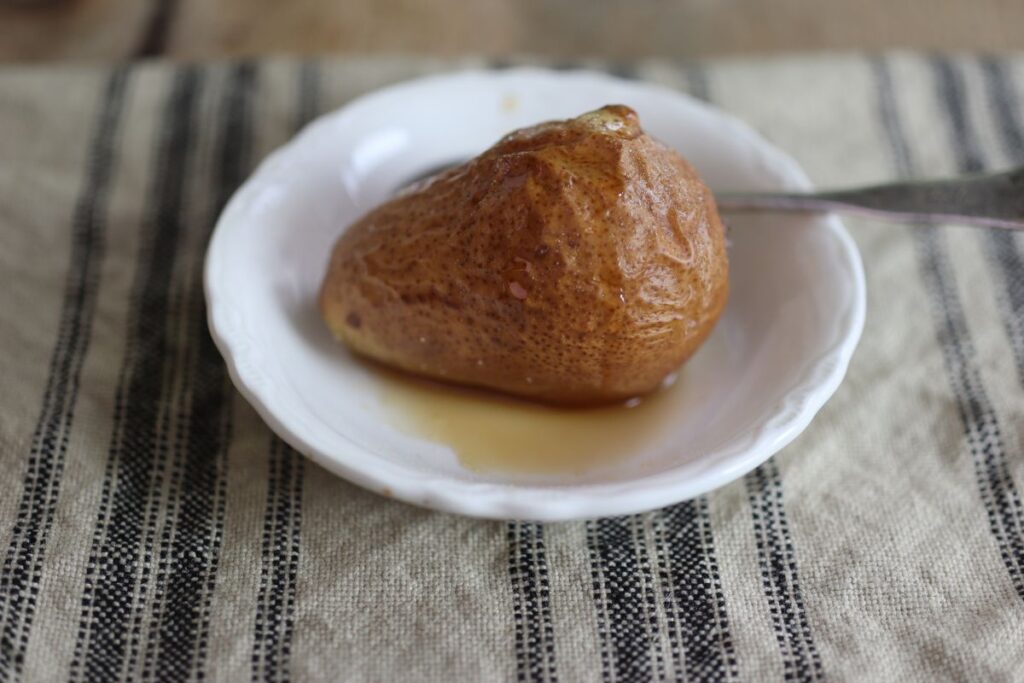
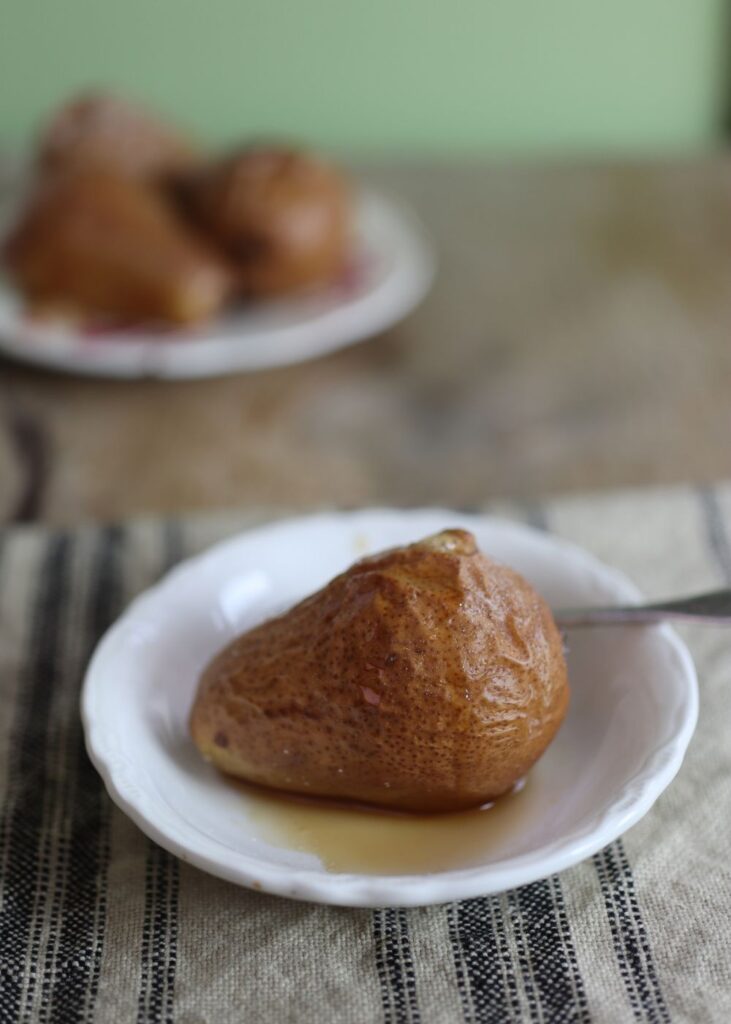
    Some 1800’s baked fruit recipes specify cooking them in a “slow” oven. So that was my approach when making this one. I used an oven temperature of 325°F. This worked really well, and resulted in perfectly-textured, sweet and soft pears, with an almost caramelized “syrup” in the bottom of the pan. This took about an hour and ten minutes for medium sized bartlett pears.

    HOW TO KNOW WHEN THE PEARS ARE DONE?

    Baked pears should be very soft, all the way through. Some other nineteenth century pear recipes specify that pear flesh should be translucent when they’re well cooked. I’ve found that pears seem to reach that perfectly-done stage when they still hold their shape (you don’t want them collapsing into mush), but a toothpick or skewer meets almost no resistance when inserted into one of the pears.


    As promised, here’s a photo of the more-recent (but still old!) clipping that was used as a bookmarker in the page containing this recipe. You never know what you’re going to find tucked between the pages of an old cookbook!


    Keep your eyes open tomorrow for our first ‘Tuesday tips’ email. I’ll be sharing some advice from 1832 on the health benefits of blackberries, as well as that “medicinal” blackberry jam recipe from 1845. Until tomorrow, ~ A

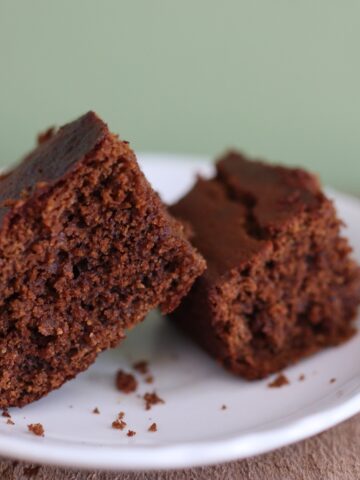
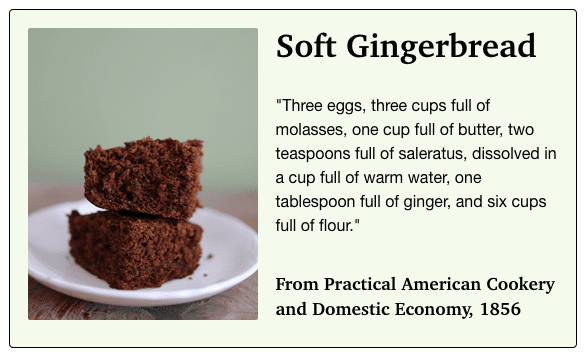
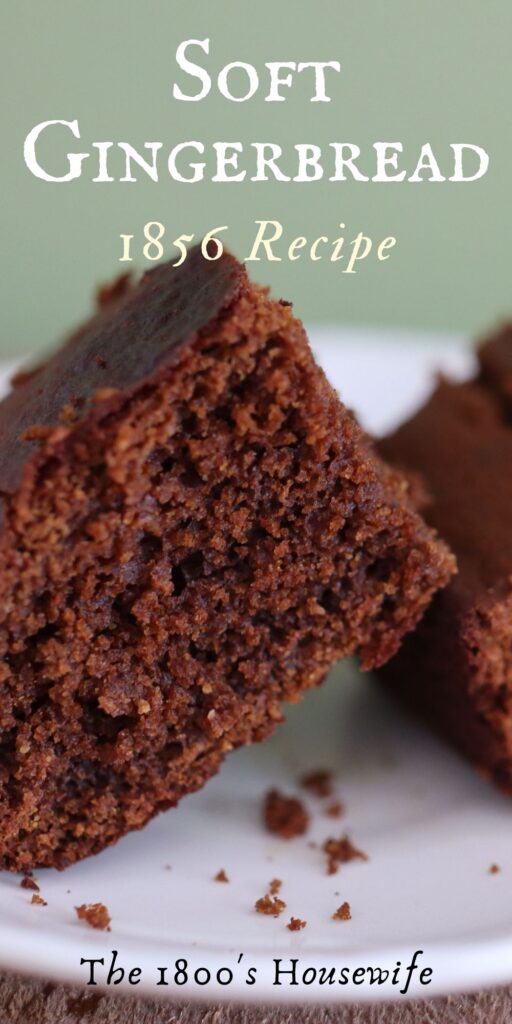
    Soft Gingerbread (1856)

    February 12, 2023 by Anna 13 Comments

    This post was originally published in the 1800’s Housewife daily newsletter, on January 13, 2023. Not on the mailing list? You can join here to receive the daily recipe and cooking notes straight to your email.

    Hey there, all –

    Are my children the only ones who come home from school absolutely ravenous? No matter how full I pack their lunchboxes, those little ones could just about eat their way through half the pantry, it seems.

    Yesterday I had this soft, delicious gingerbread ready to surprise them with, and wow, did they love it. It’s similar to Miss Parloa’s gingerbread recipe, but I slightly prefer the lighter texture of this one. It’s a keeper, for sure.

    ~ Anna

    Here’s a photo of the recipe as it appears in the cookbook:

    As with many 1800’s cookbooks, you’ll notice how some key pieces of information that we’re used to relying on, seem missing.

    For example, “What temperature should the oven be? What type of pan should be used? Should it be greased?”

    Here are a few suggestions that may be helpful if you make this (and I DO hope you make it, because it’s delicious!

    Cooking Notes:

    BAKING TEMPERATURE

    Having made quite a lot of recipes from these nineteenth century cookbooks, I’ve found that gingerbread tends to be baked in a “medium quick” oven…so a little on the hot side.

    I set my oven to 370°F when baking this, and felt the results were about perfect. You’ll know the gingerbread is done when the top just starts to darken, and a toothpick (or broom straw if you’d like to be authentic) comes out clean.

    SALERATUS

    The short answer here is that you can simply use common baking soda in place of the saleratus in this recipe. (Some suggest substituting each teaspoon of saleratus with 1¼ teaspoons of modern baking soda, others use equal measures. I used the 1¼ substitution for this recipe).

    A longer answer is that about the time this cookbook was published, the products marketed as “Saleratus” were slowly changing over from potassium bicarbonate (still used as a baking soda alternative today), to sodium bicarbonate–today’s baking soda. Both are still in use for helping baked goods to rise. But it’s sodium bicarbonate that has become our modern kitchen staple, the leavening agent known as “baking soda.”

    WHAT PAN TO USE

    1800’s gingerbread was generally made like a thin cake, rather than a deep cake or loaf. Some contemporary recipes specify that the batter should be no more than an inch deep, and this seems to have been customary for baking soft gingerbread (as opposed to hard gingerbread which was very thin and well, hard.)

    So choosing a large enough pan to allow you to make this like a sheet cake is a good choice. Definitely grease the baking pan well.

    SCALING THIS RECIPE

    This is a pretty generous recipe, suitable for a large family or church potluck. For a smaller family, it works really well to scale this recipe down, using ⅓ of all the listed ingredients. If you do this, it cooks very nicely in a 13×9″ pan, and takes about 20-22 minutes to bake.


    Keep your eyes open tomorrow for a tasty hot chocolate recipe from 1877. With the snowstorm coming, a steaming cup of something delicious sounds like just what we might need! Until tomorrow, ~ A

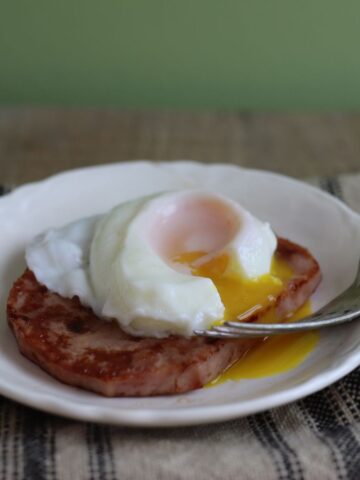
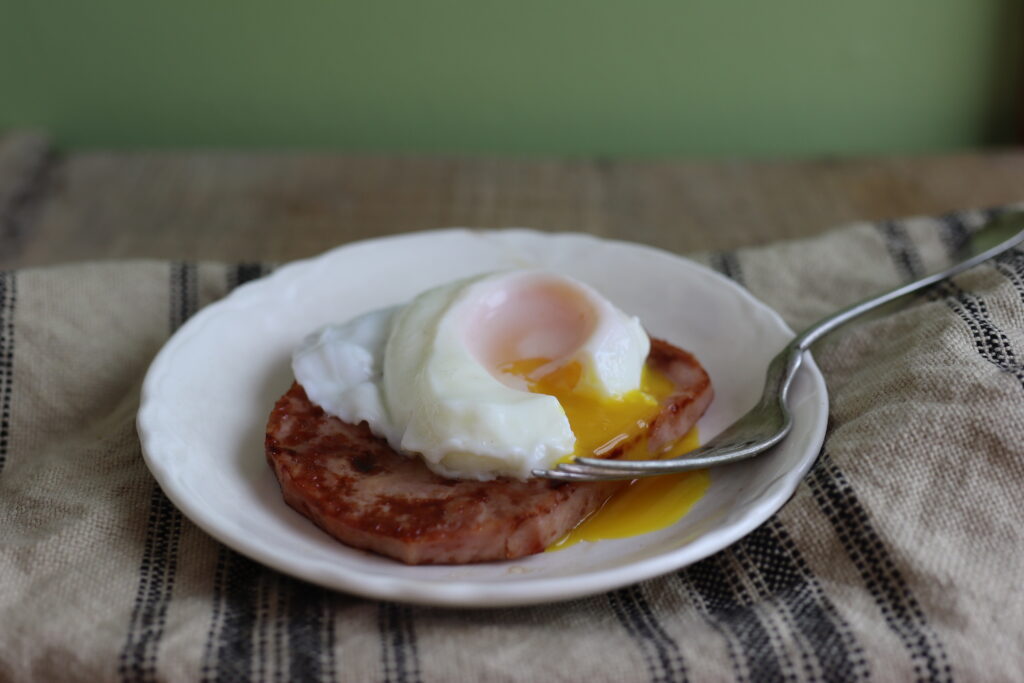
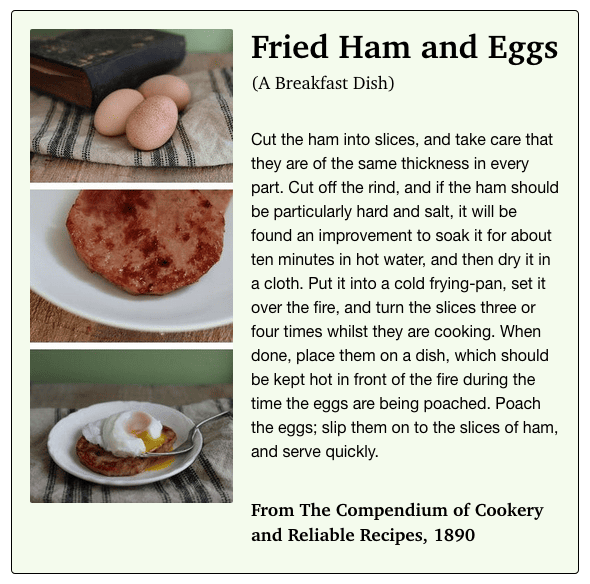
    Fried Ham & Eggs (1890)

    February 11, 2023 by FlorenceNelson Leave a Comment

    This post was originally published in the 1800’s Housewife daily newsletter, on January 15, 2023. Not on the mailing list? You can join here to receive the daily recipe and cooking notes straight to your email.

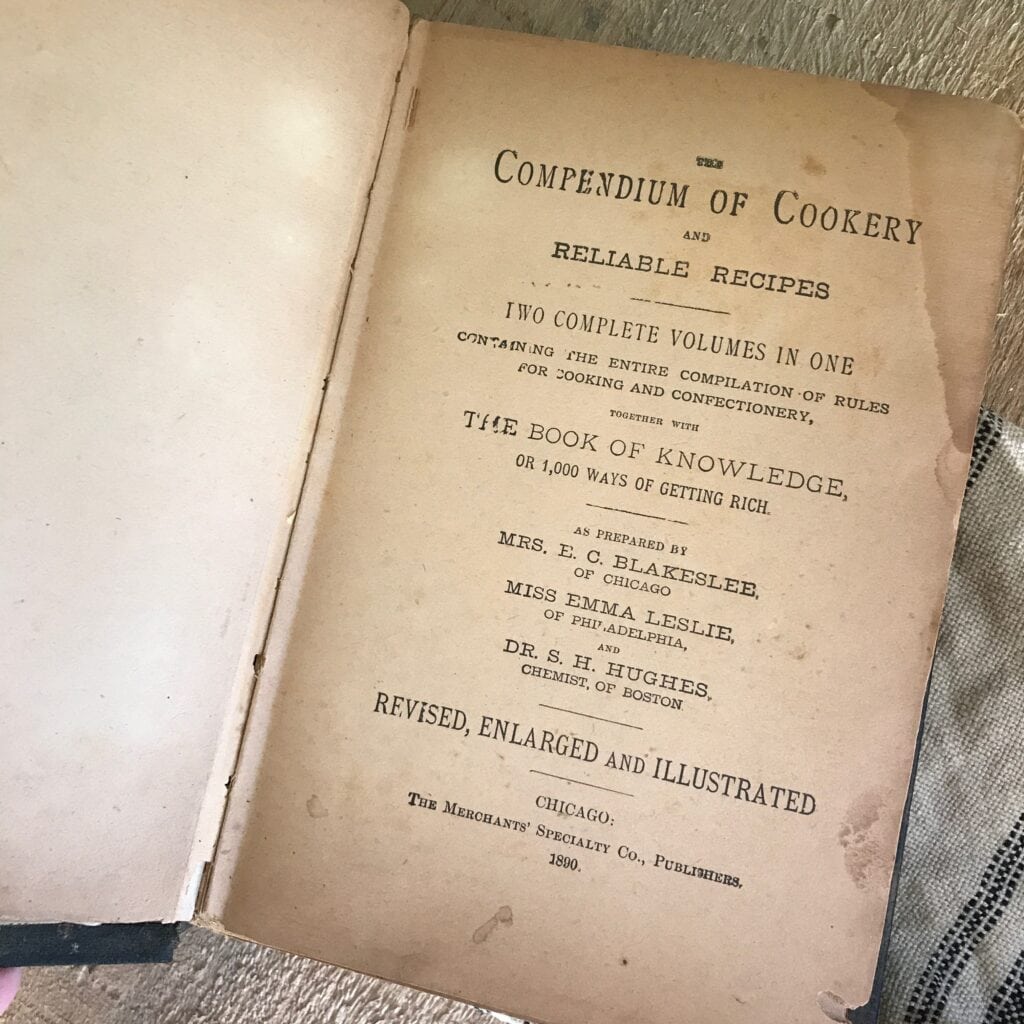
    Today’s recipe comes from The Compendium of Cookery and Reliable Recipes, published in 1890.

    My dear Hattie,

    In your last letter, you asked for some of my favorite breakfast dishes to make, wanting to vary the routine of your morning meals. It can be so easy to fall into habit, making the same dishes until you and everyone else grow a bit weary of them. I have certainly found that regularly trying something new can add such joy to daily life, for all members of the household.

    I am enclosing for you a receipt for a dish that is the “very favorite” of my little Thomas. He would have this every day if he could have his wish. It is a simple and easy breakfast dish, but I have copied it exactly from “The Compendium of Cookery and Reliable Recipes”, which is one of the cook books I find myself reaching for most often.

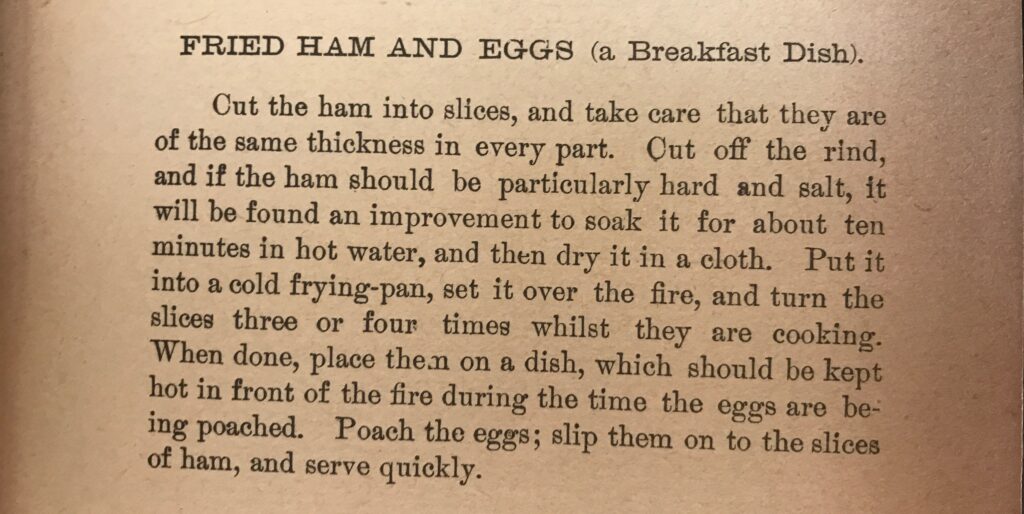
    photo of the original recipe, from the Compendium of Cookery and Reliable Recipes, page 99

    Like you, I am already looking forward to spring, and dreaming of planting seeds and tending the gardens. The seeds that you will find enclosed are some I saved from the beautiful foxgloves that my neighbor, Martha, grows. I hope they bring you joy when the weather turns warm again.

    Ever your loving cousin,
    Florence Nelson

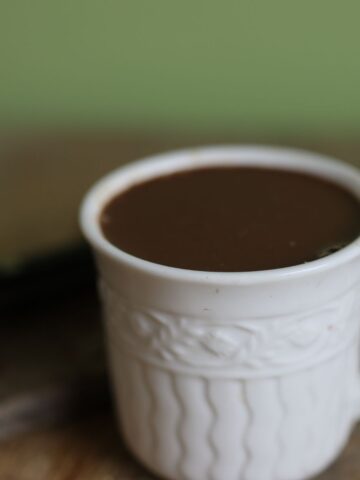
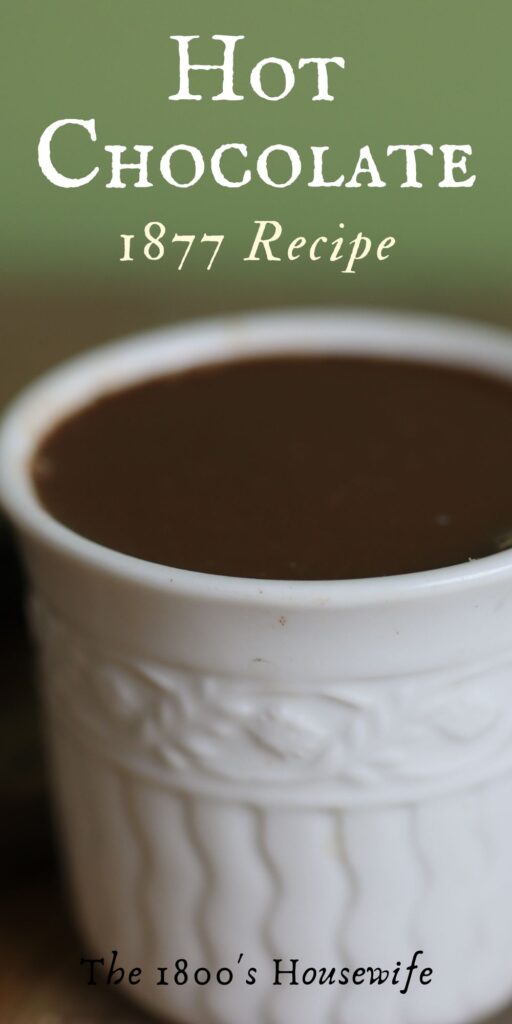
    Hot Chocolate (1877)

    January 28, 2023 by Anna 1 Comment

    This post was originally published in the 1800’s Housewife daily newsletter, on January 14, 2023. Not on the mailing list? You can join here to receive the daily recipe and cooking notes straight to your email.

    Yesterday we got about 7 inches of heavy, early-morning snow, followed immediately by rain. The result, of course, was slushy, ankle-deep snow soup. I found that everything from feeding the ducks, to getting the car out of the driveway, ended up feeling an awful lot like one long, cold and wet, patience-building exercise.

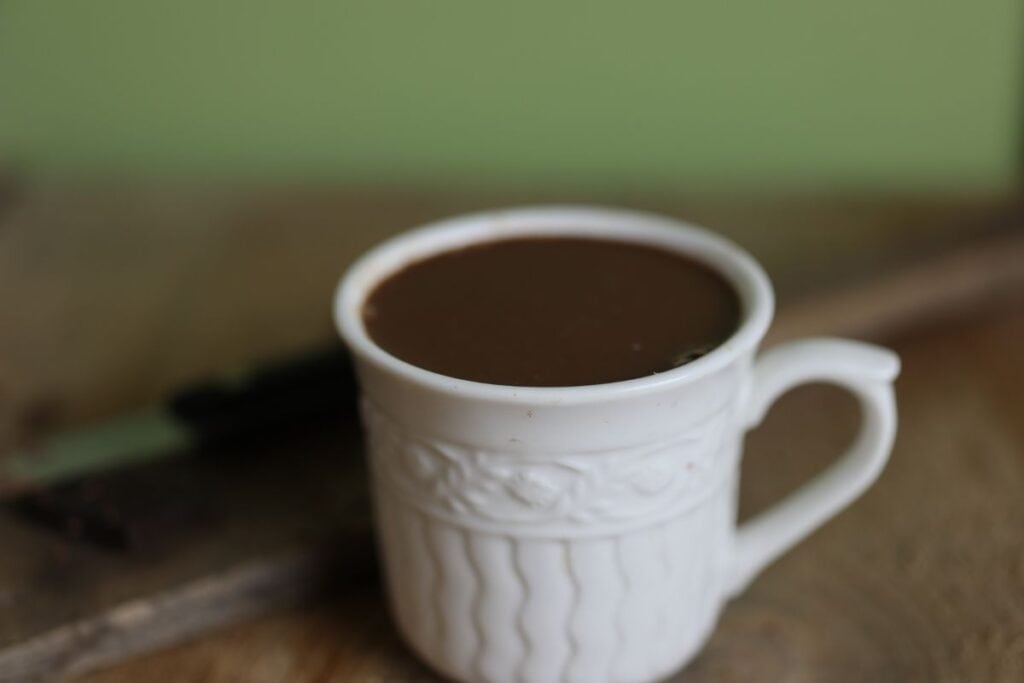
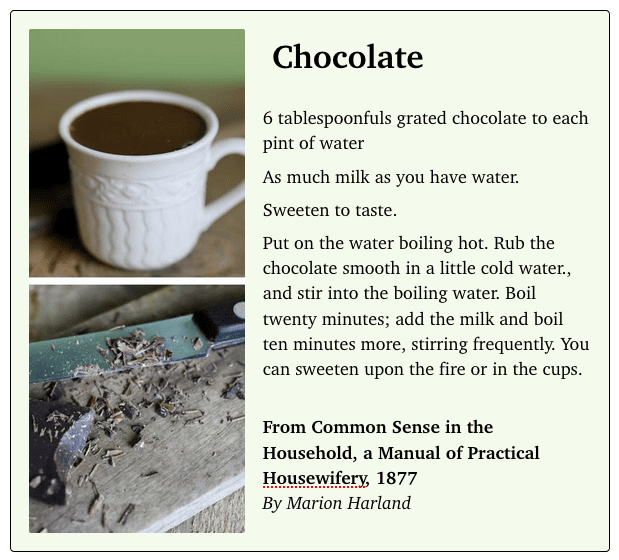
    How comforting to settle in at the end of that day, with a strong cup of this 1800’s “drinking chocolate”. Whether you’re a fellow New Englander slogging through snow soup, or one of our southern readers–you deserve this recipe as much I do, and I hope you enjoy it every bit as much!

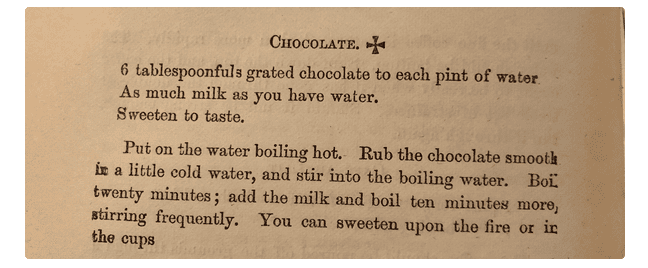
    Here’s a photo of the recipe as it appears in the cookbook, page 494:

    If you’d like to make this recipe taste as close to a nineteenth century cup of chocolate as possible, it can be helpful to know a bit about the chocolate that was readily available in the 1800’s.

    When this cookbook was written, the bar of chocolate used for a recipe like this would have been an unsweetened bar of “family chocolate”, often bought in a one-pound bar. At least one manufacturer, McCobb’s, sold their “plain chocolate” bar in a tin with a built-in grater. You can  see one of these  right now on eBay, which is kind of neat.

    This wasn’t milk chocolate, which wasn’t widely available until about the turn of the century. And it wasn’t smooth, like we’re used to today, since the conching process that produces silky-smooth chocolate wasn’t invented until 1879. This would have been a bit of a grittier, dense-feeling chocolate.

    So what kind of chocolate should you use to recreate this recipe? When I’m being intentional about choosing chocolate to most authentically recreate this, or other 1800’s drinking chocolate recipes, I buy the least-sweetened stone ground chocolate that I can get my hands on.  Taza’s 95% Wicked Dark  is a good bar for this.

    Many folks opt to use unsweetened baker’s chocolate for re-creating vintage recipes, which has the benefit of being inexpensive and readily available. This also works great, and makes for a delicious cup of chocolate.

    Because texture does play such a role, I personally feel that given the choice between an unsweetened but modern-smooth bar, or a barely-sweetened stone ground bar, the stone ground option is a closer approximation of what the average person would have been using for making hot chocolate in the mid-to-late 1800’s. (If you’d like a deeper dive into chocolate history from 1850-1900,  this  is one of the more thorough sites, and a very interesting read.)

    How much sugar should you add? Like most chocolate recipes of the time, this is left totally up to personal preference. As Marion Harland says in the recipe, “sweeten to taste”. I find that about half a teaspoon in a 6 ounce cup of this hot chocolate is what I enjoy.

    It’s worth keeping in mind that we go through a vastly greater amount of sugar per-person, in modern America, compared to what was used in the 1800’s. Chocolate was generally sweetened much less than what we’re now used to, and I’ve really come to enjoy it that way.


    Keep your eyes open tomorrow for an 1800’s recipe for ham with eggs. Until then, Anna

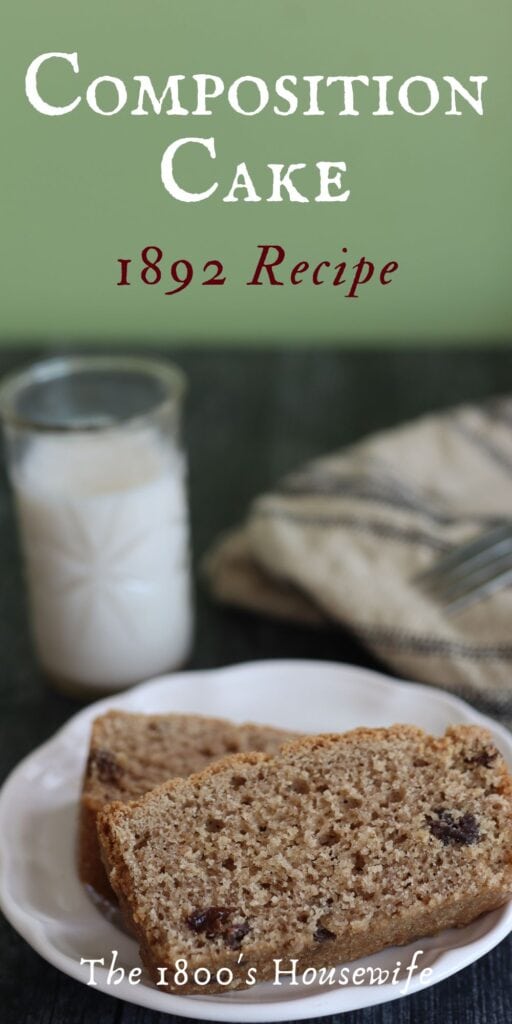
    Composition Cake (1892)

    January 26, 2023 by Anna 4 Comments

    This post was originally published in the 1800’s Housewife daily newsletter, on January 18, 2023. Not on the mailing list? You can join here to receive the daily recipe and cooking notes straight to your email.

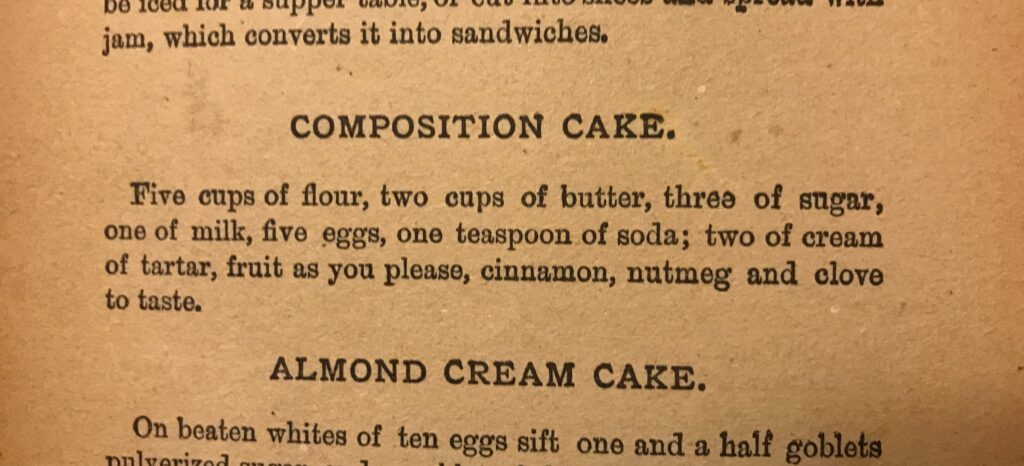
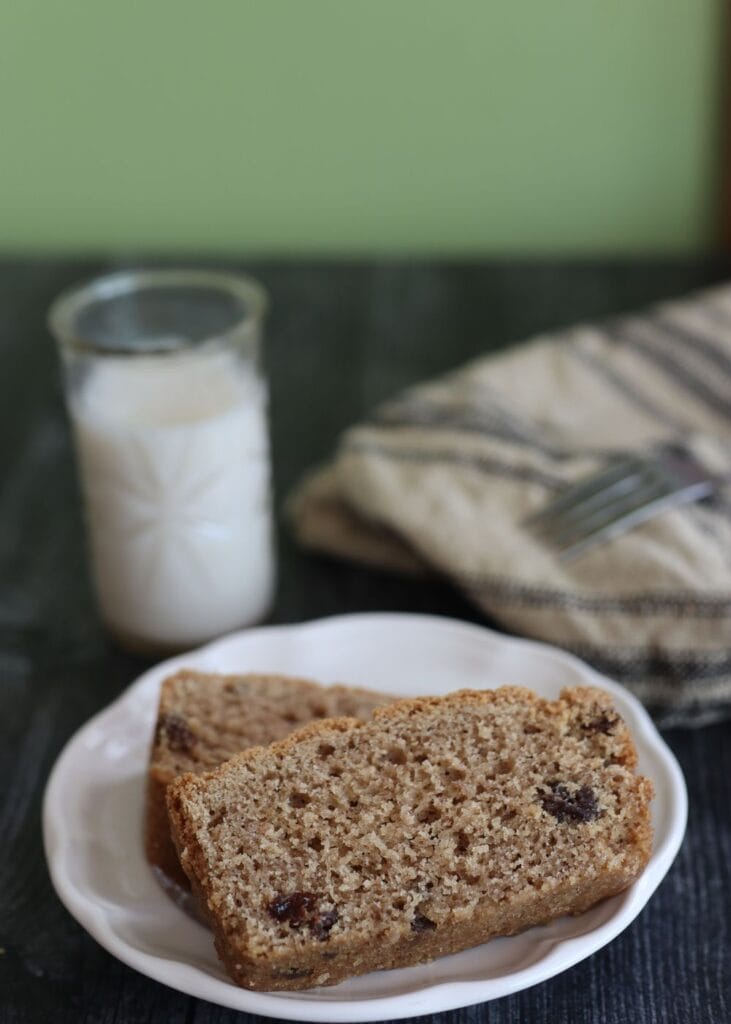
    This 1892 recipe for Composition Cake is lightly crackly on top, with a delicate crumb, and just the right combination of spices and raisins.

    Composition Cake seems to have been, in many ways, a bit like today’s chocolate chip cookies. Every cookbook has a recipe for it, and they’re all a little different.

    Let me tell you, this Composition Cake I made yesterday, from an 1892 recipe, deserves a country fair blue ribbon. It is just that good.

    Slightly crackly on the top, a nice crumb throughout, and with a lovely combination of spices and raisins. I hope you enjoy it as much as I do!

    From The Snow White Cook Book, 1892

    As with many 1800’s cookbooks, you’ll notice how this recipe is missing some information that we’re used to relying on.

    For example, “What temperature should the oven be? What type of pan should be used? Should it be greased?”

    Here are a few suggestions that may be helpful if you make this recipe:

    BAKING TEMPERATURE:

    1800’s cake recipes rarely specify temperature, and when they do, it tends vary from “moderate” to “medium quick”. I went with a moderate 350°F for this recipe, and the result was lovely. You’ll know the cake is done when it’s golden brown, the center is set, and a toothpick (or broom straw if you’d like to be authentic) comes out clean. Baked in loaf pans at that temperature, my cake took exactly 45 minutes to bake.

    MIXING THE BATTER:

    I found it worked very well to beat the butter and sugar together, then add the eggs and milk, and finally the dry ingredients, which I’d already sifted together. Fold in the fruit after the batter is well mixed.

    FRUIT:

    Cake in the 1800’s very often included dried fruit. This was SO common, that many recipes assume you have your own preference for the amount and type of fruit you like in your cake, and that this could simply go without saying. Think, “season to taste.” The most common dried fruits used in cake were raisins, dried currants, and citron.

    SPICES:

    I used 1 teaspoon cinnamon, ½ teaspoon nutmeg, and ¼ teaspoon cloves. I thought this was pretty nearly perfection, but if you really love a spicy cake, you could bump those amounts up even more.

    WHAT PAN TO USE:

    Composition cake seems to have generally been made fairly deep, often in loaf pans. (As opposed to a thin cake like the gingerbread recipe we made last week). Two loaf pans works very well for this recipe. Grease those pans well.


    Just a reminder that if you ever have a particular type of recipe you’d like to see here, just send me an email and I’ll try to find one. I’m always happy to hear from you! Until next time, Anna

    📖 Recipe

    Composition Cake (1892)

    Print Recipe Pin Recipe Rate Recipe

    Ingredients

    • 5 cups flour
    • 2 cups butter
    • 3 cups sugar
    • one cup milk
    • 5 eggs
    • 1 teaspoon soda
    • 2 teaspoon cream of tartar
    • 1 cup dried fruit raisins, currants, or citron
    • 1 teaspoon cinnamon
    • ½ teaspoon nutmeg
    • ¼ teaspoon cloves

    Instructions

    • "Five cups of flour, two cups of butter, three of sugar, one of milk, five eggs, one teaspoon of soda; two of cream of tartar, fruit as you please, cinnamon, nutmeg and clove to taste."

    Notes

    MODERN BAKING NOTES:
    BAKING TEMPERATURE: 1800's cake recipes rarely specify temperature, and when they do, it tends vary from "moderate" to "medium quick". I went with a moderate 350°F for this recipe, and the result was lovely. You'll know the cake is done when it's golden brown, the center is set, and a toothpick (or broom straw if you'd like to be authentic) comes out clean. Baked in loaf pans at that temperature, my cake took exactly 45 minutes to bake.
    MIXING THE BATTER:
    I found it worked very well to beat the butter and sugar together, then add the eggs and milk, and finally the dry ingredients, which I'd already sifted together. Fold in the fruit after the batter is well mixed.
    FRUIT:
    Cake in the 1800's very often included dried fruit. This was SO common, that many recipes assume you have your own preference for the amount and type of fruit you like in your cake, and that this could simply go without saying. Think, "season to taste." The most common dried fruits used in cake were raisins, dried currants, and citron.
    SPICES:
    I used 1 teaspoon cinnamon, ½ teaspoon nutmeg, and ¼ teaspoon cloves. I thought this was pretty nearly perfection, but if you really love a spicy cake, you could bump those amounts up even more.
    WHAT PAN TO USE:
    Composition cake seems to have generally been made fairly deep, often in loaf pans. (As opposed to a thin cake like the gingerbread recipe we made last week). Two loaf pans works very well for this recipe. Grease those pans well.
    Tried this recipe?Let us know how it was!

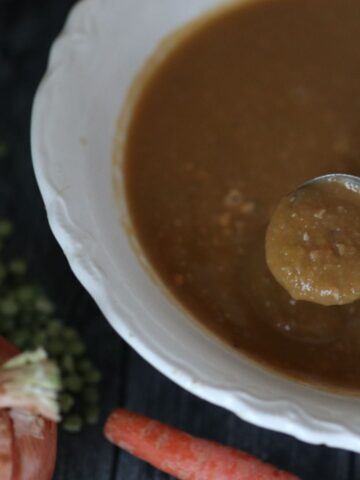
    Pea Soup (1887)

    January 12, 2023 by Anna Leave a Comment

    This post was originally published in the 1800’s Housewife daily newsletter, on January 12, 2023. Not on the mailing list? You can join here to receive the daily recipe and cooking notes straight to your email.

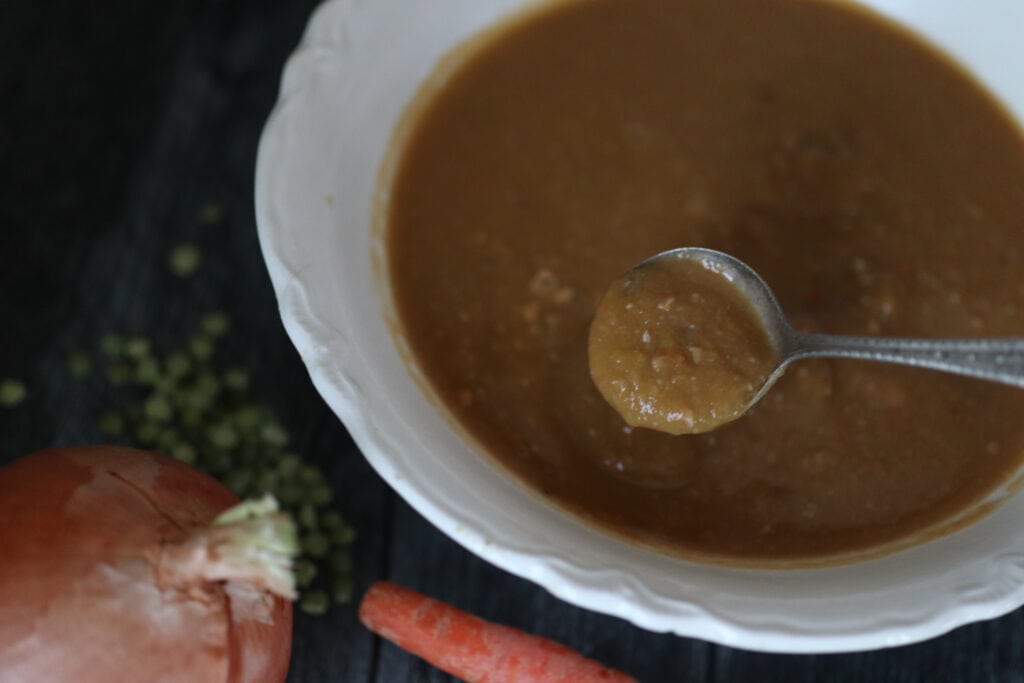
    Here in Maine, it’s a snowy, frigid day, and this cozy pea soup is just the thing. (I actually made this a couple of days ago, and I’m relishing the last of the leftovers right now!)

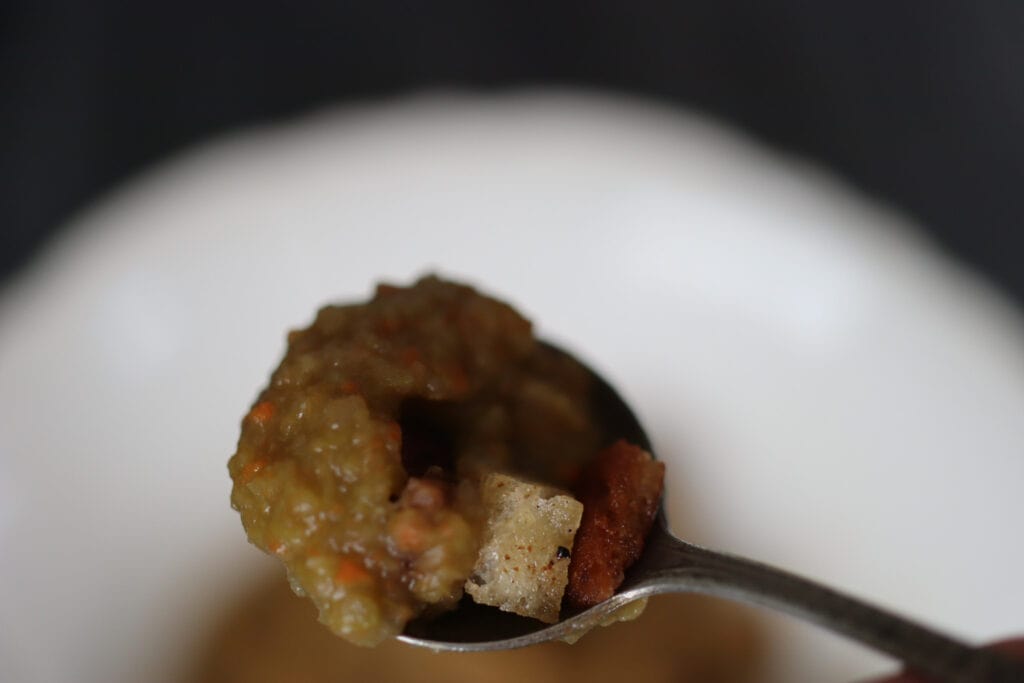
    This is frugal, hearty, 19th century eating at its best. Don’t be tempted to skip the stale-bread croutons, because oh my heavens–they are just so good! Hope you enjoy this delightful soup recipe as much as I have. ~ Anna

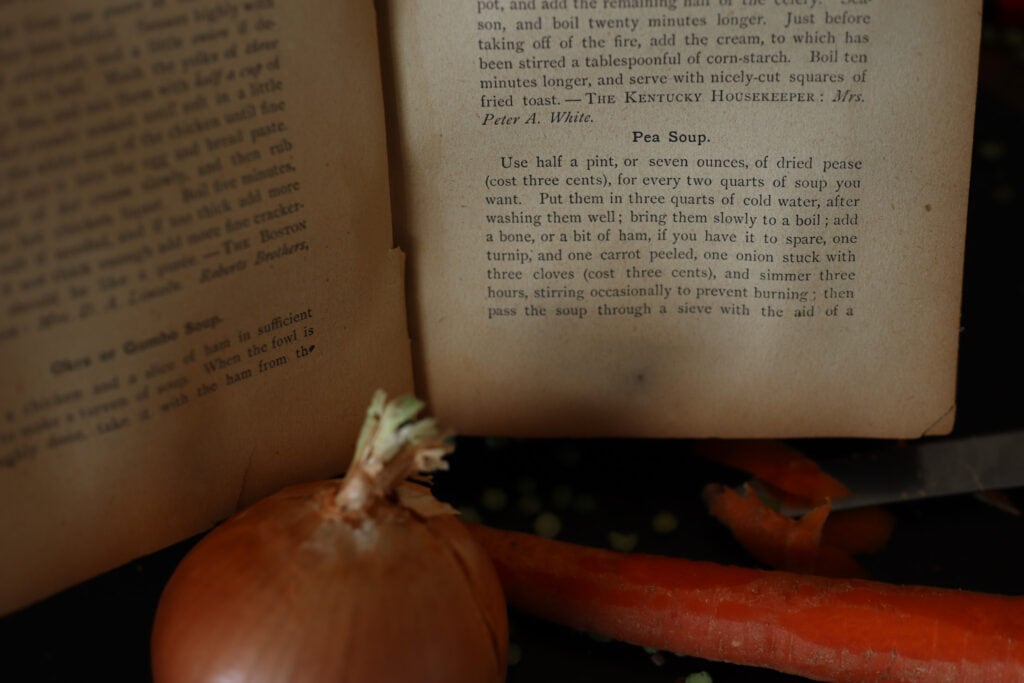
    Pea Soup, from The New England Cookbook, 1887

    PEA SOUP
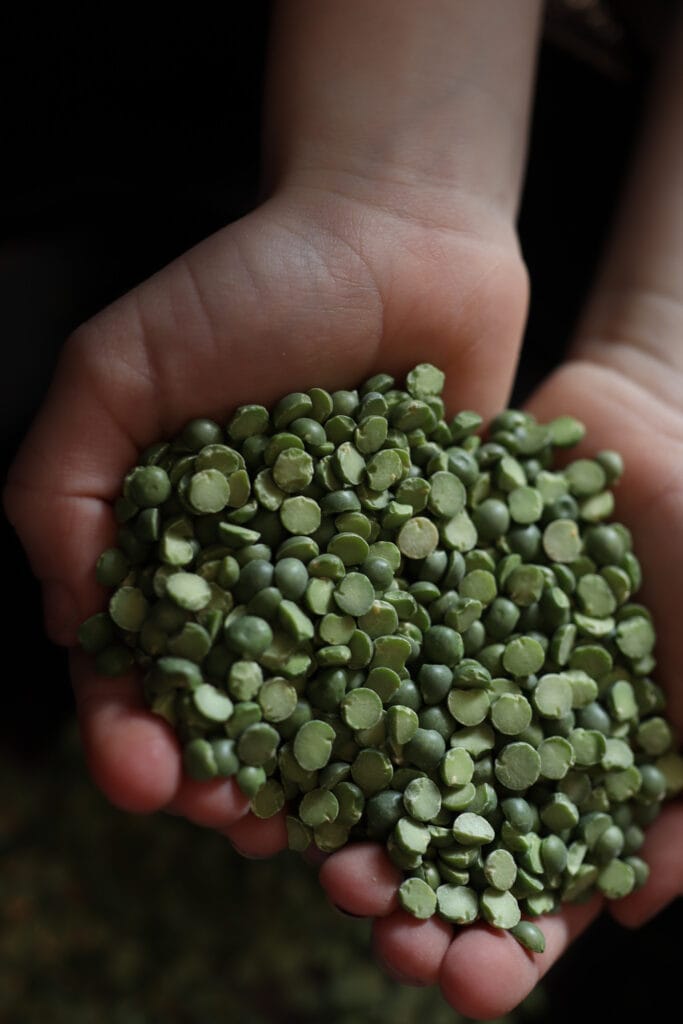
    “Use half a pint, or seven ounces, of dried pease (cost three cents), for every two quarts of soup you want. Put them in three quarts of cold water, after washing them well; bring them slowly to a boil;

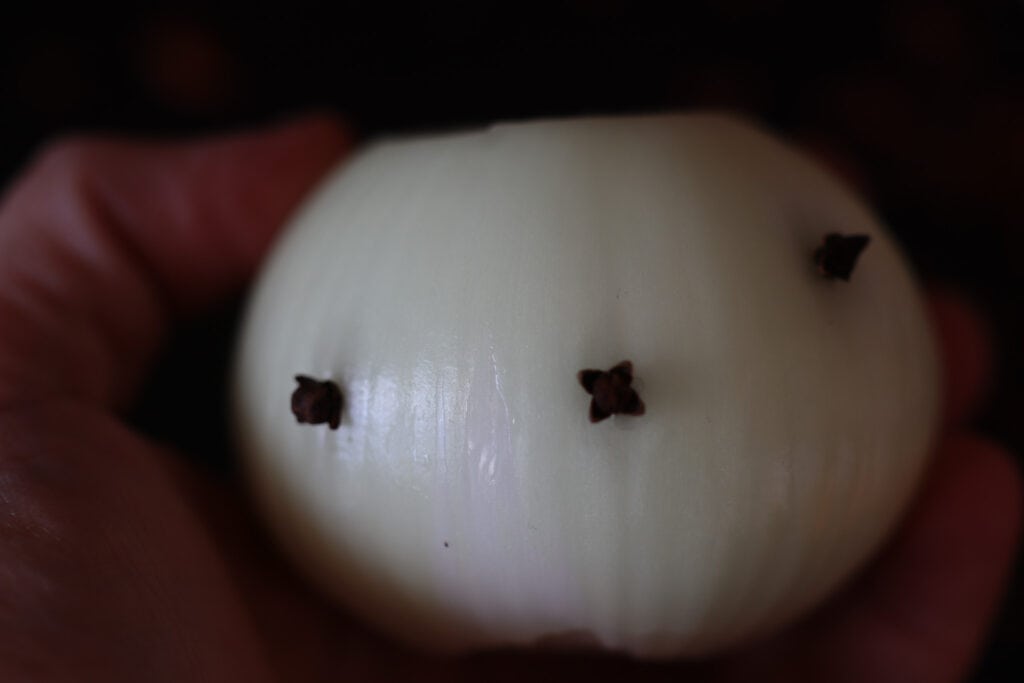
    add a bone, or a bit of ham, if you have it to spare, one turnip, and one carrot peeled, one onion stuck with three cloves (cost three cents), and simmer three hours, stirring occasionally to prevent burning; then pass the soup through a sieve with the aid of a potato-masher and if it shows any sign of settling stir into it one tablespoonful each of butter and flour mixed together dry (cost two cents); this will prevent settling;

    meantime fry some dice of stale bread, about two slices, cut half an inch square, in hot fat, drain them on a sieve, and put them in the bottom of the soup-tureen in which the pea-soup is served; or cut some bits of very hard stale bread, or dry toast, to use instead of the fried bread.

    By the time the soup is done, it will have boiled down to two quarts, and will be very thick and good. This receipt will cost you about ten cents. –Twenty-five-Cent Dinners: Miss Juliet Corson (By per. O. Judd Co., Pubs.)”

    Photo of the recipe in the New England Cookbook, Page 9 (Recipe continued on page 10, photo below)
    Recipe for Pea Soup, continued. Page 10

    Below, you’ll find a printable copy of this recipe. I hope you enjoy it!

    Keep your eyes open tomorrow for a lovely soft gingerbread recipe from 1856. We’re going with comfort food during this cold, snowy weather! ~ A

    📖 Recipe

    1887 PEA SOUP

    Print Recipe Pin Recipe Rate Recipe
    Prep Time: 10 minutes minutes
    Cook Time: 2 hours hours
    Total Time: 2 hours hours 10 minutes minutes
    Servings: 6
    Calories: 73kcal

    Ingredients

    • 7 ounces dried peas
    • 3 quarts water
    • 1 bone or bit of ham
    • 1 turnip
    • 1 carrot peeled
    • 1 onion
    • 3 whole cloves

    Instructions

    • Use half a pint, or seven ounces, of dried pease (cost three cents), for
      every two quarts of soup you want. Put them in three quarts of cold
      water, after washing them well; bring them slowly to a boil;
    • add a bone, or a bit of ham, if you have it to spare, one turnip, and one carrot peeled,
    • one onion stuck with three cloves (cost three cents), and simmer three hours, stirring occasionally to prevent burning;
    • then pass the soup through a sieve with the aid of a potato-masher and
      if it shows any sign of settling stir into it one tablespoonful each of
      butter and flour mixed together dry (cost two cents); this will prevent
      settling;
    • meantime fry some dice of stale bread, about two slices, cut half an
      inch square, in hot fat, drain them on a sieve, and put them in the
      bottom of the soup-tureen in which the pea-soup is served; or cut some
      bits of very hard stale bread, or dry toast, to use instead of the fried
      bread.
    • By the time the soup is done, it will have boiled down to two quarts,
      and will be very thick and good. This receipt will cost you about ten
      cents. –Twenty-five-Cent Dinners: Miss Juliet Corson (By per. O. Judd
      Co., Pubs.)

    Nutrition

    Serving: 1g | Calories: 73kcal | Carbohydrates: 9g | Protein: 7g | Fat: 1g | Polyunsaturated Fat: 1g | Cholesterol: 14mg | Sodium: 247mg | Fiber: 3g | Sugar: 4g
    Tried this recipe?Let us know how it was!

    Propagating Strawberry Plants

    June 23, 2021 by FlorenceNelson Leave a Comment

    “Look how many, Mama! Look how many we found!”

    Yesterday my children came running back from the strawberry patch with nearly a pint’s-worth of ruby-colored treasure, and they were so excited to show me. The strawberries are starting to ripen!

    To my eyes, the strawberry bed is still a sea of green and white. But children’s sharp little eyes are filled with eagerness, and they have been watching the patch every day for the last week. The first of the berries truly are ripe, and the season promises to be a bountiful one.

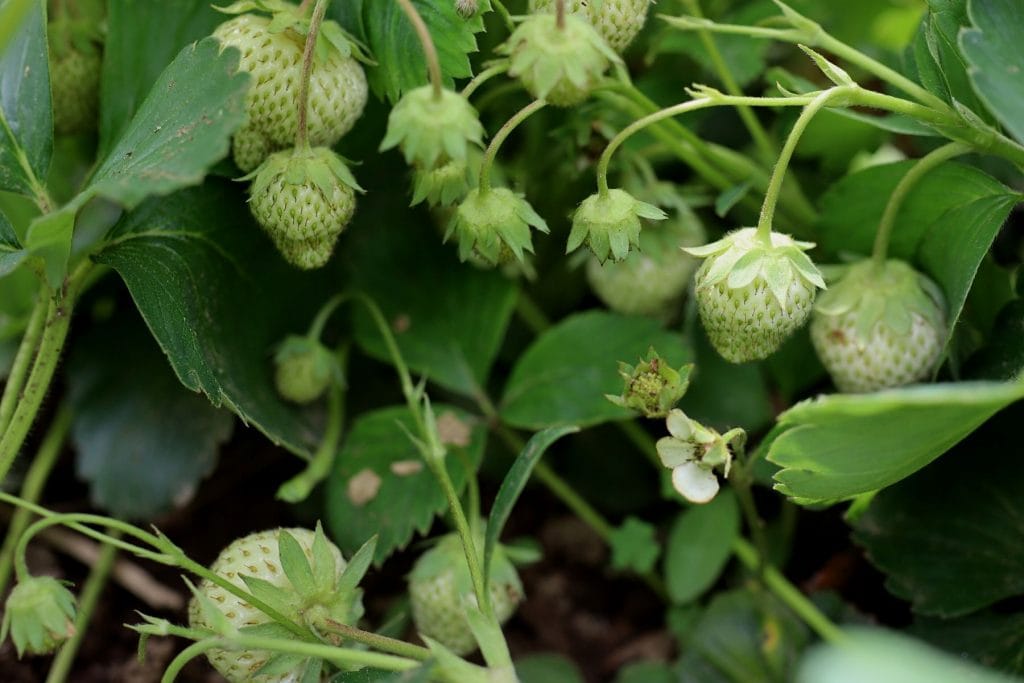
    Looking at the mounds of berry bushes, it’s so hard for me to believe that our whole lovely berry patch started with just three plants, and only last spring. What a wonderful miracle that some of our favorite plants are so easily and plentifully propagated!

    For Christmas last year, I had received a copy of a book called The Small Fruit Culturalist, by Andrew S. Fuller. My husband had bought it for me, knowing how much I long to grow an abundant variety of fruits and vegetables in our own gardens.

    Over the winter, I read the book several times over, and in the spring was able to procure three strong plants from an excellent variety of strawberries, which produce the most wonderful large and flavorful berries.

    After preparing their bed with care, and following all instructions regarding planting, I was delighted to see the plants begin to grow and thrive. Hoping to eventually create a large strawberry bed, I fastidiously followed Mr. Fuller’s directions for propagating the plants:

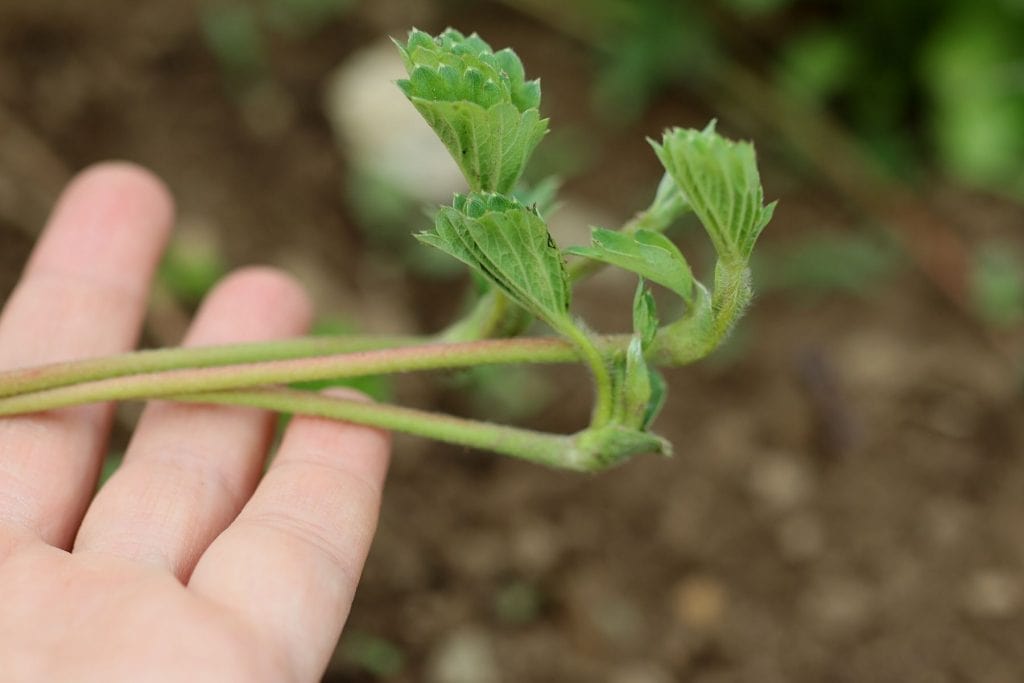
    The varieties mainly cultivated in this country are propagated from the runners. The first produced are usually the strongest and best for early planting, but those that are formed later in the season are equally as good when they arrive at the same age or size. A few theorists have maintained that the first plants formed near the parent stool were the only ones that should be used, and that they were far superior to the others, and would always be more prolific. This assertion is not supported by facts; consequently is not worthy of a moment’s thought. To insure the rooting of runners, the surface of the soil should be kept loose and open, and if the weather is very dry at the same time they are forming, it is well to go over the beds and cover the new roots as they are produced. When only a few very large and strong plants are wonted, it is well to pinch of the runner just beyond the first plant, that this may become strong and vigorous.

    A good plan to insure the safe removal of runners after they are rooted, is to sink a pot filled with soil under each joint of the runner and let the roots strike into it. In two or three weeks, the pot may be lifted, and the runner separated from the parent plant. This is a tedious and expensive mode, and seldom necessary.

    It often occurs when taking up plants in the fall that many of the small ones are not well rooted, and, if the variety is scarce and valuable, they may be worth saving. If so, cut off the runner close to the plant, and then dibble them close together either in the open ground or in a frame, shade them, and give plenty of water until they are rooted. If they do not produce sufficient roots before cold weather, then protect them, and they will usually form roots before wanted for planting in the spring.

    The richer and better the soil, the more rapid will be the production of roots, whether in frames or the open ground.
    I have found it to be a good plan to cover the entire surface of the soil with fine compost of pure manure before the runners start in spring.

    The runners draw their sustenance from the parent plant until they have formed roots sufficient for self-support. It is therefore important that their roots shall find something to feed upon soon after they are emitted. If water can be liberally applied to the beds it will insure the emission of roots very rapidly.

    All last summer, the children helped me to care for the new strawberry bed. Susanna took charge of keeping the bed well-weeded, while the boys kept it amply watered during the long dry spells we saw in mid-summer. Little Abigail was of course too small to be much help yet, but oversaw the efforts from the blanket I used to set her on, while the older children and I worked in the gardens.

    During that first summer, I was delighted to see that many runners were produced by each plant, although there were very few berries. It was a joy to me that each of the four children were rewarded for their work by one large berry each, while Dr. Nelson and I happily shared a fifth. I promised us all that next year we would enjoy strawberries in much greater abundance.

    But truthfully, even I could not guess at how beautifully those three plants would propagate, and how many berries we would truly have!

    This summer I am continuing to follow Mr. Fuller’s propagation instructions, and am also trying his method of rooting some of the young runners into little pots, sunk into the soil. I am hoping to surprise my dear neighbor, Elizabeth, with some healthy young plants as a “Thank You” for all those asparagus starts she blessed me with this spring!

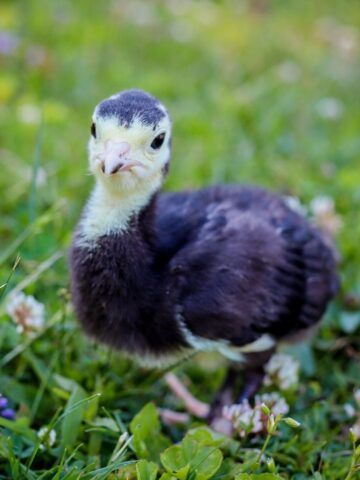
    Feeding Young Turkeys

    June 13, 2021 by FlorenceNelson 2 Comments

    During the midwinter this year, my little Suzanna surprised me one night as she was saying her evening prayers.

    At the end of her “now I lay me”, I heard an earnest whisper: “and dear God, would you please bring us some baby turkeys this year, and one of them that I can keep forever as my own that won’t get eaten? I would love it, and take such good care of it.”

    Because this gentle little one so rarely asks for anything, (and the few times she has, the requests have been so small and sensible), her unusual prayer stayed with me.

    I myself had thought more than once, that adding a few turkeys along with the chicken flock might be a prudent idea. So after a conversation with my husband, we decided to see what we could do about finding some young turkeys once the summer season came.

    Just on the edges of town, we have a wonderful midwife who attends to many of the women here. In fact, she was with me when our little Susanna was born, 7 years ago. I knew that she kept turkeys, so decided to inquire with her.

    Just this last week, dear Mrs. Westwood came by with a little basket–from which kept emerging the sweetest little peeping sounds. I could hardly contain myself, as I called Susanna over to peek under the cloth covering the basket, to see what was inside.

    Baby turkeys! Four soft, little cheeping bundles of fluff.

    While the children cuddled the precious little “darlings”, I listened and took notes on every bit of advice Mrs. Westwood could offer, about how to most successfully raise them.

    Spying my bookshelf, she quickly spotted a particular volume, and pulled it out. “This book has a good little bit of advice about raising turkeys, and if you just follow this, you should be all right.”

    The book was The Farm and Household Cyclopaedia, and it is one I refer to often. In fact, I had already read the section on turkeys so many times, I could probably recite it from memory. What a comfort to know that Mrs. Westwood, with all her many years of experience raising turkeys, agreed with its recommendations:

    “The difficulty of raising turkeys is a serious drawback to the profits of the business, but the exercise of care will obviate the difficulty. At first, and for about six weeks, turkey chicks are very delicate, so much so that even a warm shower will finish them. If they can be kept alive for about two months, they begin to assume a more robust character, and will soon become the very hardiest of poultry. The chicks, therefore, should be provided with shelter, and the shed which furnishes this would be all the better if it had a wooden floor. The best feed for the first week is hard boiled eggs, mixed with minced dandelion. It is thought the dandelion serves to keep the bowels in order. At all events the young birds prefer dandelion to all other green food. At the end of the first week, add gradually to the boiled eggs bread crumbs and barley meal, constantly lessening the amount of egg until at the end of three weeks it may be entirely discontinued. Now give boiled potatoes as a part of the food, and a small portion of some small grain may be added, in fact making the food very much like that of other poultry. If fed in this way and kept dry, they will come along all right.”
    ~ THE FARM AND GARDEN CYCLOPAEDIA, 1888

    Little Susannah has made it her special charge to prepare the boiled eggs and minced dandelion for the chicks. She often enlists her little brothers to help with gathering the dandelion for the mixture. They so capably undertake the task of keeping the young turkeys well fed, that I truly think they could feed a hundred chicks if we had them!

    So far, the little ones seem strong and hearty, and are growing beautifully. We all find them to be the most charming little creatures, and I’m so glad that our little girl’s uncommon prayer provided the encouragement I needed to try raising them.

    Popovers

    June 9, 2021 by FlorenceNelson 9 Comments

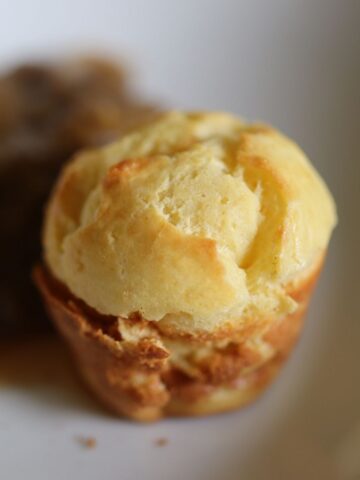
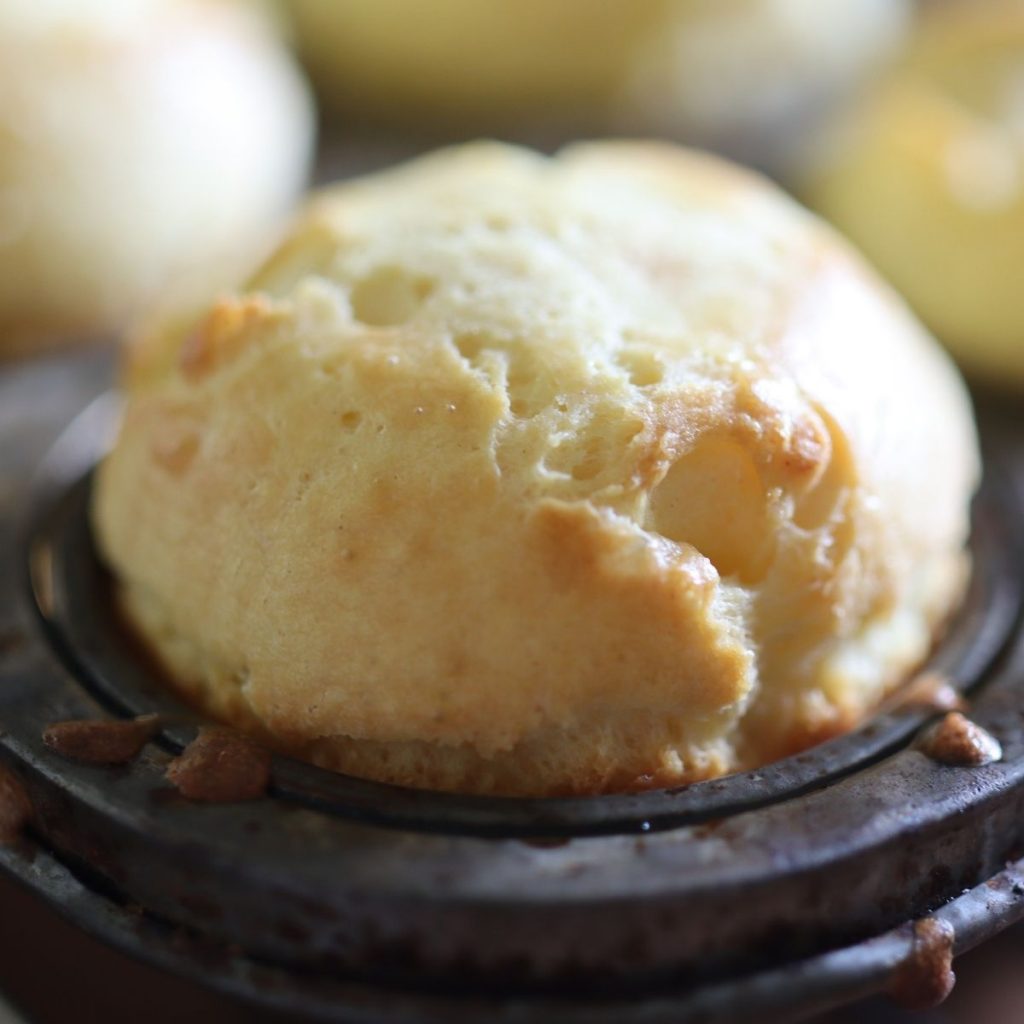
    fresh popover made from 1800's recipe

    This favorite recipe makes the best, lightest pop-overs! Serve them like the White House Cookbook suggests, with a sweet sauce, or straight from the oven with a little butter.

    Yesterday the children asked me, “Mama, what is a pop-over?”

    It turns out that one of the little boys in school had said pop-overs were his favorite food, and my children were keen to learn what wonderful delight they might be missing out on!

    Apparently is has been so long since I made pop-overs, that my little ones don’t even know what they are. Poor things! I told them if they would wait until breakfast the next morning, I would show them exactly what a pop-over is.

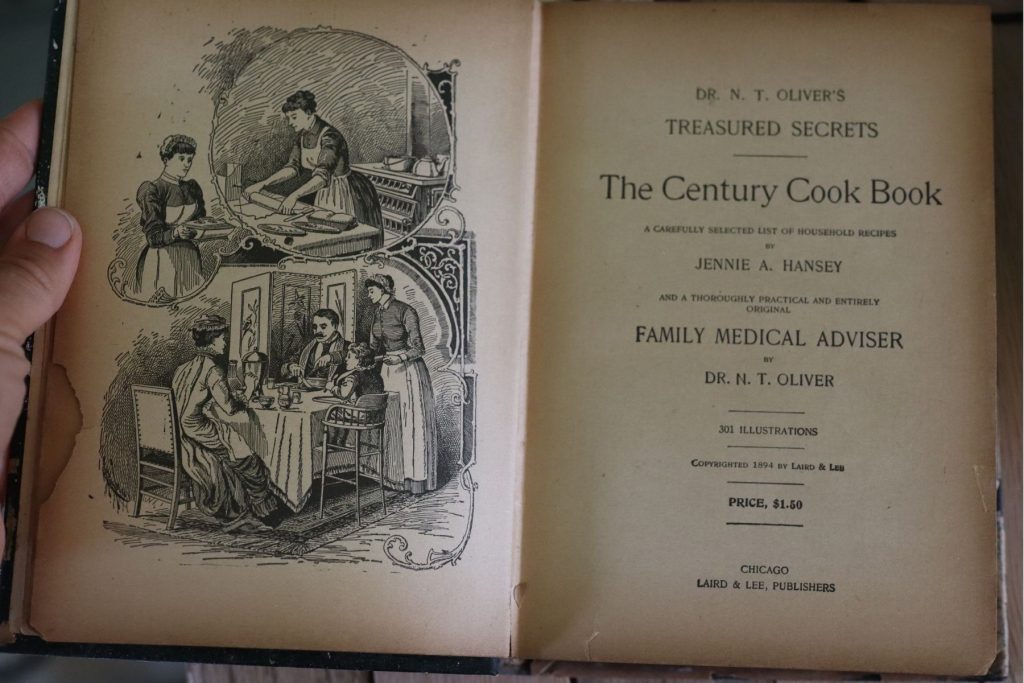
    There are several recipes that I like for making pop-overs, but I think the very best is the recipe from N.T. Oliver’s The Century Cook Book. It calls for three eggs rather than two, and omits the butter sometimes found in other recipes.

    I’ve always found it to result in the most perfect, heavenly pop-overs, even when one is out of practice at making them–as I seem to be!

    POP-OVERS
    Take one pint of sifted flour, one level teaspoonful of salt. Beat three eggs light, add one pint of milk, and gradually stir into the flour mixture; beat six minutes after all are together; put into gem pans, and bake from twenty to twenty-five minutes.
    ~Dr. N.T. Oliver’s The Century Cook Book, 1894

    There are many delightful ways to serve pop-overs at the table. I enjoy them spread simply with a little sweet butter. However, many prefer them served with a sweet sauce, as the lovely White House Cookbook suggests. Offering plenty of both at the table is a sure way to please all gathered there.

    Now that I have re-introduced my family to the joy of pop-overs, it would probably be prudent for me to memorize the recipe. The children were so taken with them, they will likely be on our table often this summer!

    📖 Recipe

    fresh popover made from 1800's recipe

    Popovers

    This old-fashioned popover recipe from 1894 makes the best, lightest popovers! Serve them like the White House Cookbook suggests, with a sweet sauce, or straight from the oven with a little butter.
    Print Recipe Pin Recipe Rate Recipe
    Prep Time: 10 minutes minutes
    Cook Time: 20 minutes minutes
    Total Time: 30 minutes minutes
    Course: Breads
    Servings: 24
    Author: FlorenceNelson

    Ingredients

    • 2 cups flour
    • 1 teaspoon salt
    • 3 eggs
    • 2 cups milk

    Instructions

    • Preheat oven to 400° F.
    • Generously grease gem pans or small muffin tins.
    • In a large bowl, stir together flour and salt until thoroughly mixed.
    • In a separate bowl, beat the eggs until light and frothy.
    • Add milk to the beaten eggs, and stir well until mixed.
    • Gradually stir egg mixture into the flour mixture.
    • Beat for six minutes.
    • Put into pans, filling each cup not quite full.
    • Bake for 20-25 minutes, until popovers are golden brown.
    • Serve warm

    Notes

    Try serving popovers as the White House Cookbook suggests: warm, with a sweet sauce.
    Tried this recipe?Let us know how it was!

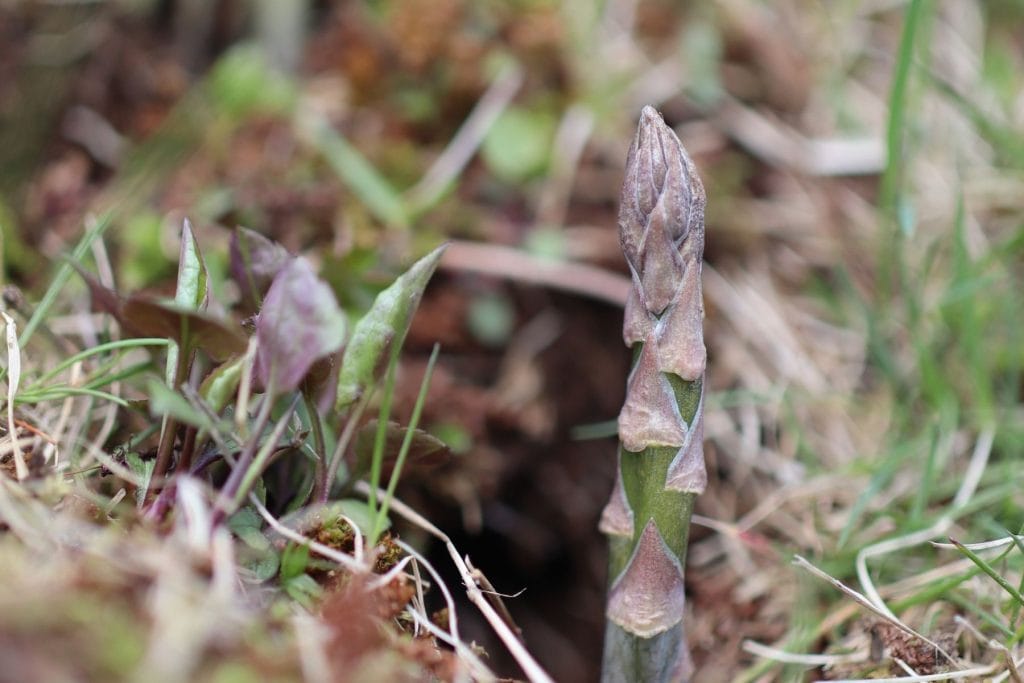
    Growing asparagus as a landscape border plant

    April 27, 2021 by FlorenceNelson 1 Comment

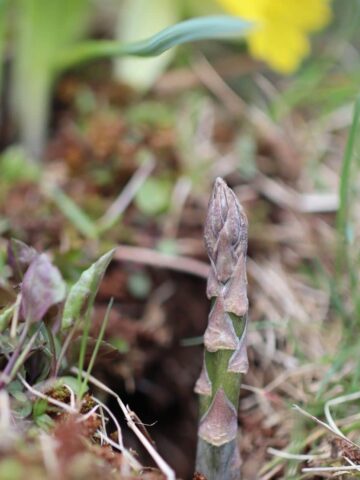
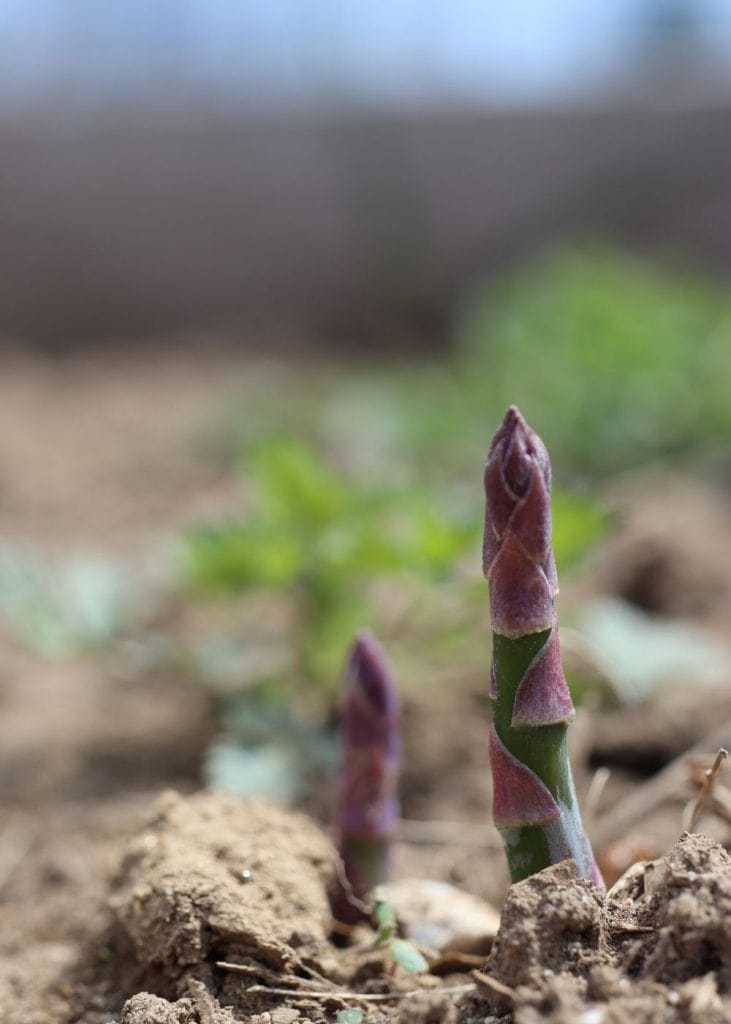
    Asparagus makes a beautiful edible landscape border plant. Harvest as usual, then let any remaining stalks form into beautiful edging foliage.

    Yesterday, little Andrew, my neighbor’s son, came scurrying up to me as I was working in my front flower bed. He had a big basket with him, which he carried like a treasure.

    “I accidentally dug up some of Mama’s asparagus bed while I was making a water wheel for my little mill that I was making out of rocks. And it was pretty great, too. But…I dug up some of Mama’s asparagus, and that wasn’t great. And she said that it was as good an excuse as any to send some over to you. She said she knew you’d like to grow some too?”

    He looked up at me with his eager little face. That sweet boy is forever getting into mischief of one kind or another.

    “I certainly would like to grow some asparagus,” I told him. “In fact, I have been meaning to start a patch here for some time.”

    While the little penitent gobbled down a piece of gingerbread, I wrote a quick note for him to take back to his mother, letting her know how much I appreciate being made the beneficiary of such a transgression against her asparagus bed.

    After sending Andrew back to his mother, I turned my attention to the asparagus bundles, meaning to get them planted immediately.

    Before getting a shovel though, I went to my bookshelf. I knew I’d read an interesting idea about planting asparagus in the Farm and Household Cyclopedia. This book has a particularly excellent index, so I found the passage I was looking for right away:

    Asparagus as a lawn plant:
    A friend suggests a very good idea as to asparagus: “Of course the old plan of sticking the plants in close beds is all wrong. There are many bits of fine soil in gardens, even the so-called pleasure grounds and hardy plant borders, where a strong clump of the common asparagus would be a great ornament, as well as of use.

    I shall plant a hundred of more good clumps of asparagus in our borders here, partly for its tender shoots in spring; partly for its spray for cutting during the summer and autumn months, but mainly for its feathery grace as a beautiful, hardy plant.

    In many a villa garden, even where good asparagus may never be seen raised in the ordinary way, a capital supply could be obtained by simply dotting a few plants here and there in borders, and on the margins of shrubberies, not only as single specimens, but as groups and masses–never, however, nearer to each other than four feet.”

    I decided to follow this advice, and disperse my new asparagus plants along borders and edges. Some went in near my daffodils, and others along a stone wall, near the lilacs. Even this year, I know they will add beautiful fronds to the border plantings. And next year, we will have our own asparagus!

    I hope you found this idea about using asparagus as a lawn plant as interesting as I did. That Farm and Household Cyclopedia is a book I am so glad to have on my shelf!

    With love,

    Florence

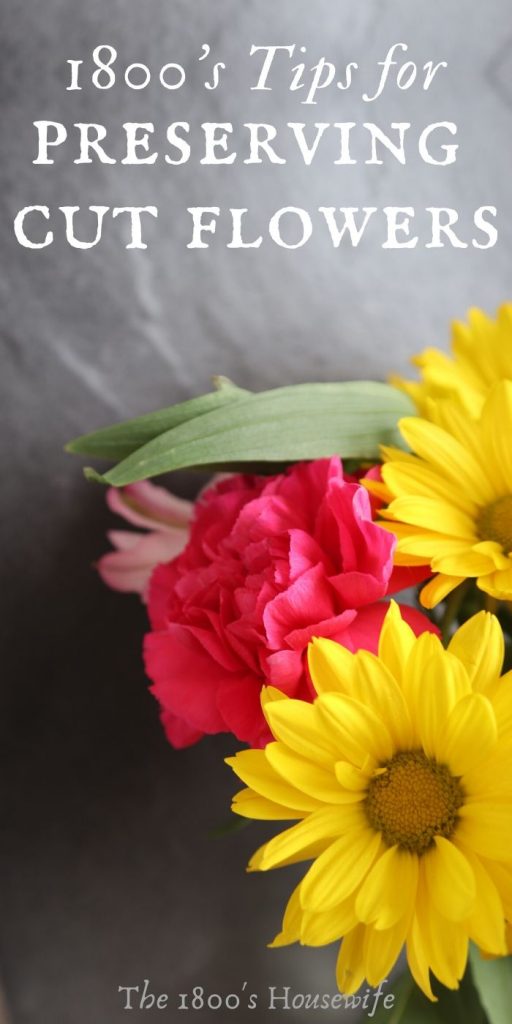
    Preserving Cut Flowers

    February 13, 2020 by FlorenceNelson Leave a Comment

    preserving cut flowers a long time

    The other day, my husband had occasion to travel into the city to conduct business. When he returned, he came bearing small gifts for the children. How excited they were! I knew that he intended to surprise them with some small treasures, but was entirely surprised when he had a “treasure” for me as well – a lovely bouquet of hot house flowers!

    What a joy to see those lovely blossoms upon my table, and how much of spring and sunshine they have lent to this otherwise cold and grey week!

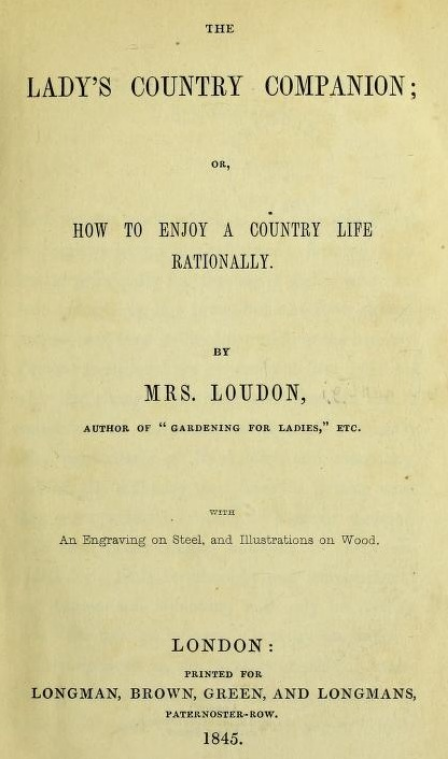
    Since it has been some time since I had flowers in the house, and I of course wish them to last as long as possible, I looked in my volume of Mrs. Loudon’s book in order to consult her rules for preserving cut flowers as long as possible.

    In her “Letter III”, I found the information I was searching for:

    To Preserve Flowers a Long Time

    As you are fond of having flowers in your room, and as your present garden is so far from your house, you will perhaps be glad to know how to preserve cut flowers as long as possible. The most simple rules are, not to put too many flowers in a glass, to change the water every morning, and to remove every decayed leaf as soon as it appears, cutting off the end of the stems occasionally, as soon as they show any symptoms of decay.

    A more efficacious way, however, is to put nitrate of soda or nitrate of potash (saltpetre) in powder into the water; as about as much as can be easily taken up between the forefinger and the thumb, put into the glass every time the water is changed, will preserve cut flowers in all their beauty for above a fortnight. Camphor in powder has nearly the same effect.

    Mrs. Loudon

    Nitrate of soda is not difficult nor expensive to obtain, and a very little goes a long way.

    A fortnight of brightness and beauty on my table will be a joy indeed, and I intend to carefully follow Mrs. Loudon’s advice, having found so much of her other botanical wisdom to be invaluable!

    Beef Steak Pie

    February 11, 2020 by FlorenceNelson 2 Comments

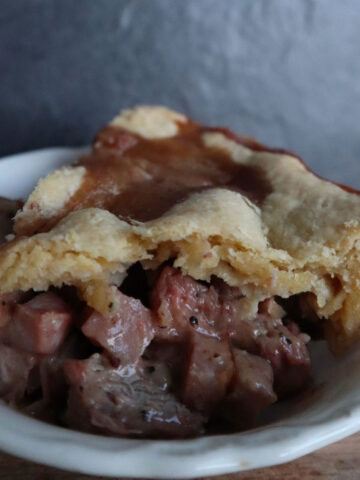
    1800s beef steak pie

    Is there anything more comforting on a cold winter’s day, than a well-spiced meat dish, enveloped in a soft and flaky crust?

    Last week I made this beef steak pie recipe from Mrs. Randolph’s cook book for the first time. My young family were all very ardent in their praise of it, and as I was cleaning away the supper dishes my little Samuel implored me sweetly, “may we have this again tomorrow please, Mama?”

    While I did not make this again the next day, my little fellow was encouraged by my reply that now I know how to make it, this is a dish we will enjoy often.

    This particular recipe for beef steak pie is rendered especially excellent by the addition of sliced ham, which gives pleasing variation in both flavor and texture to the meat filling.

    I know of several housekeepers that adjust this recipe by omitting the bottom crust, placing the filling directly into the plate, and sealing only the top with a good thick puff paste. For those who would like to follow Mrs. Randolph’s recipe exactly, I have copied it here:

    BEEF STEAK PIE.

    Cut nice steaks, and stew them till half done, put a puff paste in the dish, lay in the steaks with a few slices of boiled ham, season the gravy very high, pour it in the dish, put on a lid of paste and bake it.

    Mrs. Randolph

    For my own family (perhaps in part because I have young children), I have found that I prefer cutting the beef into smaller pieces before placing them in the dish.

    With the addition of a vegetable dish or two, this truly makes a hearty and delicious meal, and one very suitable for entertaining guests. I expect to make it many times again, which I know my family will be pleased to hear.

    This recipe has been adapted for clarity, and the use of modern ovens. For the original recipe exactly as written, see the quoted text above. ~ F. Nelson

    📖 Recipe

    1800s beef steak pie

    Beef Steak Pie

    This delicious and hearty beef steak pie features the addition of ham, tucked under a flaky crust.
    Print Recipe Pin Recipe Rate Recipe
    Prep Time: 30 minutes minutes
    Cook Time: 40 minutes minutes
    Total Time: 1 hour hour 10 minutes minutes
    Calories: 452kcal

    Ingredients

    • 1 pound beef steaks
    • 8 ounces sliced boiled ham
    • 4 tablespoons butter or lard
    • 4 tablespoons flour
    • ¼ teaspoon ground black pepper or to taste
    • ½ teaspoon salt or to taste
    • pastry for a deep-dish 2-crust pie

    Instructions

    • Cut nice steaks, and stew slowly them in enough water to cover, till half done (about 30 minutes.) Reserve the liquid in which the beef steaks have been stewed.
    • Line the bottom of a deep pie dish with one half of the paste.
    • Lay in the steaks, alternating with the boiled ham.
    • In a pan over low heat, melt the butter or lard, then quickly whisk in the flour. Add 2 cups of the reserved beef liquid. Stir over low heat until thick.
    • Season the gravy very high, pour it in the dish over the meat.
    • Put on a lid of paste and bake it at 350, until golden brown and bubbling, about 35-40 minutes

    Notes

    For those who would like to use Mrs. Randolph’s rule for puff paste, I have copied it below. ~ F. Nelson

    Nutrition

    Serving: 1g | Calories: 452kcal | Carbohydrates: 21g | Protein: 30g | Fat: 27g | Saturated Fat: 11g | Polyunsaturated Fat: 13g | Cholesterol: 112mg | Sodium: 556mg | Fiber: 1g | Sugar: 9g
    Tried this recipe?Let us know how it was!

    Mrs. Randolph’s Rule for Puff Paste

    Sift a quart of flour, leave out a little for rolling the paste, make up the remainder with cold water into a stiff paste, knead it well, and roll it out several times; wash the salt from a pound of butter, divide it into four parts, put one of them on the paste in little bits, fold it up, and continue to roll it till the butter is well mixed; then put another portion of butter, roll it in the same manner; do this till all the butter is mingled with the paste; touch it very lightly with the hands in making–bake it in a moderate oven, that will permit it to rise, but will not make it brown. Good paste must look white, and as light as a feather.

    Mrs. Randolph

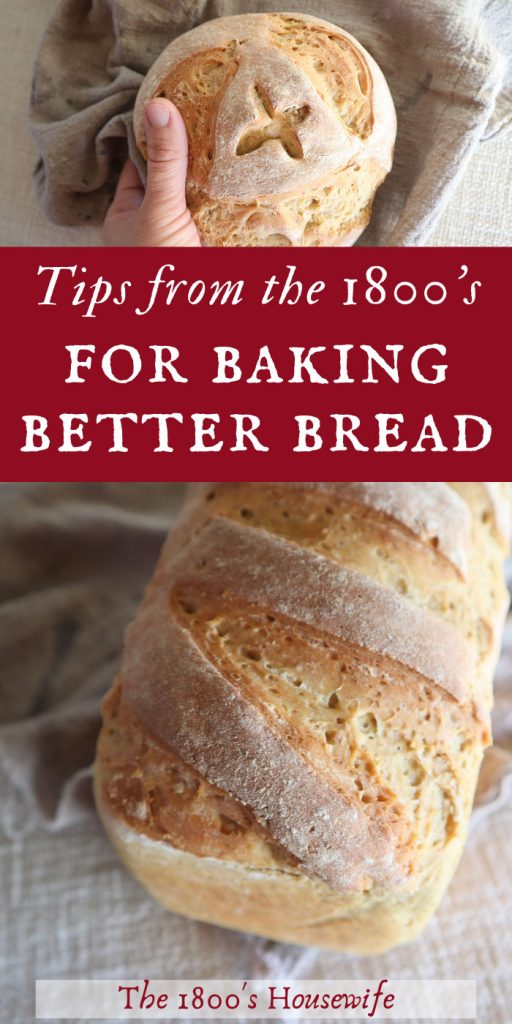
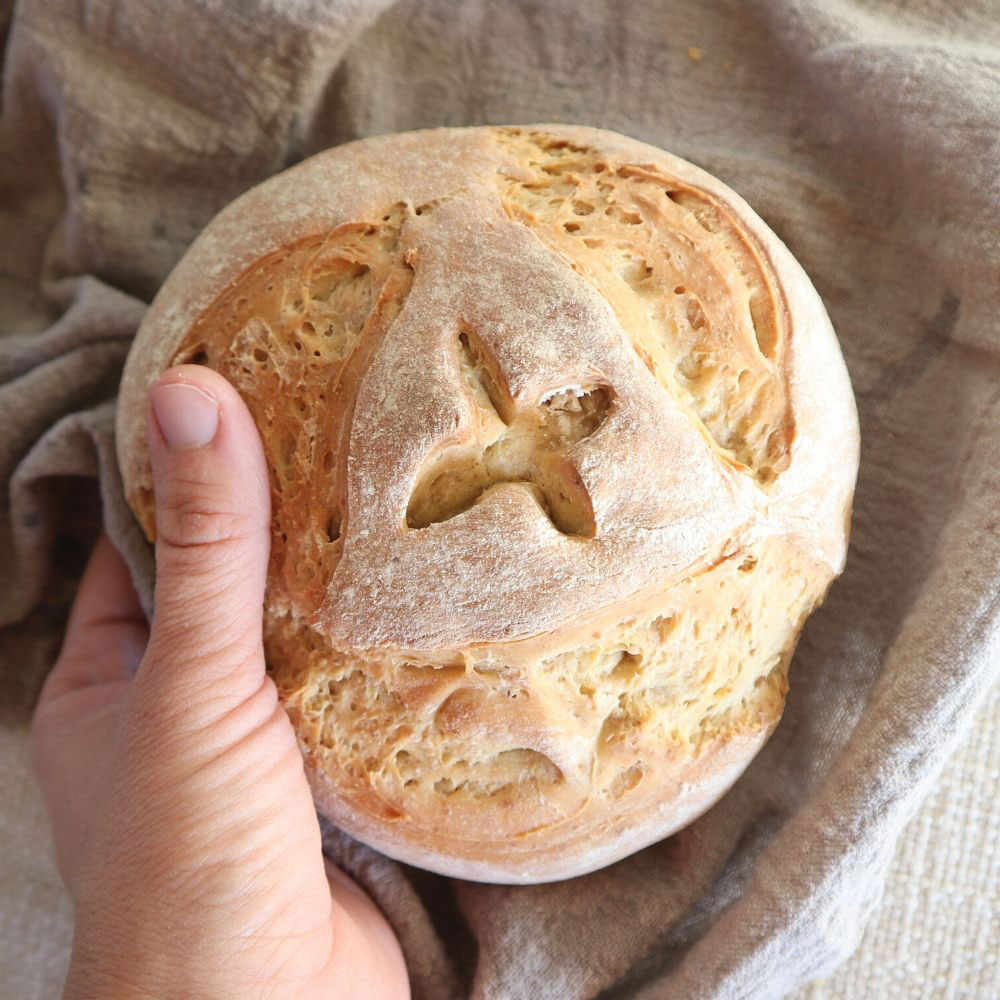
    Bread Baking Tips for Perfect Loaves

    February 6, 2020 by FlorenceNelson 2 Comments

    loaf baked following bread baking tips from the 1800's

    Yesterday, I shared a new recipe that we tried from Miss Parloa’s Appledore Cook Book. Her Soft Molasses Gingerbread was delicious!

    Today, I thought I would share some bread-baking advice from a subsequent volume by the same author: her New Cook Book and Marketing Guide. Miss Parloa’s rules for bread making have been invaluable to me, and also to my family, who enjoy a daily bread that is much improved for my having read and applied them.

    I cannot tell you how much I appreciate that this volume makes no assumptions where so many other cook books do – namely, that young cooks already posses the knowledge to skillfully execute the recipes most needed for running a healthy home.

    It is unfortunate that the daily bread of so many families is not all that it could be – light, well-made, and most healthful. With the same (or less!) expense in materials, plus the attentive application of the bread-making rules below, even the simplest ingredients in the humblest of kitchens can truly be made into loaves fit for a duchess.

    As there is no one article of food of so great importance for the health and happiness of the family as bread, make it as nearly perfect as possible.

    ~ Miss Parloa

    What follows below is a full excerpt of the bread-baking advice written by Miss Parloa, at the beginning of the bread recipes section of her New Cook Book and Marketing Guide. I hope you find it as invaluable as I have!

    bread making methods from the 1800s

    Bread Baking Tips from Miss Parloa’s New Cook Book and Marketing Guide

    When you put the bread on the board, pat it lightly. Do not press down, but let all motions be as elastic as possible. Knead with the palm until the dough is a flat cake, and then fold. Keep doing this until the dough is light and smooth and will not stick to the board or hands. Use as little four as possible in kneading. Do not stop until you are fully finished, for bread that has “rested” is not good. Milk can be used instead of water in mixing. It should always be first scalded, and then allowed to cool to blood heat. One table-spoonful of lard or butter makes the bread tenderer when water is used.

    Sourdough Bread from 1800's Recipe

    In cold weather some kitchens grow cold very quickly after the fire is out. In this case the bread should be made earlier in the evening, and set in a warmer place (about eighty or ninety degrees); because if it begins to rise within the first two hours, it will continue to rise, unless the temperature falls to the freezing point. The reason for letting the rolls rise longer than the loaves is, that the former, being smaller, are penetrated by heat much more quickly than the loaves are, and, of course, fermentation is stopped sooner; therefore, the rolls do not rise as much in the oven as the loaves.

    Rolls should be made into smooth little balls, and should be placed in even rows in a shallow pan. Breakfast rolls are first made into little balls and then rolled between the hands until three inches long. They are placed close together in even rows in the pan. Dinner and French rolls, after being made into little balls, are put on a well-floured board, and a little, well-floured rolling-pin, two and a half inches in diameter, is pressed nearly through their centre. The rolls are to be so placed in pans as not to touch each other. Being so small, and baking so quickly, they have a sweet taste of the wheat.

    sourdough loaf baked with 1800s bread making tips

    The best-sized pan for loaves is made of block tin; is eight and a half inches long, four and a half wide, and three deep. Those for wheat bread should be greased very slightly with either butter or lard. For rye, Indian, or Graham, they must be greased thoroughly, as the dough clings more to the tins. There are many kinds of bread that can be made readily and safely after once learning to make good common bread. It is difficult to give exact rules for flour, as it varies, some kinds requiring much more water than others. The “new process” flour has so much more starch, and packs so much more closely than the “old process,” that one-eighth less is required, or one-eighth more of liquid; but if the flour is weighed, the same amount of water is taken for a pound of flour made by either process. The best flour is always the cheapest for bread. As there is no one article of food of so great importance for the health and happiness of the family as bread, make it as nearly perfect as possible.

    Miss Parloa’s Soft Molasses Gingerbread

    February 5, 2020 by FlorenceNelson 31 Comments

    Editor’s Note: This is a very heavy, gummy gingerbread recipe, but is historically interesting. If you’ve heard rave reviews about an “1800’s Housewife gingerbread recipe”, I promise it’s not this one. You want the 1856 Gingerbread Recipe from Practical American Cookery. Do try that one, it’s a real winner!

    Yesterday, one of my little ones asked me to make gingerbread. What a lovely idea for a cold and blustery February day!

    The only problem was, I had let us run clean out of sugar. Not one granule of white or brown sugar was there, in this whole house. And my usual recipe uses both molasses and sugar.

    Thankfully, I am very blessed to have a number of excellent cookery books on my shelves. For the next 20 minutes, my little ones and I took them all down and combed through each one, looking for gingerbread recipes that called for only molasses, and no sugar.

    I should have known that dear Miss Parloa would be our salvation. In her wonderful Appledore Cook Book, she shares not one but two soft gingerbread recipes that require only molasses for sweetening.

    1800s cookbook recipe for soft molasses gingerbread

    I have come to notice in Miss Parloa’s cook books that when she lists multiple recipes for a certain dish, they seem to be listed in order of her own preference for the finished product. So we opted to make her Soft Molasses Gingerbread, No. 2., rather than No. 3, which also relies only on molasses for its sweetness.

    The instructions are very easy to follow, and we were delighted with the results. This is an excellent frugal recipe for soft molasses gingerbread, which requires only six ingredients. It puts a delicious gingerbread well within reach of anyone, even if sugar, eggs, and butter are not available, or are too expensive for common baking.

    soft molasses gingerbread from 1800's recipe

    If I ever had occasion to serve gingerbread to the President, I would still likely opt for a “Rich Molasses Gingerbread” recipe, with eggs and additional spices. This is not perhaps what you might call a “company gingerbread” recipe.

    But for family cookery, it is affordable, easy, and very nice. My little ones were delighted with it, and could have gobbled down the whole pan at once, if I let them!

    The recipe below has been adapted only to allow for modern leavening, and ovens. For the exact original recipe using saleratus, please reference “Soft Molasses Gingerbread, No. 2.” in the photo above.

    📖 Recipe

    Miss Parloa’s Soft Molasses Gingerbread (1800’s Recipe)

    This 1800's recipe for soft molasses gingerbread is very easy and requires only 6 ingredients. Sweetened only with molasses, and spiced with ginger, it's delicious.
    Print Recipe Pin Recipe Rate Recipe
    Prep Time: 10 minutes minutes
    Cook Time: 18 minutes minutes
    Total Time: 28 minutes minutes
    Course: Cakes & Cookies
    Keyword: cake recipes
    Servings: 16
    Calories: 176kcal

    Ingredients

    • 1 cup molasses
    • 1 teaspoon baking soda
    • 1 teaspoon ginger
    • 1 tablespoon butter or lard
    • ½ cup boiling water
    • 2 cups flour

    Instructions

    • Heat oven to 375
    • To a mixing bowl, add molasses, baking powder, ginger, and butter or lard.
    • Stir this together, and then pour on one half a cup of boiling water, and the flour. Beat well.
    • Spread in a well-greased 8×8 pan.
    • Bake until set in the center, about 18 minutes.

    Notes

    This is very nice if pains are taken to have the water boiling, and to beat it well when the flour is added. ~ M. Parloa
    For those with modern refrigeration methods, this recipe works best when butter or lard is at room temperature, rather than very cold. It is worth taking time to let butter soften before making the recipe. ~ F. Nelson

    Nutrition

    Serving: 1g | Calories: 176kcal | Carbohydrates: 37g | Protein: 2g | Fat: 2g | Saturated Fat: 1g | Polyunsaturated Fat: 1g | Cholesterol: 4mg | Sodium: 59mg | Fiber: 1g | Sugar: 21g
    Tried this recipe?Let us know how it was!

    Governing Children With Gentleness

    October 1, 2019 by FlorenceNelson Leave a Comment

    As a mother of four young children, I have found that avoiding anger or raised tones in the governing of my young ones goes far to create both a happier home and children. In my experience, it also makes for a happier mother.

    Maintaining a gentle and happy disposition can be much more easily said than done, however, so I find myself often looking to the guidance of those with more wisdom and experience than I. Without fail, reading over their advice helps me to set aside my frustrations and resolve to govern the children as much as possible with consistency, strength, and a cheerful disposition.

    The passage that follows is from Miss Beecher’s volume, Housekeeper and Healthkeeper. I find it most helpful, and refer to it often:

    Miss Beecher’s Guidance on Parenting Without Anger

    Another maxim, and perhaps the most difficult, is, Do not govern by the aid of severe and angry tones. A single example will be given to illustrate this maxim. A child is disposed to talk and amuse itself at table. The mother requests it to be silent, except when needing to ask for food, or when spoken to by its older friends. It constantly forgets. The mother, instead of rebuking in an impatient tone, says, “My child, you must remember not to talk. I will remind you of it four times more, and after that, whenever you forget, you must leave the table and wait till we are done.” If the mother is steady in her government, it is not probable that she will have to apply this slight penalty more than once or twice. This method is far more effectual than the use of sharp and severe tones, to secure attention and recollection, and often answers the purpose as well as offering some reward.

    Cross and Angry Tones Not More Effective Than Gentle Consistency

    The writer has been in some families where the most efficient and steady government has been sustained without the409 use of a cross or angry tone; and in others, where a far less efficient discipline was kept up, by frequent severe rebukes and angry remonstrances. In the first case, the children followed the example set them, and seldom used severe tones to each other; in the latter, the method employed by the parents was imitated by the children, and cross words and angry tones resounded from morning till night in every portion of the household.

    Happy Children Are More Easily Governed

    Another important maxim is, Try to keep children in a happy state of mind. Every one knows, by experience, that it is easier to do right and submit to rule when cheerful and happy, than when irritated. This is peculiarly true of children; and a wise mother, when she finds her child fretful and impatient, and thus constantly doing wrong, will often remedy the whole difficulty by telling some amusing story, or by getting the child engaged in some amusing sport. This strongly shows the importance of learning to govern children without the employment of angry tones, which always produce irritation.

    Governing Children of Difficult Temperaments

    Children of active, heedless temperament, or those who are odd, awkward, or unsuitable in their remarks and deportment, are often essentially injured by a want of patience and self-control in those who govern them. Such children often possess a morbid sensibility which they strive to conceal, or a desire of love and approbation, which preys like a famine on the soul. And yet they become objects of ridicule and rebuke to almost every member of the family, until their sensibilities are tortured into obtuseness or misanthropy. Such children, above all others, need tenderness and sympathy. A thousand instances of mistake or forgetfulness should be passed over in silence, while opportunities for commendation and encouragement should be diligently sought.

    Green Tomato Pickles

    October 1, 2019 by FlorenceNelson Leave a Comment

    picture of 1800s recipe for green tomato pickles

    Miss Beecher’s INDIANA PICKLES

    Take green tomatoes, and slice them. Put them in a basket to drain in layers, with salt scattered over them, say a tea-cup full to each gallon. Next day, slice one quarter the quantity of onions, and lay the onions and tomatoes in alternate layers in a jar, with spices intervening. Then fill the jar with cold vinegar. Tomatoes picked as they ripen, and just thrown into cold spiced vinegar, are a fine pickle, and made with very little trouble. Miss Beecher, 1846

    Transplanting Trees

    October 1, 2019 by FlorenceNelson Leave a Comment

    For transplanting Trees, the autumn is the best time. Take as much of the root as possible, especially the little fibres, which should never become dry. If kept long before they are set out, put wet moss around them and water them.

    Dig holes larger than the extent of the roots; let one person hold the tree in its former position, and another place the roots carefully as they were before, cutting off any broken or wounded root. Be careful not to let the tree be more than an inch deeper than it was before. 

    Let the soil be soft and well manured; shake the tree as the soil is shaken in, that it may mix well among the small fibres. Do not tread the earth down, while filling the hole; but, when it is full, raise a slight mound of say four inches deep around the stem to hold water, and fill it.

    Never cut off leaves nor branches, unless some of the roots are lost. Tie the trees to a stake, and they will be more likely to live. Water them often. Miss Beecher’s Housekeeper and Healthkeeper, 1873

    To Ripen Green Tomatoes After Frost

    October 1, 2019 by FlorenceNelson Leave a Comment

    The tomato season ends with the frost. If the vines are pulled up before frost comes, and are hung up in a well-ventilated cellar with the tomatoes hanging to them, the “love-apple” will continue ripening until Christmas. The cellar should not be too dry not too warm. The knowledge of this may be improved to great practical advantage for the benefit of many who are invalids, and who are fond of the tomato. Fowler & DePuy, 1880

    If any tomatoes be shaken from the vine in the process of putting the vines into the cellar, there are many excellent ways to use green tomatoes. This recipe for Indiana Pickles uses green tomatoes, and is most delicious.

    Dyeing with Peach Leaves

    September 27, 2019 by FlorenceNelson

    Today, my little ones and I are dying several articles of clothing with a lovely bright yellow, obtained from the many peach tree leaves that have recently blanketed the yard. Autumn is coming, and the cold breezes together with heavy rain have been very handy in knocking them down for our use!

    If you have never attempted dyeing with peach leaves, it is not difficult. Fill your dye pot with leaves, and water to cover. Set over the fire to simmer – about an hour should do. Strain out the leaves, and then add your cloth stuffs, giving care to stir frequently, lest the color be uneven. I do feel that a bit of alum helps to set the color.

    Yellow Dye from peach leaves

    Mrs. Child’s advice is excellent as always, and I have found this method to work well for obtaining a very nice shade of yellow. It gives a most bright and cheerful color that looks very nice for children’s clothing.
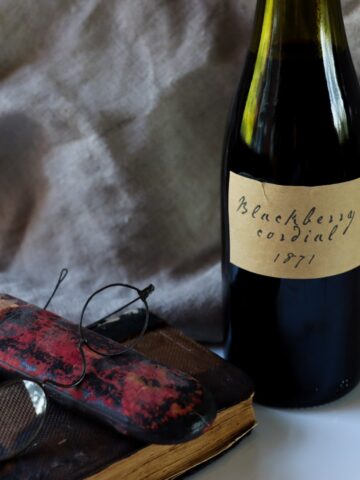
    I find the final shade to be brighter and lighter than that derived from onion or beggarstick. It is bolder and more fast than goldenrod.

    One thing that always delights me when dyeing with peach leaves is the very strong smell of almond that fills the air when the peach leaves are simmering. It is a most pleasant and distinctive odor. By the time the dye bath is full ready, the scent will be quite dissipated, and that can help to discern when the full amount of dye has been obtained from the leaves.
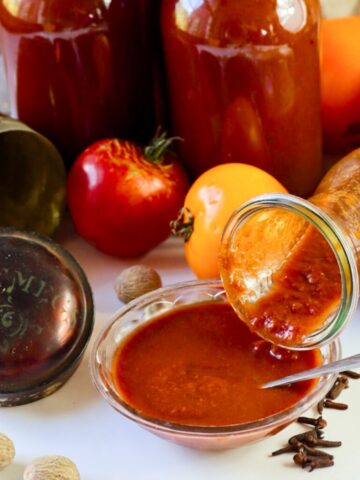
    Do be very certain to strain the bath well through a tight muslin. Any speck of vegetable matter that should escape to settle on the fabric being dyed may create a darker place that might be objectionable in the finished article.
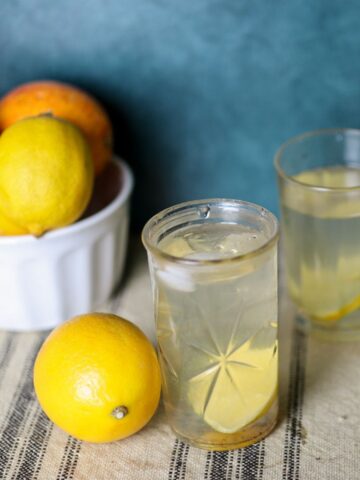
    If you have experience dyeing with peach leaves, please feel most welcome to share your advice in the comments below. Encouragement and help are most welcome for those who may be trying this for the first time!

    [social_warfare ]

    Home and Health and Home Economics

    September 27, 2019 by FlorenceNelson

    The Virginia Housewife

    September 27, 2019 by FlorenceNelson

    The American Frugal Housewife

    September 26, 2019 by FlorenceNelson

    The American Frugal Housewife, written by Mrs. Child in 1833, is a robust guide for living abundantly within one’s means, even if those means be small.

    The American Frugal Housewife, though a slim little volume, has become one of my most reached-for homemaking resources. As a guide for living abundantly within one’s means, even if those means be small, it is perhaps unparalleled.

    The opening lines of the book say it very well, “The true economy of housekeeping is simply the art of gathering up all the fragments, so that nothing be lost. I mean fragments of time, as well as materials“

    In the pages that follow, Mrs. Child goes on to show in concise detail, how to make the most of everything, from materials that might otherwise be cast aside, to the odd bits of time that might be spent less profitably. Her suggestions for ways that children may be taught to help work together for the good of the family are most helpful.

    The American Frugal Housewife may be purchased here.

    The American Frugal Housewife may be read in full here.

    Miss Beecher’s Domestic Receipt Book

    September 26, 2019 by FlorenceNelson

    Miss Beecher’s Domestic Receipt Book (written in 1846) is truly a complete book of cookery, which would be an asset to any housekeeper’s book shelf. Miss Beecher has taken great care with the recipes selected for inclusion, seeking to include those that both best promote health, while relying on ingredients that are readily available and affordable to the average household.

    The book is well structured, making it quick and easy to find the recipe desired. Her selection of cake recipes is particularly fine, and I can attest that the Molasses Gingerbread recipe is most excellent, and well worth trying.

    Do be aware that, as so many receipt-writers do, Miss Beecher has often omitted the quantities (or indeed any mention of) flour. However, if one remembers this and is familiar with the dish being cooked, common-sense will supply what the ingredient list may lack, and all is bound to turn out right in the end.

    Miss Beecher’s Domestic Receipt Book may be purchased here.

    Miss Beecher’s Domestic Receipt Book may be read in full here.

    The Lady’s Country Companion

    September 26, 2019 by FlorenceNelson

    The Lady’s Country Companion, written in 1845 by Mrs. Loudon, is a wonderful resource for those who seek to enjoy country life to the fullest.

    The Lady's Country Companion

    This wonderful book is a delightful compendium of information that may improve upon the joy of anyone, but especially those fortunate enough to have a bit of land in the country. Mrs. Loudon is well known for her many gardening books, and her expertise shines through again as she walks even the most novice gardener through every step of laying out both flower gardens and kitchen gardens. Did you know, dear reader, that the geometrical flower gardens that we so admire in images of the grand English estates, can easily be re-created with nothing more tedious than a stake and piece of string? Mrs. Loudon explains exactly how, and even details the best herbs and flowers to select.

    While one would never refer to this as a cookbook, there are many excellent receipts enclosed, most suitable and enjoyable for country living. The instructions for the making of wines, ciders, and perry, I found most usefully illustrated, and very instructive. I hope soon to have opportunity of following Mrs. Loudon’s directions for the brewing of Perry, now that some of the excellent pear varieties are more readily accessible.

    The Lady’s Country Companion may be purchased here.

    The Lady’s Country Companion may be read in full here.

    « Previous Page